Showing posts with label Ant-Man. Show all posts

July 14, 2018

REVIEW: Ant-Man and the Wasp


Speaking as someone who liked the first Ant-Man, I feel like even I have to agree with everyone else in saying "who even cares about Ant-Man and The Wasp after THAT?" I mean, can you blame us? I figured I'd change my mind and come around after the hype from Infinity War died down, but it's two months later and I still can't fathom why Marvel decided to release their biggest and most-awaited film to date before their sequel to Ant-Man. I was reasonably excited for this movie, yet I still found myself saying "oh yeah, that did just came out, didn't it?" last weekend. I went to the theater, grabbed my ticket, and settled in with low expectations for an offbeat, inoffensive sci-fi/comedy romp. Unfortunately, I feel like the filmmakers approached this project with those same expectations in mind, and therein lies the problem.

Set two years after the first film, we find Scott Lang under house arrest after the airport incident in Captain America: Civil War. He hasn't worn the Ant-Man suit since, spending his sentence making up for lost time with his daughter, Cassie (Abby Ryder Fortson); this all changes when he's contacted once again by Hope Van Dyne (Evangeline Lilly) and her father, Hank (Michael Douglas). After the events of the first Ant-Man film, the two have been working on a device capable of accessing the Quantum Realm, the mysterious, sub-atomic dimension where Hope's mother (and Hank's wife), Janet (Michelle Pfeifer), is thought to be lost. Seeing as how Scott successfully navigated the Quantum Realm in the first movie, Hank and Hope believe him to be the key to locating and rescuing Janet. Naturally, it's not quite that easy; things are complicated, not only by Scott's incarceration, but by the Ghost (Hannah John-Kamen), a sinister operative with the ability to phase through solid matter and a keen interest in Hank's research on Quantum energy. With Janet's life hanging in the balance, it's up to Ant-Man and The Wasp to save the day without violating the terms of Scott's plea arrangement.


If this movie has a strong-suit, it's most definitely the character interactions. Scott Lang continues to be one of the most likeable protagonists in the MCU, and his dynamic with Hope reaches new heights this time around. It would have been so simple to go with the old cliché of "inept but loveable man/capable but angry woman", but instead we're allowed moments to see that Hope genuinely cares about Scott. This isn't a one-sided attraction, meant to act as wish-fulfillment for any divorced dads in the audience; they work well together, both as superheroes and human beings, and this is all thanks to Rudd and Lilly's charming "workplace romance"-style chemistry. I also really liked Scott's family dynamic this time around; his relationship with Cassie continues to be tooth-achingly adorable, and it's really nice to see a divorced couple interact in a realistic yet positive manner. There's no glimmer of hope that Scott and his ex-wife (played by Judy Greer) are going to get back together, but they're both totally invested in putting their daughter first, despite the circumstances of their family situation. There isn't any of that "my ex-wife is a shrew and her new man is a tool, they're gonna get some gratifying comuppance" nonsense to be found here; it's a genuinely sweet (if a tad idyllic) portrayal of how parents and step-parents can overcome personal drama and past disputes to make a positive impact in their child's life.

Really, this movie does a lot of interesting things regarding morality and the way people overcome personal conflicts with one another. Ghost is another excellent antagonist in the modern MCU, doing questionable things for perfectly understandable reasons. Her life is at risk, the same as Janet's, so our heroes are placed in a tricky spot; if they do as Ghost asks, they're throwing away their chance at saving Hope's mother. But if they "beat" Ghost the way a superhero usually might, they're essentially condemning her to a painful death, as her condition worsens to the point that it literally causes her to phase out of existence. It's a curious predicament that leads to an admittedly inventive outcome, albeit by way of a conflict resolution that completely dismisses any and all intrigue generated by this catch-22 of a situation (not unlike the way things were resolved in Black Panther). It gives us a host of charming character interactions and a villain who plays with the story and cast in ways you wouldn't necessarily expect, only to handicap itself with a complete and utter lack of any and all ambition in every other respect.


It's a film that, compared to its predecessor, feels much more confident and self-assured of its own identity. Typically, this would be a positive thing, except that the identity in question is painfully unremarkable in nearly every way. The first Ant-Man felt like a truly daring experiment for Marvel Studios; it's the film that made everyone say "okay, I liked The Avengers and Guardians of the Galaxy, but really? Ant-Man?" It had an uphill battle to fight in winning over mainstream audiences, and it more than succeeded. Ant-Man and The Wasp, however, feels like exactly what you'd expect if you asked someone to make a generic Marvel movie. It feels like it lacks an identity of its own, especially in a visual sense, which leads me to believe that everything I found so impressive and imaginative about the first Ant-Man was just left-over details from the original Edgar Wright draft. Unlike its predecessor, Ant-Man and The Wasp has no groundwork to build off of, so everything feels noticably flatter as a result.

The action in particular suffers the worst here; outside of a fun and engaging chase sequence through the streets of San Francisco, the fight scenes here are nothing to write home about. We rarely see things from Ant-Man or Wasp's tiny perspective (which, visually speaking, was the best thing about the first movie); instead, get ready to watch that "shrink, dodge, grow, kick, shrink, dodge, grow, kick" maneuver over and over and over again. I understand that it can be challenging to showcase shrinking powers when the main villain is a normal-sized human 100% of the time, but then that's sort of the challenge, isn't it? There's also next to no ant-based action, which was a huge disappointment for me, seeing as how that's easily Ant-Man's most unique ability. Remember that insane sequence in the first movie where Scott learned about all the different types of ants he'd be using during the heist? Here, the ants are purely set dressing and transportation, nothing more (in a movie called Ant-Man and The Wasp, no less). It's a nitpick, sure, but again, why do it at all if you're not even going to try? Ant-Man is a challenging character to bring to life on the big screen, but that's supposed to be the appeal; a movie about Ant-Man isn't going to be as straightforward in terms of its action, direction, or visuals as a movie about Captain America or The Hulk. Instead of rising to the occasion like the first movie did, Ant-Man and The Wasp puts all of its chips on its (admittedly endearing) cast and ends up feeling lesser overall because of it.


All of those flaws, however, more or less fell within my expectations. I came in expecting a lighthearted, low-stakes sci-fi adventure, nothing anywhere near on the same level as Infinity War, and that's basically what I got. I can excuse some preference-based hang-ups and nitpicks for a situation like this, where the film in question isn't really aspiring to be anything more than an enjoyable, down-to-earth romp. What I can't excuse, however, is the numerous plot holes, conveniences, and outright examples of laziness found within this film's storyline. I love Michelle Pfeifer and think she's a perfect choice for the role of Janet Van Dyne, but it's not hyperbole to say that her chunk of the story is held together with chewing gum and dental floss. Everyone's talking about the amount of technobabble in this film, which, to be fair, is to be expected from a character as deeply-rooted in the world of fantastical super-science as Ant-Man. Normally, a character like Scott Lang would act as the everyman, giving Hank and Hope an excuse to put everything in layman's terms for the audience. It's a well-worn trope, but it's more or less forgivable, seeing as how it plays a practical purpose in conveying plot details to the audience (i.e. the scene in Event Horizon in which Sam Niell sticks a pencil through a folded sheet of paper to explain warp-travel). 

The only problem is that we never really get that explanation. The constant repetition of the word "quantum" is just filler, to the point that the film itself makes it the punchline of a joke. You could make the argument that this is meant to be a clever subversion of a classic sci-fi trope (since, in reality, Hank Pym probably wouldn't waste his time explaining the ins and outs of quantum science to a schmo like Scott, especially while on the clock), but I feel that it's much more likely that the filmmakers realized that if they attempted to explain the technobabble, the entire plot would fall apart. The whole point of sci-fi is that it's fiction rooted in science; it's fascinating because, even though concepts like laser guns and robot suits are fantastical, we can more or less rationalize how they might work. Here, the Quantum Realm is essentially magic; if you were to remove every instance of the word "quantum" from the script, you'd end up with a story that answers every pertinent question with "because". How did Janet survive in the Quantum Realm for 30 years without starving or going insane? Because. Why do our heroes only have a set amount of time to rescue her? Because. I'd be fine if the Ant-Man series started to become more fantasy than sci-fi (hey, the opposite worked out alright for Thor), but this just feels indefensibly lazy. Any time a plot point has to happen, the film forces it through by way of some made-up science-y sounding words. It's the same issue I had with the black goo in Prometheus, and I honestly wouldn't care if all of these conveniences didn't occur in places that are integral to the plot we're supposed to care about. You can have harmless conveniences in your movie; it's convenient that Scott happened to be robbing a house with a shrink suit in the basement in the first Ant-Man, but the film isn't lesser for it. You can use coincidence to get your characters into a predicament, but you should never use it to get them out of it, which is something Ant-Man and The Wasp does at all the worst moments. A movie can be off-beat and endearing without insulting the viewer's intelligence, but then that's a balance that this film struggles to grasp (despite a few clever moments here and there).


Despite some really enjoyable performances and some occasionally fun action, Ant-Man and The Wasp only manages to feel painfully average at best. It's inoffensive, but altogether unremarkable, which is a shame, seeing as how this is the 20th film in the MCU. If you're just looking for an excuse to go to the cinema this summer, you could most definitely do worse, and I know kids are gonna love this just as much as they loved the first one (if you have small children, it's sure to inspire less awkward conversations about the nature of mortality than Infinity War did). That said, I'm not sure I need another Ant-Man adventure after this, if this is all they're going to aspire to be. There's nothing wrong with having more low-key entries in something as massive as the MCU; movies like Ant-Man can provide some much needed levity and breathing room in-between the larger blockbusters. But just because a movie aims to be fun and laid-back doesn't mean it has to feel this unambitious and lazy. It's just a victory lap after Infinity War, and I really hope Marvel Studios avoids this kind of attitude in the future. With how much time, effort, and money they've poured into crafting the MCU into an interwoven narrative of annual blockbusters, the one thing they should never aspire to be is "fun enough, but nonessential viewing", which is exactly what Ant-Man and The Wasp turned out to be.

May 8, 2016

REVIEW: Captain America- Civil War


Out of all of the myriad entries in the monolithic money-machine that is the Marvel Cinematic Universe, I honestly think my personal favorites may be the Captain America movies. Joe Johnston's Captain America: The First Avenger was a delightfully pulpy period piece that, despite its flaws, still wins me over by way of sheer atmosphere and gumption. 2014's The Winter Soldier quickly established itself as the absolute best film the MCU had to offer (a title that has yet to be usurped). Two years later, the Russo brothers are back with Captain America: Civil War. While Winter Soldier continues to be the pinnacle of Marvel excellence, it must be said that Civil War is a strong contender for my personal favorite superhero film to date.

After the collective collateral damage of the Avengers' exploits garners criticism from the world community, legislation is brought to the table that would transfer control of the heroes to a United Nations subcommittee. Naturally, this sows dissent amongst the do-gooders; Tony Stark (Robert Downey Jr) is struck with a hefty dose of  guilt, especially following his involvement in the creation of Ultron, and champions the cause for registration. Meanwhile, Captain America (Chris Evans) has little faith in bureaucracy following the events of Winter Soldier, maintaining the firm belief that red-tape and hidden agendas will lead to corruption and injustice. The former friends find themselves on opposing sides of the law, and the situation is made all the more complicated by the resurfacing of Bucky Barnes, the Winter Soldier (Sebastian Stan). Naturally, Cap wants to protect his old friend, which puts him at odds from the authorities hunting him down. The conflict steadily escalates from a question of ideals to a full-on clash of allegiances, where lines are drawn and alliances are both made and shattered.


To the casual observer, this could easily be mistaken for another Avengers film rather than a Captain America sequel. Everyone short of Thor and the Hulk are present and accounted for, and that's not even counting the new additions of Black Panther (Chadwick Boseman) and Spider-Man (Tom Holland). In terms of scale, this is a much, MUCH larger film than Winter Soldier; though the pacing and tonal shifts can err on the somewhat clunky side, the fact that this film manages to do as much as it does as well as it does is something definitely worthy of praise. As far as Marvel blockbusters go, this is easily a contender for the densest entry yet. For it to end up not only coherent, but also compelling is a testament to the Russo brothers' strengths as filmmakers. 

As Winter Soldier proved, the Russos especially excel when it comes to directing action. Within the first five minutes of Civil War, all I could think was how this movie was immediately superior to last year's Avengers: Age of Ultron. The fight choreography on display here is airtight; as cool as it was to see the Avengers storm a HYDRA fortress or for Iron Man to don the Hulkbuster armor, it's a simple fact that well-directed combat between physical actors will manage to out-wow even the flashiest CG effect. The blows are as heavy-hitting as they are fast, and each setpiece displays wonderfully creative examples of each hero's powerset in ways that are sure to make fanboys like myself go giddy with childish delight. The excessive shaky-cam may not sit well with some, but I found the frenetic energy flowed off the screen and into my veins, leaving my heart pounding as the credits rolled. Of course, flashy action is more or less meaningless if we don't care about the people inside the super-suits. Which is why I'm glad to report that Civil War is quite possibly the most emotionally compelling Marvel film to date.


Marvel Studios has always had a knack for strong casting, so it's to be expected that everyone here does a good job. Even with such a talented cast, even with such powerful and endearing chemistry, there are still those who manage to go above and beyond. It feels as though Robert Downey Jr has become comfortable in the role of Tony Stark in recent years; Civil War provides the emotional shake-up that the character so desperately needed. RDJ steps outside of his comfort zone on this one and thrives, imbuing Tony with an intensity not matched since the very first Iron Man film. While the addition of Spider-Man felt somewhat superfluous, Tom Holland gives what is easily one of the best performances in the film; I don't hesitate in the slightest in saying that Holland's portrayal of Peter Parker does the character justice better than any I've ever seen. As much of a Spidey fan as I am, I was surprised to find that the show was stolen not by the webhead, but rather by Chadwick Boseman in his role as T'challa, the Black Panther. Motivated by revenge, T'challa brings an air of intensity and dignity not found in the majority of Marvel protagonists; he carries himself like royalty and doesn't waste his time spitting out one-liners. He's a man on a mission of pride, and he commands the viewer's attention whenever he's on screen. I wouldn't necessarily say I was "excited" or "hyped" for The Black Panther before seeing Civil War, but I certainly am now.


With all the bombastic conflict and in-fighting, it may come as a surprise to some viewers that the film does have an actual villain; filling the role of Helmut Zemo, we have Daniel Brühl. Zemo presents an interesting facet to the film. On one hand, I felt as though he was under-utilized (despite dutifully serving his purpose to the overall plot). The fact that this character is also a far cry from the Baron Zemo of the comics is something that is sure to rub readers the wrong way, at least initially. That said, despite his minimal screentime, he certainly plays a major role in the plot and is truthfully a contender for the best (or at the very least, most effective) villain Marvel has ever put out. The Marvel films very often have a problem with providing effective or interesting antagonists, and Zemo manages to be both, despite having little connection to his inspiration from the source material and next to  no direct interaction with Cap and the gang until the climax.

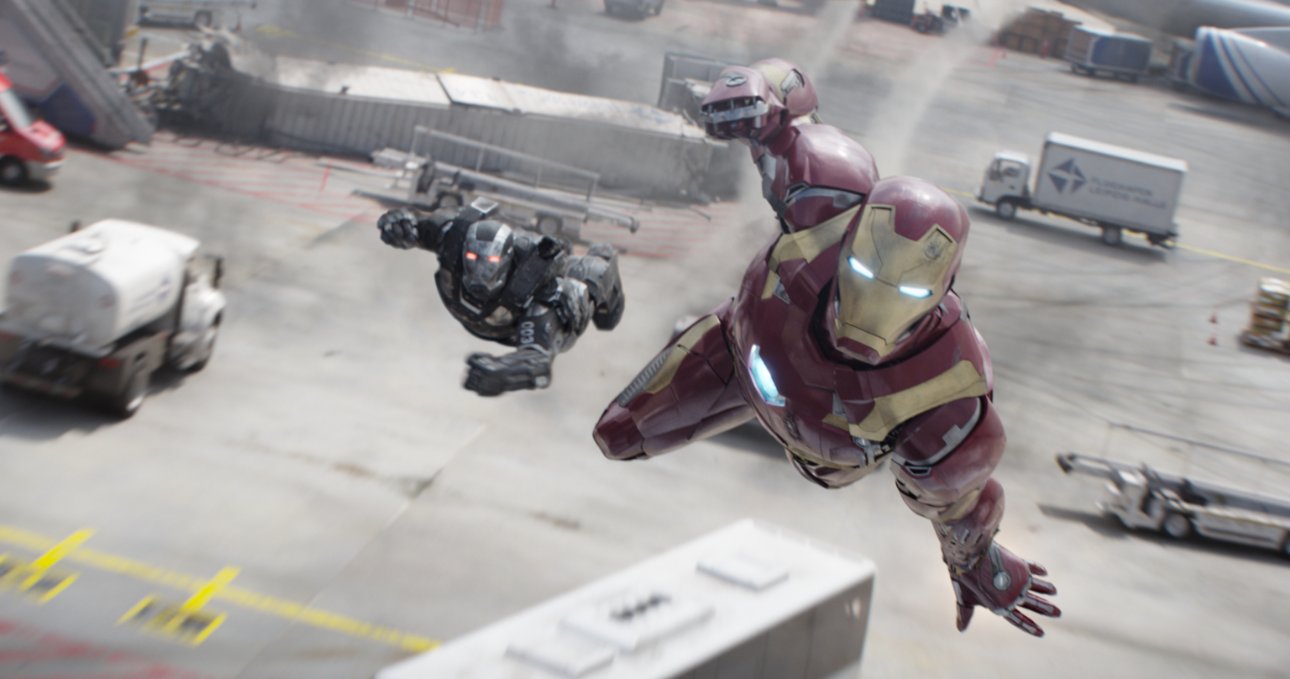
Speaking of complexity, I would be remiss not to praise the tact with which the film handled the primary conflict. One would expect that, despite moviegoers being asked to choose between #TEAMCAP and #TEAMIRONMAN, one side (likely the one led by the titular hero) would clearly be portrayed as being in the right. In reality, the situation isn't nearly so black and white. I went into the theater waving the flag for Team Rogers, ready to follow Captain America into the jaws of doom. By the end of it all... my allegiances admittedly hadn't changed, but I was far less critical of the Stark side of things. There is no character assassination at play here; both of our protagonists have naturally reached this point in their respective arcs over the course of several movies, and it's in Civil War that it all comes to a head. Both make good points and bad decisions, and it's ultimately up to the viewer to decide who's right and who's wrong. Cap and Tony don't disagree and immediately start wailing on each other; there's a genuine air of reluctance and discomfort hanging over the whole thing, the feeling that comes with political disagreements between friends. When punches and repulsor blasts are eventually exchanged, it feels as though it's something our heroes feel they need to do, rather than something they want to do. This unfortunately plays into an occasional feeling of tonal dissonance; as much as I love the extended Leipzig Airport fight, the upbeat tone of the sequence feels completely different from nearly everything else happening in the story. It's a contender for the best action sequence ever featured in a superhero film and I was grinning like an idiot the entire time, but I'd be lying if I said it didn't clash somewhat with the more dour subject matter which surrounded it.


Captain America: Civil War is an organic, grass-fed steak of a film. By which I of course mean it is both natural and substantial. The conflict builds and builds until it boils over into an emotional crescendo that is sure to affect films to come; make no mistake, this is no mere stepping stone on the ever-shrinking road to Thanos. This is a movie that feels like a standalone chapter in the Marvel Universe, something that was built to over the course of previous films and delivers a satisfying payoff. While the pacing and tone consistency do suffer at times as a result of just how much the film has to feature, it still stands that the overwhelming majority of what's here is pure quality. If you're looking for a superhero movie that will make you feel something, I'm hard pressed to name a better candidate than Civil War.

July 18, 2015

REVIEW: Ant-Man


It's only just dawned on me how long I've been waiting for Marvel's Ant-Man to come out. Back before The Avengers even assembled, there was buzz (no pun intended) about Edgar Wright's attempts to helm an adaptation of the classic To Steal An Ant Man comic storyline, bringing Scott Lang and Hank Pym into the Marvel Cinematic Universe. Finally, after suffering countless rewrites and losing Edgar Wright in favor of the much more obscure Peyton Reed, Ant-Man  finally hits the screen as arguably the most fun Marvel film to date.

Scott Lang is an ex-burglar who finds himself released from prison, unable to find a job or see his daughter, Cassie (Abby Ryder Fortson, who is almost distractingly adorable). Desperate to make ends meet, Scott decides to pull off one last job, robbing the mansion of Dr. Hank Pym (Michael Douglas). Lang manages to crack Pym's security, only to find nothing but what appears to be a fancy motorcycle suit. Of course, this suit is far from ordinary, allowing the wearer to shrink in size (while retaining proportionate strength and density). Scott eventually finds himself allied with Hank and his estranged daughter, Hope (Evangeline Lilly) as the three plan a heist on Pym's former company to prevent his protege, Darren Cross (Corey Stoll, turning it up to eleven), from misusing Pym's shrinking technology. It's one part whiz-bang comic book adaptation, one part Ocean's Eleven. If I had to compare it to another Marvel film, I'd have to go with James Gunn's Guardians of the Galaxy; both films stay connected to the rest of the MCU just enough to add to the overall narrative of the world Kevin Feige and company have put together, but they also are disconnected enough from everything else that's going on that they're left free to totally be their own, unique thing.


Paul Rudd is quite good in the role of Scott Lang, but I feel as though he's almost too much of an average joe. The idea behind Lang is that he's just a normal guy, not an elite agent like Hawkeye or a billionaire like Tony Stark. He's pretty good at burgling and working with electronics, but other than that he's wholly unremarkable. While Rudd brings a great sense of deadpan humor to the character, he just doesn't leave quite enough of an impression to be considered really amazing. He's good, but he's not about to generate the same level of audience excitement that one would get from Robert Downey Jr or Tom Hiddleston. On the flip-side, we have Michael Douglas as the former Ant-Man, Hank Pym. Douglas completely nails this part, playing Pym like a cynical old man, retired from a life of dabbling in mad science who now desperately wants to save the world. The film does drag at times, but never when Douglas is on the screen. Evangeline Lilly is quite good as Hope Van Dyne, but I feel as though she didn't quite get the character development she needed. Hank is such an interesting presence, but Hope's entire role can basically be summed up in that, ever since the death of her mother, her relationship with her father is somewhat strained. She bounces back and forth between working with him and being furious at him until their arc is wrapped up quickly and cleanly around the end of the second act. Similarly, I never felt all that invested in the relationship between Scott and Cassie; we know that Scott isn't a bad guy (they explain early on that, even though he DID commit a crime, it was decidedly Robin Hood-esque in nature) and Cassie continues to adore him no matter what. He essentially becomes Ant-Man to make himself feel more deserving of his daughter's admiration, which is fine, but it doesn't add anything to their subplot. There is literally no moment in Scott Lang's story at which point his relationship with his daughter is at stake; actually getting to see her and pay child support is what motivates him to invade Pym's home in the first place, but it's not like his ex-wife will grant him unlimited visiting rights now that he can talk to ants.


Filling the role of the villain, we have Corey Stoll as Darren Cross. On one hand, I think this is a terrible villain. He's got next to no depth behind the usual generic greed, ambition, and daddy issues that come with being a protege-turned-traitorous CEO. On the other hand, Stoll is just so much fun to watch in this role. It's not exactly a deep character, but the amount of maniacal cheese crammed into this performance saves it from being yet another pitiful Marvel villain alongside Malekith and Ultron. It's mentioned that Pym Particles (the secret to Hank Pym's size-altering formula) can have an adverse effect on the human mind, when the user is not properly protected. This basically gives Stoll full range to act as goofy and pulpy as he wants, and by God does he go all-out. This is definitely one of those love it or hate it kind of things, but I personally thought it was loads of fun, if not especially deep. In a similar camp is the trio of crooks who help Scott pull off various operations throughout the movie (Michael Peña, David Dastmalchian, and Tip "T.I." Harris); they provide the goofier comedic relief, compared to Rudd and Douglas' more dry, deadpan delivery. I found these characters to be really well-written and likeable, never stepping over that line between funny and annoying. However, like I said, these are the clearly designated comedic relief; if you don't find them funny, they serve little purpose in the grand scheme of things.

As much as I should praise the writing, I feel as though this may be the most visually interesting Marvel movie to date (aside from Guardians of the Galaxy); while the CGI is noticeable, the cinematography keeps things from looking like just another Summer blockbuster. The shrinking scenes in particular are a feast for the eyes, making for some of the most creative action sequences I've ever seen in a superhero film. It's got a wholly unique look and feel to it, setting it apart from what one might expect out of the MCU these days. At this point, Marvel Studios is basically a money-making machine; by no means do they have to really step outside the box when it comes to visuals or cinematography. If they wanted, they easily could have stuck to a bland, simple formula and still produced something that would go on to be hilariously profitable. Bland and simple, but profitable. However, there is noticeable effort to be found in the way this movie was put together, and I feel as though that's worth a lot.


Ant-Man has managed to succeed in that oh so important field where Age of Ultron failed; it actually lived up to the hype. I honestly didn't know what to expect going in; I was excited, of course, but the number of changes this movie had gone through made me just a tad worried. However, any and all of those fears turned out to be completely unfounded; this is definitely a strong contender for the best film of Marvel's Phase Two, easily landing amongst the cream of the crop of the MCU as a whole. While it's not a flawless feature, it more than makes up for it with great performances, imaginative sequences, and just being loads of fun in general.