Showing posts with label Captain America. Show all posts

May 3, 2018

REVIEW: Avengers Infinity War


Well, it's finally here. 10 years after Iron Man kicked off the modern superhero craze, 6 years after the first Avengers teased this particular storyline in its post-credits stinger, and just over two months since Black Panther set all those impressive box office records that this is inevitably going to demolish; Avengers: Infinity War is finally upon us. There are many who view this as the grand finale of the Marvel Cinematic Universe, the designated jumping-off point for anyone (like myself) beginning to feel the strain of superhero fatigue. It's taken 18 movies over the past decade to get to this point, so it's understandable if it's all starting to feel like a bit much nowadays. Having at long last seen Infinity War, I can safely say that Joe and Anthony Russo have accomplished the impossible; not only have they crafted a blockbuster with over 30 main characters that doesn't feel like an incoherent mess, they have reignited my excitement for the latent potential of the MCU, leaving me to eagerly await whatever comes next.

The film begins directly after the post-credits scene of Thor Ragnarok, as we find the mad titan Thanos (Josh Brolin) making his way across the galaxy collecting the ubiquitous Infinity Stones, six glowy ingots that each control some basic element of existence. With all six stones, Thanos would possess the power of a literal god, a power he intends to use to wipe out half of all living things in the universe (all for the supposedly-altruistic goal of restoring cosmic balance, naturally). As one might expect, his plans put him in conflict not only with the recently broken-up Avengers, but with the Guardians of the Galaxy as well. What follows is a two and a half hour long event, taking us from the streets of Manhattan to the far reaches of space, and right about now is probably a good time to mention that there will be mild, implicit spoilers from this point onward. I'm not going to be outright stating what happens to whom, but this isn't the kind of thing you'll want to read if you intend to go in totally blind. So once more, for the people in the back:

SPOILER ALERT: the remainder of this Review reveals certain plot elements of Avengers: Infinity War!


The most immediately striking thing about this movie, for me, was how smartly put-together it was. When describing this movie, it's understandable to assume it would sail about as smoothly as the Titanic; it's got over 30 superheroes in it and acts as a sequel/finale to 17 other movies (I'm not counting Ant-Man since Scott Lang isn't present here), all while acting as a part one to it's own finale. Balancing a stage full of spinning plates isn't even an apt metaphor, it's more like the Russos are balancing live tigers on top of lit sticks of dynamite while riding a tilt-a-whirl. There's no shortage of things that could go wrong with a situation like this, but it's obvious that everyone involved in the production of Infinity War was perfectly cognizant of these possibilities and did everything in their power to avoid making any fatal mistakes (not unlike a certain Sorcerer Supreme).

I've seen a fair share of critics accuse this film of being an exercise in excess, and I can only assume said critics are completely new to the superhero genre. Infinity War shows a frankly miraculous level of restraint in how it doles out its eye-candy; there's no headache-inducing, nigh-incomprehensible action bukkake here like you'd find in Age of Ultron or X-Men: Apocalypse. We aren't given an extended sequence where all 30+ characters attack Thanos at the same time, reducing the screen to an eye-melting visual cacophony of CGI laser beams; instead, everyone is divvied up into teams and given something important to do. Everyone has a plot line to contribute to and, as such, everyone feels as though they matter to some degree. Naturally some characters are more prominent than others (Doctor Strange and Thor play much bigger roles than Okoye and the Winter Soldier, for instance), but no one really feels completely tertiary or useless. It doesn't revel in its own scale this early on, not while there's still half a story left to be told in next year's Avengers: Untitled (a daring, but unique naming convention, if I do say so myself).


The filmmakers knew that, going in, all of our most pressing questions would involve Thanos. All he's done for the past decade is sit in a chair, so they waste no time at all in establishing him as a credible threat. How do they do this? By showing him beating the incredible Hulk (Mark Ruffalo) into submission with nothing but his bare hands in the first five minutes of the movie. The character that has been a trump card for essentially every film he's appeared in is dispatched in the very first scene and doesn't appear again for the rest of the movie (fake trailer shots like the one above are a trend I wholeheartedly endorse, incidentally). The inevitable rematch is something we're denied until the next Avengers film comes out; while some may find this unsatisfying, all it does is make me even more excited for next May.

I also appreciated how Infinity War refuses to waste its audience's time. We've waited this long to get here, so there's no justifiable excuse for any filler. There's a scene near the end of the first act where a broken and battered Thor (Chris Hemsworth) comes across the Guardians of the Galaxy. After an offhand mention that Gamora (Zoe Saldana) is Thanos' daughter, Thor begins to dramatically advance on her while the other Guardians try to fast-talk their way out of a godly beating. Things grow tense for just a moment, only for Thor to pat Gamora on the shoulder and remark "family can be tough". In a lesser film, we'd surely be subjected to a 5-10 minute action sequence where Thor fights the Guardians of the Galaxy over a misunderstanding. It would accomplish nothing beyond padding the runtime with more unnecessary action and feel like a trite waste of our time which, in a movie that's already well over two hours long, is something we cannot abide. Instead, Infinity War makes the mature choice to forego mindless action in favor of a small character moment. It knows exactly what it wants to accomplish and adjusts its priorities accordingly; we've already had entire movies about Black Panther (Chadwick Boseman) and Spider-Man (Tom Holland). This one is all about Thanos.


With the recent addition of characters like Killmonger, Ego the Living Planet, and the Vulture to the MCU pantheon, there've been rumblings that Marvel's supposed "villain problem" is finally over. Nowhere is this better illustrated than in Infinity War's handling of Thanos; Josh Brolin is far and above the breakout star here, delivering a performance that more than lives up to nearly ten years of hints and teases. I haven't been this taken with a villain performance since Heath Ledger's turn as the Joker in The Dark Knight, screenwriters Christopher Markus and Stephen McFeely have somehow found a way to take a giant purple cartoon character who has done nothing but sit in a chair for the past decade and turn him into the most nuanced Marvel antagonist this side of Loki (Tom Hiddleston). I've seen a lot of people praising Thanos' motives as being relatable, which I honestly don't understand; his motivation for enacting a universe-wide culling is essentially to preserve resources and vastly improve the quality of life for those who survive (rather than an obsessive infatuation with Lady Death, as seen in the comics). His logic is inherently flawed (considering he could just make more resources appear with a snap of his fingers), but then that's sort of the point; he is the mad titan, and the film makes it perfectly clear that Thanos is insane. He truly believes in his heart of hearts that he's doing the right thing, that he's the iron-willed savior of life as we know it, and that's what makes him such a tangible threat. He isn't simply evil because (as the misleading trailers put it) murdering billions of people puts a smile on his face. He's the hero of his own story; if you watch Infinity War as a film where Thanos is the protagonist, the seemingly odd structure and pacing suddenly make perfect sense. This is a movie where the main character is the villain. It's got a horrifying, depressing, downer of an ending, unless you're watching from Thanos' perspective, in which case everything worked out exactly the way it was supposed to.

The film also takes an opportunity to put other, less prominent Avengers in the spotlight; after Infinity War, I think my favorite character in the entirety of the MCU may be Thor, which is an insane testament to how far we've come. Between Thor: The Dark World and Infinity War, the God of Thunder has been re-worked from a complete jobber with exactly one joke ("I say mortals, what is this "Twitter" you all speak of? Is it anything like the Casket of Ancient Winters???") into a true king who's lost everything. By the time he meets the Guardians in Infinity War, he's lost his family, his friends, his kingdom, his home, his hammer, and his eye, and we finally get a feel for how all of this senseless loss has affected him deep down. My favorite scene in the entire movie is a quiet moment between Thor and Rocket Raccoon (Bradley Cooper), in which his typical bravado is slowly chipped away as we see him truly begin to process his grief. Chris Hemsworth has truly come into his own with this character and I'm praying to Odin and Frigga and all the powers that be that he's not among the deceased in the next Avengers outing. I also came out really enjoying Benedict Cumberbatch's Doctor Strange, who (much like in Thor: Ragnarok) seems to shine best when he's got some other parts of the MCU to bounce off of. Special kudos must also be awarded to Tom Holland, who feels more like Spider-Man here than in any other MCU film (including his own).


With a budget falling somewhere between $300 and $400 million, Infinity War is easily one of the most expensive films ever made; and boy does it look it (can you imagine how embarrassing it would be if the visuals here were complete and utter trash?). It's safe to say that most Marvel movies don't look bad when it comes to their use of CGI, but this is the first time in a very long while where I've actually been impressed by the visual effects in a blockbuster like this. We've reached a sort of singularity where the visuals all mesh together perfectly, and we start to forget that characters like Thanos are made entirely inside a computer. Spider-Man has lost that offputting, overly-animated action figure look he had in Civil War and Homecoming, and I don't even bat an eye when I see Rocket Raccoon and Groot (Vin Diesel) interacting with a room full of real humans. This is also the first film to be shot entirely with IMAX cameras, so perhaps that distinction added something to the visual fidelity we're left to enjoy. When you're dealing with something of this scale, it's important that the action never feels overly-cluttered, and that's something the visual effects artists completely nailed.

The cinematography (care of longtime Russo collaborator, Trent Opaloch) is also quite good, maintaining the Russos' standard up-close-and-personal approach while (for the most part) ditching the requisite shaky-cam we find in The Winter Soldier and Civil War (I suppose shaking an IMAX camera would be both very difficult and potentially very expensive). One sequence in particular that I absolutely adore happens very early on, when two members of Thanos' Black Order (The Ebony Maw, played by Tom Vaughan-Lawlor, and Cull Obsidian, played by Terry Notary) do battle on the streets of New York with Iron Man (Robert Downy Jr), Doctor Strange, Spider-Man, and Wong (Benedict Wong). The beginning of the sequence, where we see the Black Order's ship descending on Bleeker Street, is shot entirely from street-level; we see the ship for the first time the same time Stark and Strange do, and it's this choice of camera angle (along with the seat-rattling sound design) that makes this sequence so immersive. Imagine being a civilian in a post-Avengers NYC; there's a big donut-shaped spacecraft ominously humming above a residential neighborhood and Tony Stark is running towards it alongside two wizards. Things are about to get real. It's a feeling I haven't gotten from one of these movies since I saw the first Avengers film back in 2012, and I think it's Infinity War's ability to not only recapture that same feeling, but to improve upon it that has me so taken with it.


Really, that sums up my entire takeaway here; Avengers was an unforgettable experience the first time I saw it, but it mostly coasts by on spectacle alone. Once you've seen it, it's never quite as good on repeat viewings (especially when you're at home and not in a theater). Infinity War, on the other hand, has so much more to offer right off the bat; already, I'm able to appreciate it on a level beyond the sheer scale of it all. Despite all my praise, it's not quite a perfect film. There are definitely some who will find the length and pacing exhausting, while others will be disappointed in how much screentime is given to certain characters (you can definitely tell this was made before Black Panther went on to make over a billion dollars, and I'm pretty sure Captain America has less than ten lines in the entire thing), but these minor speedbumps can't change the fact that this is an expertly-crafted event of a film that more than lives up to the hype Marvel Studios has spent so much time building. Anyone dismissing this for not feeling like a standard Marvel movie or requiring viewers to do their due-diligence in keeping up with the MCU canon is completely missing the point of this movie; this is not your traditional Marvel movie. At the same time, those who are quick to write off the numerous character deaths as "inconsequential" fail to realize that, in this situation, it's very much about the journey rather than the destination (mainly because we haven't reached the destination just yet). It should be obvious to anyone over the age of 10 that a number of the characters killed off in Infinity War will return for the next Avengers outing, but that doesn't invalidate this film's contributions to the overarching, multi-film narrative that is the MCU.

Avengers: Infinity War is a dark, daring blockbuster that soundly breaks the modern superhero movie mold while upholding and celebrating all the elements that made the genre the box office behemoth it is today. It's a modern-day Empire Strikes Back; in 20-30 years, when we ask the new generation of filmmakers what movie inspired them to pursue such a career, I would be shocked if at least one of them didn't cite Infinity War as the film that changed their life forever. It's a new high for the Marvel Cinematic Universe, and it made a True Believer out of me all over again. Go check it out.

May 8, 2016

REVIEW: Captain America- Civil War


Out of all of the myriad entries in the monolithic money-machine that is the Marvel Cinematic Universe, I honestly think my personal favorites may be the Captain America movies. Joe Johnston's Captain America: The First Avenger was a delightfully pulpy period piece that, despite its flaws, still wins me over by way of sheer atmosphere and gumption. 2014's The Winter Soldier quickly established itself as the absolute best film the MCU had to offer (a title that has yet to be usurped). Two years later, the Russo brothers are back with Captain America: Civil War. While Winter Soldier continues to be the pinnacle of Marvel excellence, it must be said that Civil War is a strong contender for my personal favorite superhero film to date.

After the collective collateral damage of the Avengers' exploits garners criticism from the world community, legislation is brought to the table that would transfer control of the heroes to a United Nations subcommittee. Naturally, this sows dissent amongst the do-gooders; Tony Stark (Robert Downey Jr) is struck with a hefty dose of  guilt, especially following his involvement in the creation of Ultron, and champions the cause for registration. Meanwhile, Captain America (Chris Evans) has little faith in bureaucracy following the events of Winter Soldier, maintaining the firm belief that red-tape and hidden agendas will lead to corruption and injustice. The former friends find themselves on opposing sides of the law, and the situation is made all the more complicated by the resurfacing of Bucky Barnes, the Winter Soldier (Sebastian Stan). Naturally, Cap wants to protect his old friend, which puts him at odds from the authorities hunting him down. The conflict steadily escalates from a question of ideals to a full-on clash of allegiances, where lines are drawn and alliances are both made and shattered.


To the casual observer, this could easily be mistaken for another Avengers film rather than a Captain America sequel. Everyone short of Thor and the Hulk are present and accounted for, and that's not even counting the new additions of Black Panther (Chadwick Boseman) and Spider-Man (Tom Holland). In terms of scale, this is a much, MUCH larger film than Winter Soldier; though the pacing and tonal shifts can err on the somewhat clunky side, the fact that this film manages to do as much as it does as well as it does is something definitely worthy of praise. As far as Marvel blockbusters go, this is easily a contender for the densest entry yet. For it to end up not only coherent, but also compelling is a testament to the Russo brothers' strengths as filmmakers. 

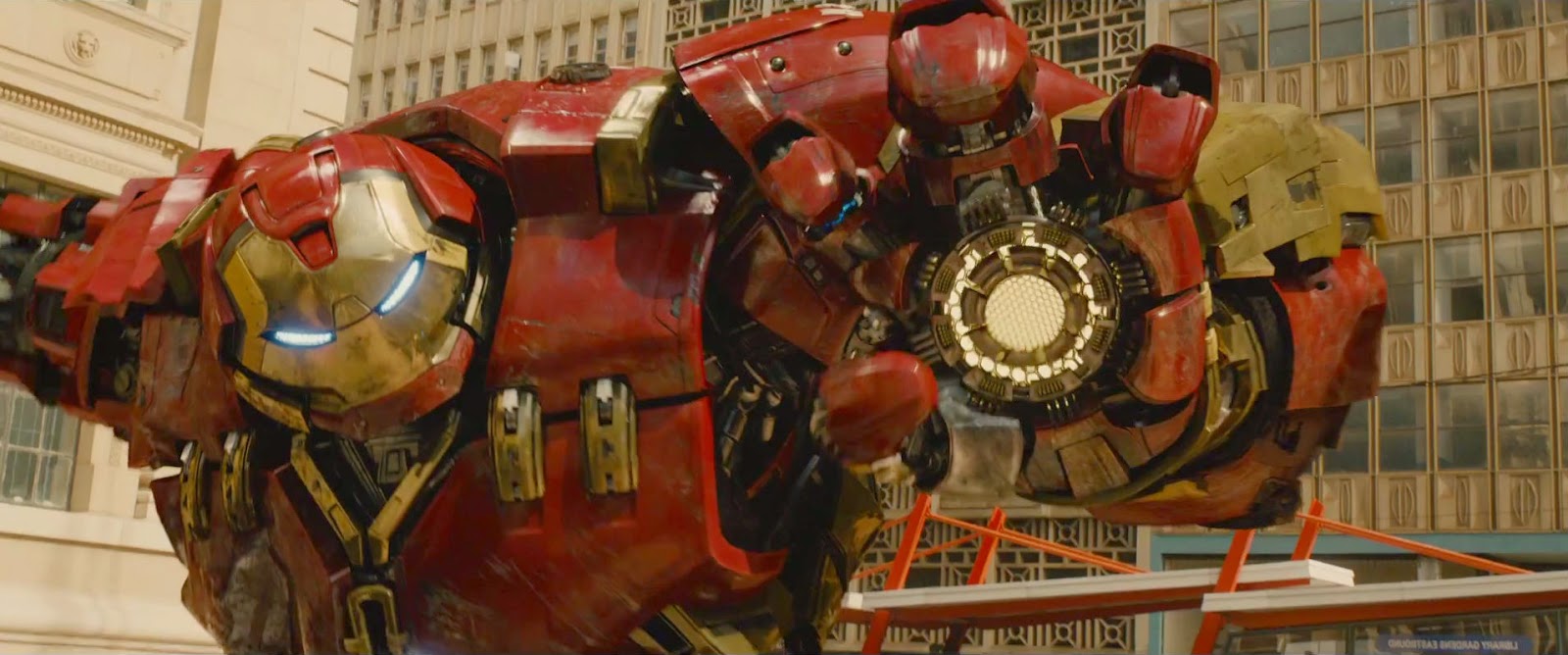
As Winter Soldier proved, the Russos especially excel when it comes to directing action. Within the first five minutes of Civil War, all I could think was how this movie was immediately superior to last year's Avengers: Age of Ultron. The fight choreography on display here is airtight; as cool as it was to see the Avengers storm a HYDRA fortress or for Iron Man to don the Hulkbuster armor, it's a simple fact that well-directed combat between physical actors will manage to out-wow even the flashiest CG effect. The blows are as heavy-hitting as they are fast, and each setpiece displays wonderfully creative examples of each hero's powerset in ways that are sure to make fanboys like myself go giddy with childish delight. The excessive shaky-cam may not sit well with some, but I found the frenetic energy flowed off the screen and into my veins, leaving my heart pounding as the credits rolled. Of course, flashy action is more or less meaningless if we don't care about the people inside the super-suits. Which is why I'm glad to report that Civil War is quite possibly the most emotionally compelling Marvel film to date.


Marvel Studios has always had a knack for strong casting, so it's to be expected that everyone here does a good job. Even with such a talented cast, even with such powerful and endearing chemistry, there are still those who manage to go above and beyond. It feels as though Robert Downey Jr has become comfortable in the role of Tony Stark in recent years; Civil War provides the emotional shake-up that the character so desperately needed. RDJ steps outside of his comfort zone on this one and thrives, imbuing Tony with an intensity not matched since the very first Iron Man film. While the addition of Spider-Man felt somewhat superfluous, Tom Holland gives what is easily one of the best performances in the film; I don't hesitate in the slightest in saying that Holland's portrayal of Peter Parker does the character justice better than any I've ever seen. As much of a Spidey fan as I am, I was surprised to find that the show was stolen not by the webhead, but rather by Chadwick Boseman in his role as T'challa, the Black Panther. Motivated by revenge, T'challa brings an air of intensity and dignity not found in the majority of Marvel protagonists; he carries himself like royalty and doesn't waste his time spitting out one-liners. He's a man on a mission of pride, and he commands the viewer's attention whenever he's on screen. I wouldn't necessarily say I was "excited" or "hyped" for The Black Panther before seeing Civil War, but I certainly am now.


With all the bombastic conflict and in-fighting, it may come as a surprise to some viewers that the film does have an actual villain; filling the role of Helmut Zemo, we have Daniel Brühl. Zemo presents an interesting facet to the film. On one hand, I felt as though he was under-utilized (despite dutifully serving his purpose to the overall plot). The fact that this character is also a far cry from the Baron Zemo of the comics is something that is sure to rub readers the wrong way, at least initially. That said, despite his minimal screentime, he certainly plays a major role in the plot and is truthfully a contender for the best (or at the very least, most effective) villain Marvel has ever put out. The Marvel films very often have a problem with providing effective or interesting antagonists, and Zemo manages to be both, despite having little connection to his inspiration from the source material and next to  no direct interaction with Cap and the gang until the climax.

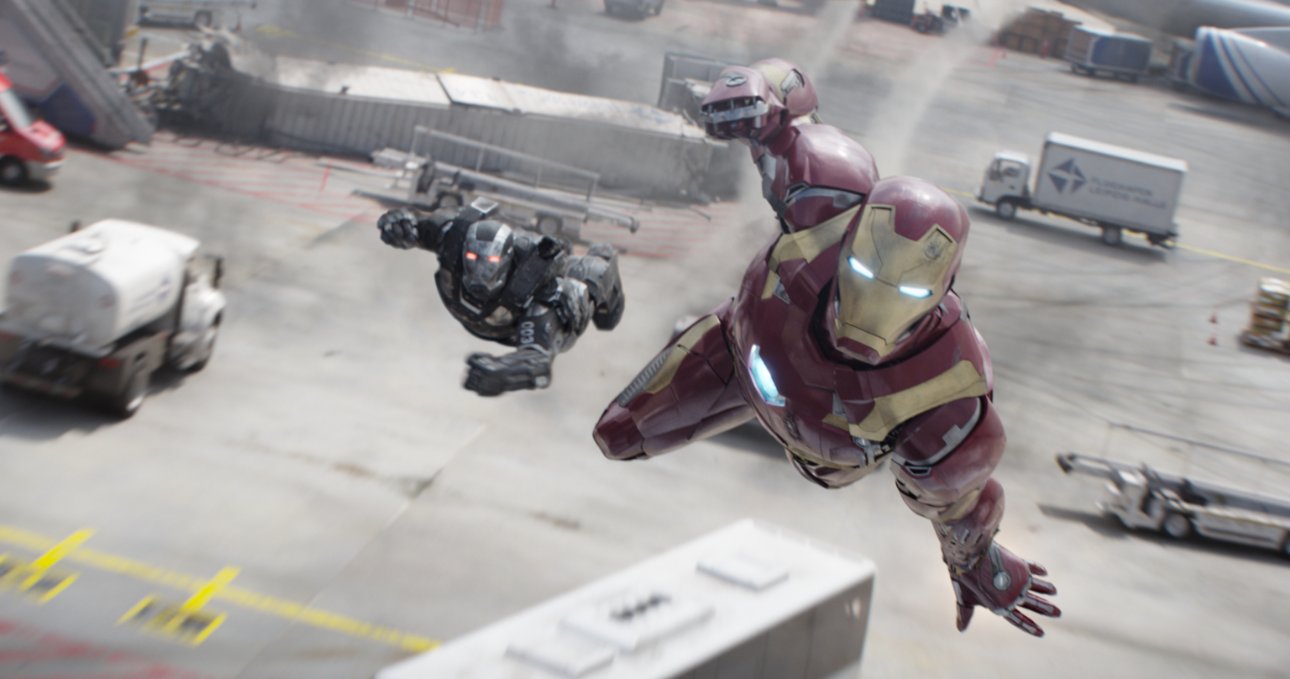
Speaking of complexity, I would be remiss not to praise the tact with which the film handled the primary conflict. One would expect that, despite moviegoers being asked to choose between #TEAMCAP and #TEAMIRONMAN, one side (likely the one led by the titular hero) would clearly be portrayed as being in the right. In reality, the situation isn't nearly so black and white. I went into the theater waving the flag for Team Rogers, ready to follow Captain America into the jaws of doom. By the end of it all... my allegiances admittedly hadn't changed, but I was far less critical of the Stark side of things. There is no character assassination at play here; both of our protagonists have naturally reached this point in their respective arcs over the course of several movies, and it's in Civil War that it all comes to a head. Both make good points and bad decisions, and it's ultimately up to the viewer to decide who's right and who's wrong. Cap and Tony don't disagree and immediately start wailing on each other; there's a genuine air of reluctance and discomfort hanging over the whole thing, the feeling that comes with political disagreements between friends. When punches and repulsor blasts are eventually exchanged, it feels as though it's something our heroes feel they need to do, rather than something they want to do. This unfortunately plays into an occasional feeling of tonal dissonance; as much as I love the extended Leipzig Airport fight, the upbeat tone of the sequence feels completely different from nearly everything else happening in the story. It's a contender for the best action sequence ever featured in a superhero film and I was grinning like an idiot the entire time, but I'd be lying if I said it didn't clash somewhat with the more dour subject matter which surrounded it.


Captain America: Civil War is an organic, grass-fed steak of a film. By which I of course mean it is both natural and substantial. The conflict builds and builds until it boils over into an emotional crescendo that is sure to affect films to come; make no mistake, this is no mere stepping stone on the ever-shrinking road to Thanos. This is a movie that feels like a standalone chapter in the Marvel Universe, something that was built to over the course of previous films and delivers a satisfying payoff. While the pacing and tone consistency do suffer at times as a result of just how much the film has to feature, it still stands that the overwhelming majority of what's here is pure quality. If you're looking for a superhero movie that will make you feel something, I'm hard pressed to name a better candidate than Civil War.

May 3, 2015

REVIEW: Avengers- Age of Ultron


After months upon months of anticipation and an oversaturation of over-showing advertisements, the second of Marvel's Avengers team-up movies has hit US theaters in the form of Avengers: Age of Ultron. I must admit, my hype for the film had slowly diminished over time; I was shaking with anticipation upon walking out of James Gunn's phenominal Guardians of the Galaxy last summer. However, between the various trailers (which show far more than they should) and the knowledge that the next time the Avengers assemble (albeit years from now in the two-part Infinity War), the result will be bigger and better in literally every aspect, my excitement for Age of Ultron steadily decreased from "frothing at the mouth" to "just another movie I want to see". Unfortunately for the film, my expectations didn't follow such a downward slope, otherwise I probably would have appreciated what I watched more than I did. Don't misunderstand me, I didn't dislike this film; hell, I just got back from my second (and likely not last) screening. I was, however, somewhat underwhelmed. I didn't leave the theater in the same state of pupil-dilating delight that Joss Whedon's first Avengers left me in. This isn't a bad movie, but I feel as though it certainly could have (and indeed should have) been better.


For anyone who's been under a rock for the past year or so, the plot follows the Avengers (Robert Downey Jr, Chris Evans, Chris Hemsworth, Mark Ruffalo, Scarlett Johansson, and Jeremy Renner) dealing with the genocidal AI known as Ultron (voiced and mo-capped by James Spader). Like many robots designed to protect humanity, Ultron sees the human race as a threat to itself and deduces that the only logical way to keep people from constantly killing each other is to wipe them all out. By his side are Wanda and Pietro Maximoff (Elizabeth Olsen and Aaron Taylor Johnson), twins from the European nation of Sokovia who volunteered to be imbued with the powers of reality manipulation and super speed for a chance to gain revenge against one Tony Stark. As one would expect from a Marvel movie at this point, the cast also includes Samuel L. Jackson reprising his role as Nick Fury and Paul Bettany pulling double duty both as Tony Stark's AI assistant, JARVIS, and as the enigmatic Vision. New to the MCU is Andy Serkis, appearing as Ulysses Klaue, a black market arms dealer whom fans of the comics will recognize as arch-enemy of the Black Panther. With an ensemble this large and diverse, it can be difficult to ensure that everyone gets enough screentime and development; it can be a little imbalanced here and there (as one would expect, we spend much more time with Iron Man than we do with Thor or Hulk), but for the most part it's pretty even.


The alumni have all long since settled into their respective roles and play them well. Honestly, all of the performances here are great, the only issues arise from the writing. It's sharp and clever at  best, utterly cringe-inducing at the worst. Captain America went through a significant deal of development and growth in the stellar Winter Soldier; here, he is relegated to occasionally give a teamwork speech and be the butt of jokes about how he's an old-fashioned boyscout who doesn't like naughty words. Tony Stark was left in a very interesting place at the end of Iron Man 3, rethinking his philosophy and mission statement when it came to being a superhero, deciding not to rely so heavily on technology. In Age of Ultron, literally every decision he makes is a bad one (even the choices that end up working out in the end are all horribly irresponsible in context). Honestly, it's kind of shocking just how incompetent Iron Man is for the entirety of this film, in particular during the already iconic Hulkbuster fight. Instead of coming off as a well-intentioned hero who makes a mistake, he's written like a wannabe messiah with absolutely zero foresight. Granted, there IS a plot point that explains this behavior (or at least the aspects of which result in Ultron being born), but that doesn't magically turn this detail into a point in the film's favor. If the intent was to streamline the process of making him into an almost-antagonist in time for Captain America: Civil War, then mission accomplished. Thor has barely any screentime when he's not hitting things with his hammer and Hulk is now involved in an awkward and overly-forward romance with Black Widow (because if there's one thing audiences love in superhero movies, it's unnecessary romantic subplots). Bruce Banner sees himself as a monster because of the beast lurking within him, but the reason that Agent Romanoff thinks of herself as something of a "monster" is so baffling I'm honestly surprised it made it into the final cut. I honestly don't understand the logic in taking the only female Avenger to get so much screentime (a hardened secret agent with a bloody, shadowy past as an assassin) and relegate her to the role of team denmother, able to soothe the savage beast with her gentle femininity (when she's not throwing out witty quips about how she's the girl on the team of "boys"). In short, literally every main character here is better written in their own movies. Widow and Cap were better in Winter Soldier, Tony and Rhodey were better in Iron Man 3, and so on. All that said, the two characters who completely steal the show here are unquestioningly Renner's Hawkeye and Bettany as The Vision.

Hawkeye was infamously underdeveloped in the first Avengers and, in a stroke of good decision making, Whedon has remedied this by giving him entire scenes of nothing but pure character development. It's greatly appreciated and helps cement Hawkeye as something more than "that guy with the bow and arrows who's on the same team as the Mighty Thor for some reason". Renner plays the role as incredibly down-to-earth and it works perfectly; this is a normal, human guy who happens to be really good at archery and that is why he works alongside Hulk and Iron Man. As I mentioned, the other highlight was Paul Bettany as The Vision. The Vision is an intriguing character, in that he is both above and outside of humanity, yet was born of humanity. He feels no ill will towards anything, even Ultron, giving him a distinctly Christlike tone; he is the bridge between the synthetic and the organic, offering insight from both perspectives as a living being and as a machine, born in a lab. Aside from the fantastic performance by Bettany, his powerset is absolutely a blast to watch in motion, so a gold star for The Vision, the peaceful, optimistic Yang to the villainous Ultron's Yin. And speaking of Ultron, we come to my biggest gripe with the movie...


In the comics, Ultron is an advanced AI developed by Dr. Hank Pym (better known as the first Ant Man). Designed to protect the human race, Ultron deduced that the only way to save mankind from itself was to destroy all life on Earth entirely. In the source material, Ultron is a hateful, spite-filled presence and is one of the absolute greatest threats to the planet. In the movie, he is a snarky android who spouts one-liners and fails to ever come off as a genuine threat. I know it's not necessarily fair to compare the comic books to the film; these are two different interpretations through two different mediums. However, that doesn't change that the MCU portrayal of Ultron is one of the most pointless villains to exist in a modern Marvel movie. He's not quite as bad as Thor: The Dark World's Malekith the Accursed, but Loki, Kingpin, Alexander Pierce, and even Thanos (for the cumulative ten minutes of screentime he's had so far) completely blow Ultron's dumb robot eyebrows off of his oddly expressive face. All that said, no disrespect is meant to Mr. Spader; he does a bang-up job in the role and his voice sounds fantastic coming out of a robot that intends to end all life on the planet. As I mentioned, none of the problems with this movie have to do with the cast so much as they have to do with the writing. Instead of loathing humanity with a deep, painful hatred, Ultron makes sarcastic remarks. There's a half a handful of moments when he actually sounds either genuinely threatening or intriguingly vulnerable, but these interesting character moments are too few and far between to salvage this wreck of a villain. His plan is idiotic and he carries himself in a way that makes it seem like he's one musical cue away from breaking into a Disney villain song. James Spader is awesome, but Ultron is decidedly not.


For all my complaining, it probably sounds like I hated this movie; I don't. I actually quite like it. I don't love it the way I love Winter Soldier, or Guardians of the Galaxy, or even The Avengers, but that doesn't mean it's horrible. Truthfully, I was just disappointed; it feels like this movie could have been so much more. It's already long (just over two hours long, to be more specific), but an extended edition would really help patch some of those holes and add some lean meat onto this shallow summer blockbuster. I feel the same way about Avengers: Age of Ultron that I felt about Iron Man 2 when I first saw that years ago; it was an enjoyable time, I definitely recommend seeing it in a theater with a good sound system and a fun, responsive crowd. That said, it simply felt like a preamble; Iron Man 2 was nothing but build up to The Avengers, Age of Ultron was a bunch of build up to Marvel's Phase Three. It's the Avengers, so you're going to have a good time. But don't expect anything revolutionary.