Showing posts with label classic. Show all posts

January 20, 2018

REVIEW: Batman (1989)


It's pretty insane when you think about just how long the superhero genre has been around. Movies like those in the MCU and DCEU feel like a relatively recent trend, but the groundwork for what we've come to know as the modern superhero genre was laid decades ago with films such as today's subject, Tim Burton's 1989 Batman film. It's important to understand just how revolutionary this adaptation of DC's dark knight was at the time. Aside from comic readers, most associated Batman with the 60's Adam West show, despite how comics like The Killing Joke and The Dark Knight Returns had long since moved past the camp of the Silver Age. There was strong demand from the fanbase for a darker, more modern take on the character; hot off the success of Beetlejuice, Tim Burton was brought on to direct, and the rest is cinematic history.

Despite being one of the founding fathers of the modern superhero genre, the plot here is hardly the stock origin story most would expect. Really, we get more focus on the origin of the Joker (played famously by Jack Nicholson) than we do Batman (Michael Keaton). After a mob enforcer by the name of Jack Napier falls into a vat of toxic chemicals, he resurfaces under the ghoulish guise of the Joker. Feeling jilted by the amount of press given to the mysterious Batman, Joker sets out on a spree of terror, poisoning the populace of Gotham City. It's up to the caped crusader (with a little help from Vicki Vale, played by Kim Basinger, and his loyal butler, Alfred, played by Michael Gough) to foil the Joker's sinister schemes once and for all. Simplistic enough conceptually, but the real meat of this film lies in the way that this story is executed.


As I mentioned, such a dark, stylistic approach to a superhero property was all but unheard of at the time of the film's release. Compared to Richard Donner's squeaky-clean Superman (which came out a decade earlier), Batman represents a bold new shift in the boundaries of the genre. Looking behind the scenes, it's clear that some people (particularly hairdresser-turned-producer, John Peters) attempted to go a bit too far with this mindset; the Batsuit was originally meant to include footwear sponsored by Nike, and Keaton's iconic "I'm Batman" line originally contained a few more expletives than the finished product we see today. It's for reasons like these that it's important for studios to bring visionary creators on board, in order to even out the money-men. Enter Tim Burton; to this day, I'm still hard-pressed to name a director better-suited for this particular job. Despite this being a massive blockbuster that endured years of rewrites and executive meddling, Burton's distinct style still shines through, and that is what I feel makes Batman such a memorable entry into the annals of film history. Just about anyone can make a film about a superhero who dresses like a bat and fights crime, but only Tim Burton could have made this film the way that it turned out (much like how Bill Finger is responsible for making the original Batman into something more than another disposable pulp vigilante).

Gotham City (care of production designer Anton Furst) positively reeks of Burton's trademark flair. We're treated to clashing architectural styles, gothic vistas, and more gargoyles and statues than any planning committee would know what to do with. Perhaps this is just a side-effect of nostalgia (since this and the 90's Animated Series were my official introduction to the character of Batman), but whenever I think of Gotham City, this is the Gotham I envision. A bleak, grey, foggy hellscape, perpetually stuck in a sort of anachronistic limbo between the roaring 20's and the 1980's. Aside from the Prince music, there's absolutely nothing here to date this film; as is expected of early Burton, he creates a fantasy dreamscape and invites the audience to lose themselves in his world. While some may say that The Dark Knight is far more in-tune with the spirit of the source material from a character standpoint (and I'd be inclined to agree), I think it's safe to say that this film is far more fascinating stylistically. The Dark Knight will forever take place in 2008 Chigago, while the events of Batman unfold in a Gotham City ripped straight from the Bronze Age of DC comics.


That's not to say that this is a perfect interpretation by any means; there are a number of changes from the source material that are sure to make comic readers' heads spin (the most egregious of which is Batman's willingness to flat-out murder any criminals he comes across), but I feel as though these are minor details that don't really detract from what is otherwise a very well-made film. The atmosphere here is tight enough that no amount of adaptational inconsistency can really totally shatter it. It's of course helped along by what might just be Danny Elfman's finest work as a composer. The score here is just magnificent, and is the song that comes to mind whenever I think of Batman (even moreso than the Adam West theme). Of course, all the atmosphere in the world isn't worth much if the cast is lackluster; fortunately, that's not the case in the slightest.

Michael Keaton's casting as Bruce Wayne was the subject of widespread controversy back in the day; after a series of primarily comedic roles in films such as Mr. Mom, fans assumed Keaton would be a poor choice for the dark knight. The reaction was so vitriolic that petitions were actually formed to have the role recast (keep in mind, this was well before the heyday of the internet). Fortunately for all involved, Keaton gives what may be the strongest performance in the entire film. As Bruce Wayne, he is quiet and reserved. He keeps all of his emotions bottled up inside and comes off as a man who appears totally unassuming, despite his lavish background. Under the cowl, Keaton's Batman is cool and collected, always in control of the situation. Compared to other live-action Batmen (namely Bale and Affleck), Keaton feels by far the most natural. He doesn't need to growl or scream to instill fear in the hearts of criminals (who are, after all, a superstitious and cowardly lot), and this innate sense of confidence helps elevate the character to the status of superhero (despite not being able to turn his neck around). This is a character who feels much more comfortable underneath his cape and body armor than he does in a tuxedo, and Keaton's performance conveys that dual identity to a T.


On the other hand, we have Jack Nicholson as the Joker. This is the true star of the movie; his origin gets the most attention from the plot, he steals every scene he's in, and he even gets top billing over the lead actor. A common criticism of Nicholson's performance is that he doesn't seem to act like the Joker, so much as he just acts like himself in clown makeup. While I can definitely see this (for as enthusiastic as he gets, he never really disappears into the role the way Keaton does), it doesn't change the fact that he gives a dynamite performance as one of the most iconic villains of all time. Burton really hones in on the narcissistic side of the Joker's personality; everything he does is motivated by ego. He is a villain who, in every sense, wouldn't exist without Batman. At the same time, it was a young Jack Napier (rather than the seminal Joe Chill of the comics) who killed Bruce Wayne's parents, creating a sort of hero/villain Ouroboros. While it's not a 100% accurate portrayal, I'd say that it's arguably the perfect performance for this interpretation of the character. He's got a great look, a great laugh, and contrasts brilliantly as a foil for our titular hero. This is a film full of strong performances and likeable characters, but it's obvious that Batman and the Joker are far and above the main event here.


I hadn't watched this movie in years and, upon revisiting it, I'm glad to say that it holds up. There are a few nitpicky issues I had concerning elements like the sound mixing, some of the editing, and of course the inconsistencies with the source material, but I feel as though I can safely say that this is an iconic classic that holds up, even without the help of nostalgia-goggles. When this film came out, it was revolutionary for its dark tone and clearly-defined stylistic choices. Nowadays, in a world of committee-planning and cinematic universes, it's refreshing for those same reasons. As much as I love the MCU, every film is basically a comedy at this point and the Guardians of the Galaxy films are the only ones with any real amount of dynamic color or directorial flair. The DCEU positively reeks of Zack Snyder's distinctive influence, but in a way that hampers any character who doesn't mesh well with washed-out colors and pseudo-intellectual platitudes. Batman is the perfect blend between blockbuster comic book adventure and a director's singular vision. It's a product born of all the right kinds of compromises, and I feel like many modern studio executives could (and should) look back to it for inspiration. If you somehow haven't seen this film by now, right your wrongs as soon as possible. Just make sure you stop after Batman Returns unless you've got something potent in your cup.

If you liked this, be sure to check out The Jurassic Mark Podcast!

January 12, 2018

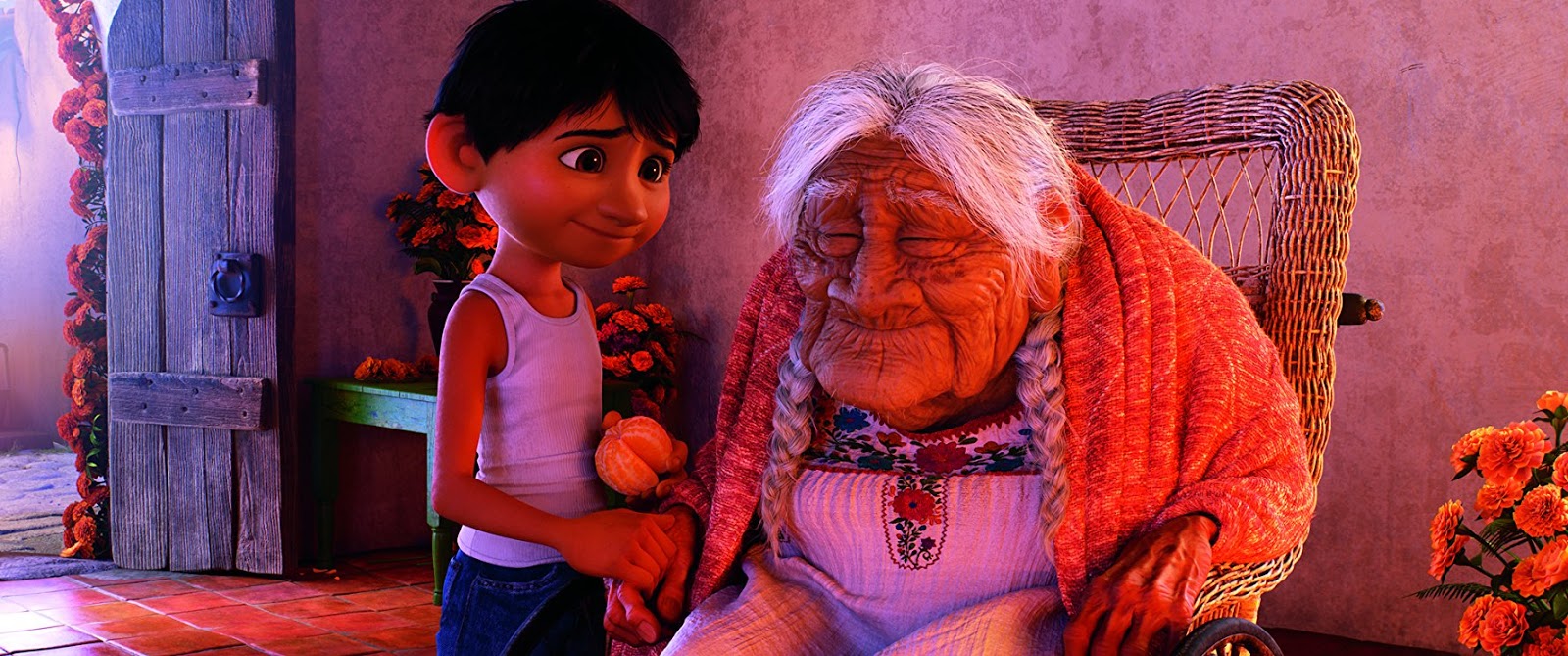
REVIEW: Coco


I know, this is over a month late, but Coco honestly couldn't have come out at a worse time for me; it released right around Thor, Justice League, The Disaster Artist, and Star Wars, and since then I've experienced multiple holidays, a bout of wintertime sickness, and a bomb cyclone (whatever that is). With everything I had on my plate, I just couldn't find time to get out and see Pixar's latest film until just this week (in what I'm fairly certain was the absolute last showing in my hometown). On the bright side, I'm overjoyed I got to catch this one before it left theaters (unlike some other animated films); I've been a Pixar fan from the day I was born, and it always feels weird whenever I miss the theatrical run of anything that isn't Cars. However, I'm also left with the bittersweet realization that last week's 2017 Retrospective is already outdated. I wish I had seen Coco when it released back in November, or at least before I started compiling my rankings of everything I watched last year. Had I not put it off for so long, I can guarantee that it would have landed right next to Logan as one of my favorite films of 2017; trust me, it's just that good.

Set in the Mexican town of Santa Cecilia, the story follows a young boy by the name of Miguel Rivera (Anthony Gonzales). An aspiring musician in a family of shoe-makers, Miguel dreams of following in the footsteps of his idol, Ernesto de la Cruz (Benjamin Bratt); unfortunately for him, music has been banned in the Rivera household ever since his great-great-grandfather left his wife and child to pursue a career in the music industry. After a family spat on Dia de Muertos (The Day of the Dead, a Mexican holiday where offerings are made to the spirits of departed family members), Miguel finds himself trapped in the Land of the Dead amongst his ancestors; if he doesn't receive a blessing that allows him to return to the Land of the Living before sunrise, he'll be stuck knee-deep in the dead for all eternity. What follows is a colorful, emotional adventure that explores the messy, complicated relationship between familial responsibility and duty to one's own dreams and passions.


I'll admit, I wasn't exactly excited for Coco in the months leading up to its release. The character design didn't thrill me (particularly the choice to add eyeballs to the skeleton characters) and the plot seemed extraordinarily basic for something from Pixar. In hindsight, I wasn't being entirely fair to Coco; it works much better from a visual standpoint now that I've actually seen it in practice (to the point that it might just be the most visually-impressive Pixar film to date) and the story (as I should have expected) had much more to it than your standard "child gets lost in fantastical place, has to race against the clock and learn a lesson" plot. 

It feels like so many movies of 2017 (even ones I've enjoyed) run into the same problem of either falling into a painful slump during the second act or outright losing all steam by the time the climax rolls around; Coco, it seems, has the opposite problem. This is a film that takes quite a bit to properly get going; until Miguel enters the Land of the Dead, I was honestly getting a bit worried. The film opens with an upbeat first-person narration that doesn't return at any other point in the story, so it ends up feeling like it's specifically addressing the kids in the audience who don't know anything about Mexico. It comes off as so cheery and overly-earnest that it comes dangerously close to crossing the line into "anyone over the age of 12 is going to feel embarrassed to be watching this" territory, but that luckily all changes once Miguel is flung into the afterlife. From that point on, the film only gets stronger as it goes, culminating in one of the most emotionally-resonant third acts I've seen all year. Again, I'm referring to the same year that gave us Logan, so keep that in mind.


Despite its almost overly-kid-friendly opening, the atomosphere of the movie matures alongside its protagonist. Miguel starts off as a rambunctious, impudent kid; at 12 years old, he's right on the verge of casting off childish flights of fancy in favor of more adult responsibilities, hardly a smooth transition for most young people. The idea that, sometimes, you can't be whatever you want to be is a bitter pill to swallow, especially when it feels as though your own family is standing in the way. The conflict between Miguel wanting to become a musician and his elders wanting him to take up the family trade isn't exactly the most original, but it's how it's handled here that makes it stand out. Unlike The Last Jedi, this is a movie where characters actually sit down and talk with one another; both sides make valid and flawed arguments, and sometimes they don't reach a consensus that makes everyone happy. It's not an ideal situation, but the emotions at play make it a relatable one; whether or not we agree with these characters' stances, we can 100% understand and sympathize with how they came to these conclusions, and that attention to detail makes all the difference in the world.

As the plot continues and the tone grows more somber, we see the shift in Miguel's priorities (as well as those of his ancestors, who want nothing more than for him to give up his dream of being a musician and return safely to the Land of the Living). Every character has a lesson to learn, so the message of the story never feels one-sided. We don't get a moral that reads like a lecture ("Always listen to your elders, they know what's best for you"), but we also don't get a moral that feels like a cynical appeal to a sense of prepubescent rebellion ("Up yours, old man! What the world really needs is to learn how to dance!"). Instead, we get something more in the middle; you should always be willing to do anything for your family, but your family should never be willing to let you give up on your dreams. Instead of feeling wishy-washy, it strikes just the right chord, presenting two flawed-yet-understandable arguments and reconciling them in classic Pixar fashion.


I suppose I should talk about what inspired me to give Coco a watch after over a month of procrastination. While I was off seeing Justice League like a sucker, my compatriots at The Long Run Podcast went to see Coco (side note, fellas, what gives? Y'all had a month-long head-start on me and I put out my Coco Review first? Get it together). Their reactions floored me; here I was, looking at a movie I expected to measure up alongside Pixar's more lukewarm entries like Brave and The Good Dinosaur, only to be told that this was the most emotionally-impactful Pixar film since Toy Story 3. That this movie contains scenes as tear-jerking and sob-inducing as the first 5 minutes of Up. That, not only was this one of the best films Pixar has ever put out, but that it was one of the best films of the year. So yeah, high praise.

I entered the theater, expecting some of those good ol' Pixar feels. I left not-quite two hours later, whistling mariachi music and trying to hide how hopelessly bleary my eyes has become. I need to reiterate, this is not your stock plot about an average kid who no one understands. This is a tale about life, death, family, tradition, and legacy. It's a story about how what we amount to, at the end, is the memories we leave behind with those we've loved in life. Coco pulls no punches and goes right for the jugular; when you're sitting there during the third act, quietly weeping into your popcorn, you can rest easy knowing that Lee Unkrich and company have earned every single teardrop.


I won't mince words; Coco is my second-favorite film to come out in 2017 and I hate that I procrastinated so long in seeing it. It's a true masterpiece, one of Pixar's best (which, despite a few less-than-stellar entries, still remains high praise for any animated feature). The music is incredibly well-crafted, even by Disney standards (and then there's Remember Me, which is so thematically brilliant it's on a whole other level). And that's to say nothing of the art direction and animation, which is just spellbinding to look at, bursting with vibrant colors and liveliness. I'm not sure if this is standard for all screenings, but there was a lovely little bumper before the film began in which several of the filmmakers showcased how much work it took to animate certain shots and sequences, before thanking all of us for coming out to see Coco in an actual movie theater. It really offered some insight into the process of modern animation and helped remind me that, even though Disney is a company with essentially bottomless resources, movies like Coco are still the cumulative result of mountains of individual care, effort, and imagination. 

If you haven't seen it by this point, I'm afraid you might be out of luck for a theatrical screening (like I said, I just happened to luck out and catch the final show in my neck of the woods), but in hindsight, I'd say that Coco is worth the effort. If you can find a theater that's still showing it, take the journey and settle in for a lovely time. I came away from it feeling like I did after seeing Inside Out; in that it gave me a good cry that I didn't know I needed to have until I'd had it, and I feel like that's the true magic of Pixar movies. To clarify, this isn't a good movie because it made me cry; the same result can be achieved with a swift kick to the groin or a hefty ball of wasabi. No, Coco is a good movie because it earns its emotional response without feeling cheap. You can get cheap tears as easily as you can get cheap laughs; it's sad when an animal dies in the same way it's funny when Melissa McCarthy falls down some stairs. But when we have a genuine, emotional reaction to the experiences of the characters on screen; when we form a connection to what we're seeing and these fake, imaginary people cease to be cartoon characters and become real, that is when you can rest assured that true artistry is taking place.

January 5, 2018

2017 End of the Year Retrospective Extravaganza!

365 days later (give or take a week or so) and here we are once again. The new year is, traditionally speaking, a time when we look back and reflect on what we've accomplished. A time of hellacious binge-drinking and brutal hangovers, of ill-fated gym memberships that collect dust after the first week and celebrity death pools that are never quite as entertaining as they seem on New Year's Day. And naturally, if you're anything like me, the new year is the time when everyone comes together to fight it out over which movies represented the best (or worst) the past year had to offer. 

If I'm being real, I feel like 2017 was a pretty damn good year for movies (despite a few obvious low-points); there was certainly a lot to talk about in the realm of cinema, so before I get to my rankings, I think it'd be best to reiterate some ground rules:

  • I don't get paid to do this blog. It's purely a hobby of mine and a lack of both time and finances prevents me from seeing everything that comes out in a given year. By no means should you expect anything professional or definitive; the opinions expressed here are purely my own, so take them with how ever many grains of salt suits your fancy.
  • Not every movie I discuss here has to have come out in 2017; this is a look back on my year, specifically on the movies I watched in 2017.
  • I'm only featuring things I've watched for the first time. That means nothing like Spectacular Spider-Man or Prince of Egypt (though they may receive an Honorable Mention at the end).

So without further ado, let's get right to it!


The Haruo Nakajima Award for Most Fun Monster Movies I Watched in 2017

We lost a lot of talented people in 2017, one of the most underrated being Haruo Nakajima, the original suit actor for the Godzilla movies (as well as countless other kaiju films of the 50's, 60's, and 70's). However, we also got two tremendously enjoyable giant monster movies this past year in the form of Shin Godzilla and Kong: Skull Island. It does my heart good to see these kinds of larger-than-life creature features making a comeback in such a big way, especially when they're done with so much care. Shin Godzilla was a stellar return to form for the king of the monsters, yet it still managed to innovate in so many important ways. It's not often that my reaction to the last shot of a movie is "WAIT, WHAT THE HELL IS THAT?", but I sure wish it would happen more often. Meanwhile, Kong: Skull Island was simply a blast, a monster romp that knew exactly what it wanted to be and exactly what it wanted to do. Inspired by everything from Apocalypse Now to Princess Mononoke, it's a prime example of how much a little care, effort, and imagination can bolster a project that, in less passionate hands, could have turned out totally unremarkable. I feel like these movies didn't really set the world on fire with mainstream audiences, but they both represent the kind of commitment to vision that I'd like to see out of more big-budget blockbusters moving forward.

The Spooky-Scary Award for Best Horror I Watched All Year

Horror is, without question, easily one of my favorite genres. Rarely do I find a pair of horror films (back-to-back, no less) of such quality as The VVitch and Get Out. These are two of my absolute favorite films I watched this entire year, films that I plan to enthusiastically revisit time and time again in the future. The VVitch is a positively stunning effort for a first-time director. Low-key and slowly paced, it's not exactly in line with the majority of modern horror films. Jump scares and obnoxious musical stings are replaced with a genuine atmosphere of creeping, natural dread that stuck with me well after the credits stopped rolling. Make no mistake, this is a masterpiece in the same league as The Shining and The Exorcist, and I honestly have no idea how Robert Eggers expects to top it (though he has my sympathies). Get Out, meanwhile, definitely errs more on the side of satire and outright comedy than pure horror, but it was still a very clever, well-crafted, and effective film. Jordan Peele's sense of subtlety and foreshadowing is the rich glue that makes this film such a blast (especially on repeat viewings). It feels like a loving throwback to things like The Twilight Zone and They Live, wrapped up in an eternally topical bundle of modern sensibilities. I simply can't recommend either of these enough; they represent so many of the things I love about the horror genre and I hope to see more from both Eggers and Peele in the future.

The Awesome Mix Award for Best Use of Established Music in 2017

After the first Guardians of the Galaxy took the box office by storm with its "bombastic action sequences set to pop music" approach back in the summer of 2014, it seems like every blockbuster under the sun is out to give it a try (though some are far less successful than others). Guardians of the Galaxy Vol. 2 and Baby Driver show how to use this stylistic trick the right way. Anyone can slap a popular song over a given sequence without any finesse or nuance, but that doesn't mean it'll work. Why was Fortunate Son playing when we were introduced to Killer Croc? Was the implication that he served in Vietnam? When music is added to a sequence with no rhyme or reason, it comes off as totally shallow; as though the filmmakers are banking on the audience dully exclaiming "HEY, I KNOW THAT SONG" before declaring it the best movie of the year. Guardians of the Galaxy Vol. 2 and Baby Driver are two films that make it extremely evident that a lot of care and discretion was used when making selections for the soundtrack. The Brandy sequence in Guardians (between Kurt Russell and Chris Pratt) is the first breadcrumb James Gunn gives us, illustrating the parallels between the soundtrack and the events of the plot. After some investigation, the true genius of the film begins to reveal itself (such as how the opening sequence, set to ELO's Mr. Blue Sky, foreshadows the climax). Meanwhile, the visual flair Edgar Wright uses in tandem with the sound design of Baby Driver is just something to behold; watch the opening sequence a few times and see if you can't pick up on all the extraordinarily subtle details in the background and dialog (spoiler alert, it's going to take a good couple viewings to even spot most of them). These are two films that take what many use as nothing more than a cheap gimmick and turn it into a multi-sensory experience; when filmmakers put this kind of thought, care, and hard work into these subtle details, the end result is all the more satisfying to watch. Take note, this is how it's done.

The Hugh Mungous Award for Most Pointless Controversy

I'd hoped we could leave all the endless internet slap-fighting over garbage that doesn't matter in 2016 with the bombed-out corpse of the Ghostbusters remake, but alas, 2017 was no stranger to pointless controversy and squabbling either. Despite enjoying Patty Jenkins' sincere take on an iconic superhero with Wonder Woman, the lead-up to the film's release was so intolerable that I actually added "wonder woman" to my list of blocked keywords on Twitter. First we had complaints about Gal Gadot's hairless armpits and the news that the Alamo Drafthouse planned to host woman-only screenings during the opening weekend. We saw Wonder Woman symbolically inducted into the UN as an ambassador for peace and women's rights, only to have that title revoked for being conventionally-attractive and white. Then the film came out and we had to endure the sour grapes of countless critics who championed Wonder Woman as the most important film of 2017, only to find themselves disappointed by the heterosexual romance and lack of misandry. It was an absolute mess; all of this anger and vitriol over a totally okay superhero movie marketed to children. Similarly, we have the eternally divisive fan reactions to Star Wars: The Last Jedi. Some fans proudly declared "NOT MUH LUKE" and labelled the film as (somehow) worse than the prequels. Others displayed such a fanatical devotion to this flawed, messy sequel that it's a wonder Jedi haven't emerged as a real-world extremist group. Either you're a Disney shill who's been paid off by the Mouse, or you're an unapologetic racist who "just didn't get it". Both sides are pathetic, both sides are wrong, both sides need to stay in 2017, because I will be damned if I have to go through this all again when Black Panther comes out next month.

The Poochy Award for Plot Points 
That Died on the Way Back to Their Home Planets

One of the biggest problems with building films around the framework of a cinematic universe is the danger that not every detail will eventually carry over into anything that matters. We watched Age of Ultron all but ignore the character development present in Iron Man 3 and Captain American: The Winter Soldier; this is the price of attempting to tell a long-form narrative between dozens of different creative teams, generating a clash between studio direction and artistic intent. Sometimes, however, it's not entirely the studio's fault. Sometimes a a bad idea is just a bad idea; such is the case with Spider-Man Homecoming's Michelle (played by Zendaya). This character almost made Homecoming a shoe-in for Most Pointless Controversy, but it just missed out for the simple fact that, in 10 years, I'm willing to bet people will still be arguing about The Last Jedi; not a soul will have anything to say about the character of Michelle. She was used exclusively to drum up clickbait drama before the release of the film, only to amount to barely more than nothing. We get a quick gag in which she mentions that her friends call her "MJ" and that's it. Based off of Kevin Feige's explanation, I wouldn't be surprised if this character was nothing more than a stress test to see what the studio could get away with from a stunt-marketing standpoint. Michelle was hardly the breakout star of Homecoming, so I doubt we'll be seeing "MJ" in any kind of major capacity down the line (especially since Gwen Stacy has already been confirmed for the sequel). On the other hand, we have Justice League. As in, all of it. The entirety of Justice League is, as far as I'm concerned, dead-on-arrival at this point, it's absolutely pitiful how little public faith WB appears to have in their own franchise. We can't officially declare it until Aquaman comes out (since that's been in active production for a while), but the writing is on the wall. The days of the DCEU (at least, in its current iteration) are numbered. With the Flashpoint movie around the corner, I wouldn't be surprised if major parts of this cinematic universe are retconned out of existence, with a number of major roles recast in favor of actors who are much less expensive and emotionally broken than Ben Affleck (and that's assuming WB doesn't just cut their losses and reboot the entire miserable mess a few years from now).

The Unpoppable Bubble Award for Best Superhero Stuff of 2017

On a more positive (yet still superhero-themed) note, we have my absolute favorite comic book films to come out in 2017, Logan and Guardians of the Galaxy Vol. 2. Tonal opposites, perhaps, but these are the two superhero movies that, I feel, exemplify that the genre still has more to offer beyond firing blue beams into the sky. I never thought I would be one of those suffering from superhero fatigue, yet here we are. My excitement for Infinity War, a film I've literally been waiting a decade for, is lukewarm at best. I didn't even bother watching The Defenders. Hell, I didn't even bother watching The Punisher. I haven't even seen the trailer for season 2 of Jessica Jones. It's all just becoming too much, we've eaten so much delicious Marvel-branded candy that we've become sick of it. It dawned on me around the time I saw Baby Driver that it was the first film I had seen in the theaters in 2017 that wasn't a comic book adaptation, a sequel, or a sequel to a comic book adaptation. But whenever the looming death of cinema gets me down, I take comfort in knowing that all is not lost; we can still get genuinely effective, well-made films out of this blockbuster fad. Both Logan and Guardians made enough of an emotional impact on me that I still think about them to this day. If you're like me and harbor the occasional fear that the MCU is slowly revealing itself as the outcome of a monkey's paw wish, give these two a look. There are still stories to be told, but it takes a talented filmmaker (like James Gunn and James Mangold) to make them into stories worth telling.

The Bill Finger (Not Bob Kane) Award for 
the Only Good Film of 2017 to Feature Batman

This is the only category on this Retrospective with only one winner, simply because I find it so insane that, out of all of the DC movies featuring Batman to come out in 2017, the best one was the animated comedy where the caped crusader is portrayed by a plastic building toy and voiced by Gob from Arrested Development. The LEGO Batman Movie is many things. It's a heartwarming family film, a hilarious comedy, and a gorgeously-put-together display of computer animation. Above all else, it's also the best portrayal of Batman and pals since The Dark Knight. There's something about that fact that I find hilarious in a cosmic sort of way. If you went back in time to 2007 and told everyone "ten years from now, a movie about Batman LEGO sets is going to be way better than a movie about the Justice League", not a soul would believe you. Hell, they probably wouldn't believe that a LEGO Batman movie would even exist. Yet here we are. It's a grand old time and, aside from most of the first two acts of Wonder Woman, it was the only bit of mercy WB decided to show us DC fans in 2017. Here's hoping with Aquaman and Batman Ninja coming out later this year that 2018 is a damn sight better.

The Martyr Award for the Worst Things I Made Myself Watch This Year

You know, this was supposed to be fun. When I put this blog together, I thought "huh, well if I only watch stuff that looks interesting, there'll be way too many positive reviews, and things will get boring, so I should watch some really terrible stuff every month, just to mix it up!" What an idealistic fool I was. But now it's tradition, so I can't escape it. I bet you thought Ivan the Incredible was gonna be here, didn't you? Surprise, for as horrid as that was, at least there was a sort of mean-spirited entertainment one could get out of it. It wasn't a good trip by any means, but man was it a tripDragonball: Evolution and Jurassic School, on the other hand, represent everything I hate to see in film. There's something to be said in defense of movies that are so bad they're good (more on that later), but I can't abide laziness. Both of these are just such boring, bland, cynical cash-grabs; if I had to say anything nice about either of them, I feel like Dragonball has the potential to be a blast with the proper company and potent enough refreshments. Jurassic School is just hopeless, such a gross scam of a movie that it actually makes me angry. This blog is something I look forward to making each week, but it's movies like these that really put me through my paces, so I guess I've at least got that to be grateful for.

The "And I've Got the Ticket Stubs to Prove It" Award for Worst Movies of 2017

Like I said at the start of all this, 2017 was (all things considered) a damn good year for movies. That said, even the best year isn't exempt from its low points; and my God, where these some low points. Alien: Covenant is the latest in the exciting saga of me gradually losing any and all faith in Ridley Scott as a filmmaker. It feels like Scott only learned the most superficial of lessons from Prometheus; RedLetterMedia wants to know what the black goo was? Let us explain! People were upset there was no xenomorph? Here's the cheapest-looking, least exciting xenomorph in the history of the franchise for exactly the last 20 minutes of the film! Everyone says the scientists acted like idiots? Well now they're not scientists anymore, so they can be as stupid, shortsighted, and incompetent as the plot requires! It's seriously an insultingly stupid movie; it doesn't feel as insufferably full of itself as Prometheus and Michael Fassbender continues to prove himself one of the finest actors of our time, but there's only so much that can be done to salvage such a broken concept. And there's still two more sequels on the way. Meanwhile, we also have DC making their second-annual appearance in the Worst Of category with Batman and Harley Quinn, an animated abomination so heinous that I had to get a buzz going just to finish it. I honestly feel bad about lumping Covenant in with something as horrendous as Batman and Harley Quinn; there's a fair power gap between the two. At least Covenant, braindead as it is, has a handful of decent ideas that it occasionally executes in a serviceable way; that's infinitely more than I can say about Batman and Harley Quinn. To be totally transparent, the title of this category is a bit of a misnomer, in that I didn't even pay to watch Batman and Harley Quinn. Despite this, I still want my money back. It's bad.

The "So-Bad-It's-Good" Award for Guiltiest Pleasure of the Year

There's something really special about finding a movie that's legitimately worthy of the title "so bad it's good". You can't get that kind of magic with a movie that goes out of its way to be bad; if it's sincere and it's entertaining, the end result is often something sincerely entertaining. I was so surprised to see just how many people behind Netflix's westernized adaptation of Death Note legitimately believed in it; the idea of taking a famous anime property and setting it in an American high school is riddled with red flags for a reason (just ask Dragonball: Evolution). But the end result is something so hilariously entertaining, I just can't hate it. It's got everything one could want; an interesting concept wasted on a nonsensical story, laughably over-the-top performances (complete with melodramatic monologues), absurd choices in music, and Willem DaFoe. Death Note may have been the film I recommended most to people in 2017 and I'm not even joking; that's how funny it is. Meanwhile, we have another film that I did not expect to enjoy as much as I did. This one came right at the end of the year when I was positively swamped with Reviews, so it didn't get it's own blog post. Here's the jist of Fate of the Furious, the first Fast and The Furious film I've ever seen; Vin Diesel starts committing crimes for Charlize Theron and Tormund Giantsbane with his car, so Kurt Russell recruits The Rock and pals to use their cars to capture Vin Diesel, but his car is better than their cars. Then we get to the climax, where Charlize Theron (in her blonde dreads) remotely pilots a nuclear submarine while Jason Statham rescues a baby from a private jet and The Rock kicks a torpedo into a car full of Russian soldiers. It's insane. I could criticize the cheesy performances, or the over-the-top plot, or the action setpieces that took my suspension of disbelief, curbstomped it, and dissolved the corpse in a vat of quicklime. I could do any number of those things, but I'd just be shouting into the void. This movie knows exactly what it wants to be and doesn't care what anyone has to say about it, and that's why I absolutely goddamn loved it. I'll admit, I was hesitant to watch this at first, but by the time the credits rolled, I wanted to give it a standing ovation for being one of the most unironically entertaining things I had ever seen in my entire life. I get it now. It's about family.

The Business/Pleasure Award for Favorite Movies I Watched for This Blog
and
The Rock and Rule Award for Underrated Animation

Take anyone who says "animation is for children" and show them these two films. Kubo and the Two Strings remains my deepest regret of 2016; rather than paying to see Kubo in theaters, I saw... another movie, and it's haunted me ever since. I can only hope that I'm able to make amends by never, ever shutting up about how spellbindingly brilliant this movie is. The geniuses at Laika continue to demonstrate why they are the name in modern stop-motion; the amount of blood, sweat, and tears that went into making something like Kubo is the stuff of Renaissance-era legend. I don't want to gush too much over the animation, lest I give the impression that visuals are all Kubo has to offer. There's some films where I want to boil them down to their sheer essence, the artistry and effort and imagination that gave it being, and inject it into my veins; Kubo is one such film. We also have Wizards, from animation legend Ralph Bakshi. This is the film that really sparked an interest in 70's animation for me. While it may be too obtuse for some, I was hooked on its incredible art design and insanely original story right from the get-go. There's so much to dissect and explore with Wizards; it's a movie that doesn't start to show its full hand until the viewer cares enough to take a look for themselves, and that's something that I treasure (whenever I'm lucky enough to find it).

The Best of the Year Award for Best Movies of 2017

As if there was any doubt how this was gonna turn out. I apologize if anyone is disappointed that my Best of 2017 picks are two films already featured in the Retrospective, but come on nowLogan is, without question, my favorite film of 2017 (hell, it's my favorite film of the past several years). It took nearly 20 years of superhero iconography and used it as a jumping-off point to tell a story that was small in scope, yet with incredible emotional weight to it. It's just perfect. The culmination of Logan's journey after all this time, the conflict between the hero he was built up to be and the weapon he never wanted to become. His relationship with Xavier and the Professor's struggle against the steady march of time. The mutual fatigue of these two main characters, their temptation to just give up and die, and the fleeting hope that helping Laura could be the last good thing either has a chance to do. It's all just so perfect. The more I think about it, the more I fall in love with it. Baby Driver, conversely, takes the silver medal this year, which is nothing to be ashamed of by any means. True, I had my nitpicks with the story (and it's tragic that such an excellent film will always have to be associated with Kevin Spacey), but at the end of the day, Baby Driver is pure art. Edgar Wright continues to prove himself as one of the most talented directors of our time, instilling all of his movies with a distinct comedic flair and attention to detail, managing to mix scenery, music, humor, drama, and action in such a stylish, seamless, yet altogether human fashion that you might as well just say it's magic and call it a day. These were my two favorite films of 2017; if 2018 has anything to offer that even comes close to these two, then we've definitely got something to look forward to in the new year.

So without further ado...
Thank you. Thank you thank you thank you thank you thank you all so much for stopping by each week. I seriously can't properly articulate how surreal and wonderful it feels whenever anyone tells me that they read what I write on this blog, and I don't think I'm ever going to get used to it. 2017 has been a big year from me; I graduated college, got a new job, and started working towards a Master's Degree. There's been a lot of changes and there have been times where the transition has hardly been smooth; I missed more deadlines this past year than I would like to admit, yet you all stuck with me through thick and thin. In 2017 alone, Jurassic Mark has received nearly 100 Thousand page views. At this time last year, we were right around 8,000 total. Again, I can't properly articulate how that makes me feel, so I'll simply say this.

Honestly, sincerely, from the bottom of my heart; thank you for reading.
And here's wishing you and yours a happy, safe, prosperous 2018!

And like always, here's a list of Honorable Mentions that just didn't make the cut for one reason or another: The Disaster Artist, Over the Garden Wall, Dunkirk, The Spectacular Spider-Man, Tarzan, Clue, The Prince of Egypt, Pete's Dragon (2016), The Texas Chainsaw Massacre (1974), and Fargo.

October 20, 2017

REVIEW: Over the Garden Wall


Where to even begin with this one? It's so hard to write about things we love unequivocally; there's so much here I want to talk about and praise that I can't pin down just one aspect to even get started with. I suppose I should explain what Over the Garden Wall even is, exactly. Back in 2013, a writer/storyboard artist named Patrick McHale created a short film that was meant to serve as the pilot to an animated series known as Tome of the Unknown. McHale, an alumni from The Marvelous Misadventures of Flapjack, had hoped to get the show picked up as a three-season series. Cartoon Network instead wanted a full-length animated movie. Eventually, the two met in the middle and Over the Garden Wall became the network's first ever miniseries when it premiered in November of 2014. I remember tuning in every night that week to catch each new chapter as it premiered; by the time it was over, I had made up my mind. Over the Garden Wall is not only one of my absolute favorite Cartoon Network productions, but one of my all-time favorite animated anythings ever.

The plot (which unfolds over 10 twelve-minute chapters) follows two brothers by the names of Wirt (Elijah Wood) and Greg (Collin Dean). We find them lost in a mysterious forest known as The Unknown, trying to make their way home; along the way, they encounter a number of colorful and absurd characters including a mysterious Woodsman (Christopher Lloyd) and a curmudgeonly bluebird named Beatrice (Melanie Lynskey). Each chapter tells a different short story that ties into their greater overall journey, taking them to strange and unique places within The Unknown. One chapter sees them stumbling upon a bizarre harvest festival, while another covers their journey on a riverboat operated by dapper frogs. Each episode is unique in terms of both content and visuals, yet none of it ever feels like filler; it all blends together to help create this imaginative, surreal, comforting-yet-slightly-spooky world of The Unknown.


A lot of people like to say that Hayao Miyazaki's Spirited Away is like a Japanese Alice in Wonderland. If that's the case, then Over the Garden Wall is like an American Spirited Away; not just in the sense that it's a tale about children lost in a bizarre fantasy land, but in terms of its quaint, inviting (yet at the same time, macabre and foreboding) atmosphere. It really is quintessential autumn-time viewing. The art direction was inspired primarily by illustrations from the late 1800's; the backgrounds have a distinctly painterly look, and warm fall colors are everywhere. Add in a smooth, jazzy folk soundtrack care of The Blasting Company, and you've got a winner on your hands. It really feels as though the creators boiled down autumn to its bare essence (feelings of growth and renewal, the interplay between quiet comfort and the creeping dread of the upcoming winter, a childlike sense of whimsy and nostalgia) and built the series' atmosphere, tone, and themes directly around these elements.

For something which premiered on contemporary Cartoon Network (where the most prevasive show by far is the hyper-spastic Teen Titans Go), Over the Garden Wall shows remarkable restraint and maturity in terms of not only its comedic sensibilities, but its themes and tone as well. If everything else on Cartoon Network is meant to be watched while vigorously downing bowl after bowl of sugary cereal, Over the Garden Wall is meant to be watched while quietly sipping a cup of tea, perhaps while bundled up underneath a nice, warm blanket. It's a very mellow, offbeat kind of show that doesn't go out of its way to make things "wacky" for the kids. It takes its time and focuses on building up the world, story, and characters moreso than establishing epic running gags to sell on Hot Topic merchandise. There's absurdity here, to be sure, but it all feels consistent and necessary, which is a huge reason why it works so well for all ages. Kids won't be bored and adults won't be irritated; this is, in every sense, something everyone can enjoy.


Despite its accessible nature, the series still deals in such themes as loss, maturity, lack of confidence, responsibility, and what it takes to develop a sense of self during our formative years. Wirt is an awkward, insecure, yet self-absorbed poet and hopeless romantic. He's caught right in that in-between, too old to properly connect with his kid brother, but too young to see his own immaturity. He, like so many teenagers, is hopelessly concerned with himself, wallowing in self-pity and adolescent wishy-washiness, and it's through his journey into The Unknown that truly helps him define the kind of person he wants to be. Greg is, comparatively, bursting with youthful optimism and whimsy, yet never once feels like an annoying baby brother to us. We understand Wirt's frustration, but we can also clearly understand all that Greg has to teach his older sibling about enjoying life and reconnecting with that upbeat spark of childhood sensibility that lies within us all. Speaking as a big brother myself, Wirt and Greg's relationship hit me right where I live in ways I never could have predicted. I'm not sure if this will resonate as much with everyone as it did with me, but I've yet to get through this series entirely dry-eyed.


Of course, a big deciding factor in the quality of a character is the quality of the performance, and boy does this series boast some serious talent. Elijah Wood is as great as one might expect, imbuing Wirt with just the right balance of self-righteous bravado and insecure wimpiness. We also have Collin Dean giving an incredibly genuine performance as Greg, truly capturing that sense of childlike obliviousness that makes the world look so incredible and inviting at a young age. There's a reason Greg is voiced by an actual child actor, rather than an older woman with a high-pitched voice. Meanwhile, Melanie Lynskey rounds out our main trio as Beatrice, bringing a strong "beleaguered older sister" type personality to the table, perfectly complimenting Greg and Wirt's individual brands of immaturity. 

Christopher Lloyd also appears as the Woodsman, rasping out a surprising amount of emotion for how little we see of him. I almost feel like this was my favorite character out of the entire thing, purely because we know so little about him; his story feels like an underlying thread that permeates the entire journey, just offstage. The rest of the supporting cast includes such personalities as John Cleese, Tim Curry, and more opera singers and jazz musicians than one would ever expect. It's a truly unique ensemble that just fits perfectly. Everything here just fits perfectly; there's no one who sounds too distracting, there's never a song that feels out-of-place, the characters and plot elements, for as absurd as they are, all feel homogeneous and at-home within the world of The Unknown. Over the Garden Wall knows exactly what it wants to do, and it does it with heart, enthusiasm, and style.


If it wasn't clear already, Over the Garden Wall is a modern-day masterpiece. It's a timeless coming-of-age fairy tale that is sure to remain a cult classic for years and years to come (even though it rightfully deserves so much more acclaim than that). The bizarre characters and surreal situations may prove a bit too eccentric for those who prefer their entertainment more conventional and easy-to-digest, but underneath all of the peculiar set dressing lies a story with a purely human soul. It's a true work of art and you would be remiss to not give it a watch, especially now, as the leaves change colors and a slight chill runs through the air. When feelings of childlike nostalgia and spiritual renewal wash over us all, and nature seems to call out, telling us to put on a jacket and come see what wonders and horrors await in the great, wide world.

June 23, 2017

REVIEW: Tarzan


The Disney Renaissance of the 80's and 90's tended to follow a pretty standard formula; adapt a classic fairy tale into an animated musical. Maybe toss in a celebrity voice or two, write Alan Menkin a check, and you've got a hit on your hands. The Little Mermaid, Beauty and the Beast, and Aladdin all fit into this same mold, as timeless as they are. Personally, I find the films near the end of the Renaissance (or even immediately after it) to be more interesting overall. They mostly maintained that same classic idea of loose adaptation, but with a more varied pool of source material than before. Rather than lifting inspiration from the tales of The Brothers Grimm or Hans Christian Anderson, the Disney films of the mid-late 90's (and even the early 2000's to some extent) branched out and took more risks; there was more creative exploration than ever before. We got Shakespeare performed by talking lions, Robert Louis Stevenson set in space, and Tarzan, a more comparatively-grounded interpretation of a classic piece of literature (although the titular character's movements took visual inspiration from professional surfers, so I suppose that's a radical enough creative decision by my standards).

The film opens as a British couple and their infant son are marooned off the coast of Africa. After his parents are killed by a leopard, the baby finds himself adopted by Kala (Glenn Close), a silverback gorilla who recently lost her own child. Dubbed Tarzan by his adoptive mother, the titular hero (Tony Goldwyn) struggles to find his place in a jungle where he is the only one of his kind. Just as things are looking up, however, the situation becomes more complicated with the arrival of an English exploration team led by Professor Archimedes Q. Porter (Nigel Hawthorne, in his final role) and his daughter, Jane (Minnie Driver). Along with them is Clayton (Brian Blessed), a scheming hunter accompanying the expedition as a guide. As Tarzan discovers for the first time creatures who are like him, he's forced to decide who his true family is and where he truly belongs.


First off, I love Disney's abilities to get me so invested in something as simple and dry as the story of Tarzan. The "ape-man" archetype is such a played out trope, yet the main character comes off almost like a superhero (despite just being an agile guy in a loincloth). The first act alone is like a compact film in and of itself, showcasing Tarzan's origins and youth, concluding with a confrontation with the leopard that killed his parents. The film wastes no time whatsoever in getting the audience invested in what's happening character-wise; the action is pulse-pounding and kinetic, yet there's also more than a few moments where I found myself getting legitimately misty-eyed. It's a film that hops from tone to tone with surprising grace and finesse, where we're just as immersed and attentive during the quiet moments of introspection as we are when soaring through the treetops at a breakneck pace.

Of course, this coming from Disney in the late 90's, the animation on display is both stellar and revolutionary. The production team behind the film developed a new program called Deep Canvas that allowed the film's artists and animators to create CGI backgrounds that took on the appearance of traditionally-painted murals. The effect is both seamless and gorgeous, holding up remarkably well nearly twenty years later. This period (just before the release of Shrek in 2001) was the peak of mainstream animation; while plenty of modern films such as The Peanuts Movie and The LEGO Movie find interesting ways to use CGI to their advantage, there's simply no substitute for the kind of 2D animation we got back in the day. Even a film as fantastic as The Incredibles is starting to show its age, but Tarzan will look this gorgeous forever.


And that's to say nothing of the soundtrack. Now as much as I still think that South Park got robbed at the Academy Awards (and as much as I love the retribution Matt Stone and Trey Parker have taken over the years), there's no denying that Phil Collins did a tremendous job with the soundtrack. Given the overall darker, more dramatic tone of this film, it would have felt odd having some of these characters (especially Tarzan himself) break into song as in previous Disney musicals. Collins' drum-heavy pop-rock manages to meld perfectly with the animation and overall aesthetic of the film without feeling the least bit jarring (the Son of Man sequence in particular is a favorite of mine); each musical sequence is essentially a gorgeously-animated music video, dodging that recurring musical pitfall of "the characters sing about whatever it is they're currently doing as they do it". There's a bit more nuance to the whole thing and it really goes a long way in striking the proper mood.


The cast here is quite strong, if not entirely utilized to their fullest. Tony Goldwyn does an excellent job as Tarzan, particularly in how he conveys the sense of contrast between when he's speaking to humans and animals. Amongst the apes, he's as eloquent as anyone, but his language is much more limited when it comes to speaking proper English. He manages to strike a good, natural balance without falling into the same tired "me Tarzan, you Jane" schtick we've seen a hundred times before. I also quite enjoyed Lance Henriksen (but really, when don't I enjoy Lance Henriksen?) as Kerchak, Tarzan's reluctantly adoptive father. This character has a surprising amount of depth and nuance for how little screentime he has, and I found his arc to be one of the more touching aspects of the story as a whole. Brian Blessed is of course wonderful as the villain, Clayton, and Glenn Close does a superb job of capturing that motherly spirit (as if Mother Simpson didn't illustrate that well enough). We also have Wayne Knight and Rosie O'Donnell as Tantor and Terk, two of Tarzan's animal friends and the primary comedic relief. This is the only part where the film really feels noticeably lacking, as these characters don't really have anything interesting or funny to do. Compared to other Disney comedic relief of this era (Mushu in Mulan, Timon and Pumbaa in The Lion King, etc.), they just don't stack up.

The character who completely stole the movie for me, however, was Minnie Driver as Jane Porter. This character is just so much fun and it's clear what a massive impact Driver's performance had on Jane's mannerisms and animation. She displays so much energy and emotion, never once feeling like a bland love interest or clichéd fish-out-of-water. She's clever and capable, but she also has moments of awkwardness and absurdity. It's not too often you get to see a female protagonist get involved in physical humor; it's a refreshing twist on the kind of protagonist-love interest relationship you see in this sort of movie. The sequence where Tarzan and Jane first meet (pursued by a pack of angry baboons) is one of my favorite scenes out of any Disney movie, just because it strikes that screwball action/adventure tone so perfectly. The scene which immediately follows, whereupon Tarzan finally understands just what he is, is wonderful for an entirely different reason; the chase is fun, energetic, and comedic, while the quieter interaction that follows is far more subtle and heartfelt by comparison. Its a pair of scenes that sum up the sides of this character's personality perfectly, and a big part of what makes her work so well is Minnie Driver's performance (Fun Fact: her "Daddy, they took my boot!" monologue was entirely improvised).


Overall, I have to say it's a shame that Tarzan, like so many other Disney films of the late/post Renaissance period, never seems to get the respect or adoration it so sorely deserves. It's the kind of film I would very much love to see come out of the Disney Animation Studios again; not only in the sense that it's traditionally animated, but in that it's a more low-key, inventive choice in film than what one would usually associate with Disney classics. Rather than your standard fairy tale or folk legend, Tarzan is an adaptation of a pulp novel from the early 1900's mixed with Phil Collins music and animation inspired by extreme sports. It's the kind of thing that you wouldn't necessarily immediately associate with the word "Disney", and that's precisely why I love it so much. Princesses will always be a safe bet, but after the box office numbers pulled in by Frozen. Zootopia, and Moana, I think it's safe to say that Disney can afford to be a little more daring a little more often. The fact that Zootopia (a cutesy talking animal flick that turned out to be a film noir crime-mystery about casual racism) performed as well as it did gives me hope that we'll see movies as nontraditional (or at least, nontraditional in a Disney sense) as Tarzan, Treasure Planet, and Atlantis sometime again soon.