Showing posts with label children's film. Show all posts

June 23, 2018

REVIEW: Captain Underpants: The First Epic Movie


Call me a cheater for doubling-down on children's animated superhero films two weeks in a row, but this is something I've been meaning to watch for some time now. As a kid, I was a tremendous fan of Dav Pilkey's Captain Underpants series; I got a copy of Captain Underpants and the Perilous Plot of Professor Poopypants for my birthday one year, and from that point on, I was hooked. So naturally, when I heard that a film was being produced by Dreamworks (who have been putting out better and better animated films in recent years) and featured an art-style reminiscent of the 2015 Peanuts movie, it's safe to say I was on-board without hesitation. I've finally got around to watching it and can safely say that it's about everything I expected it to be, which is by no means a bad thing.

Our story follows two kids named George Beard (Kevin Hart) and Harold Hutchins (Thomas Middleditch). George is the one with the tie and the flat top. Harold is the one with the t-shirt and the bad haircut. Remember that now. The two attend Jerome Horwitz Elementary School in the city of Piqua, Ohio, creating comic books and pulling various pranks and in order to enrich the miserable lives of their fellow classmates. After sabotaging the school's Invention Convention, the two find themselves in the principal's office, at the mercy of the monstrous Mr. Krupp (Ed Helms). As punishment, Krupp plans on having George and Harold placed in separate classes, effectively destroying their friendship; in desperation, the two use a 3-D Hypno Ring (found in a box of cereal) to hypnotize Krupp into letting them off the hook. Unbelievably, the ring actually works and leaves Krupp susceptible to George and Harold's commands. The boys decide to turn their mean old principal into their self-made comic book hero, Captain Underpants, only for Krupp to immediately strip down to his tighty-whiteys and dive out the window in search of crime. What follows is a series of comic misadventures that sees the Captain going up against Jerome Horwitz Elementary's new science teacher, the nefarious Professor Poopypants (Nick Kroll), a vengeful mad scientist who wants to rid the world of laughter.


Speaking as someone who poured over the Captain Underpants books back in elementary school, I love the amount of care and detail that went into making this film feel authentic to the source material. This definitely isn't a case of "we've got the license, just crank out whatever"; the team behind it clearly had a certain degree of respect and reverence for the original books that I think really helped elevate this beyond just another kids' movie. The CG art style perfectly emulates Dav Pilkey's simplistic illustrations, bringing the books to life in the best kind of way. It feels like we're entering a new Renaissance of computer-generated animation, and films like this, The LEGO Movie, and the upcoming Spider-Man: Into the Spider-Verse are all proof of that. It's clear that the animators had a lot of fun experimenting with various mediums and art styles, telling some parts of the story through traditional 2-D animation, paper cut-outs, and even sock puppets. There's even a section during the climax where, much like in the books, all of the graphic violence is portrayed via the iconic process of Flip-O-Rama; the characters in the film even accidentally tear the page, a constant danger for anyone who got a little too enthusiastic with their books back in the day.

It's this attention to detail that really makes Captain Underpants something endearing for anyone familiar with the series of books; tons of classic running gags are scattered throughout (my personal favorite being the return of the infamous "Everything Except Fabric Softener" store), and there's not a doubt in my mind that this would have been one of my favorite movies, had it come out when I was growing up. There's just a striking level of authenticity that feels really respectable here. It's perfectly possible to make a good movie that strays far from the source material, just as it's possible to make a bad movie that strives to be as accurate as possible, but you get the feeling that, with Captain Underpants, the filmmakers went out of their way to make something specifically catered to the children who read these stories. This is a film that children can call their own, moreso than most other children's films I've seen as of late.


If you're over the age of 12 and have never read a Captain Underpants book, there's next to no reason for you to watch this. Unless you're an animation student or you have kids of your own, you aren't going to get anything out of this. And, oddly enough, I'm perfectly okay with that. Just because a movie caters to a niche audience or isn't immediately accessible to everyone who watches it doesn't make it bad by default (see The VVitch, The Lobster, and Wizards). This isn't one of those animated children's movies that attempts to appeal to adults by referencing Taxi Driver or The Godfather for a cheap laugh; sure, Nick Kroll gets a few really excellent lines that anyone can enjoy, but the humor is, for the most part, very much focused at a younger demographic. It knows who it wants to please and how it wants to go about doing that, all without resorting to spastic yelling and chaotic visual noise. The plot is straightforward and easy to grasp, the characters are exaggerated and cartoony, and the jokes are sure to elicit fits of giggles from anyone who's ever had a hard time keeping a straight face when learning about Uranus.

It's a movie that's sure to make more than a few grown-ups roll their eyes (I mean, the villain is literally named Professor Pee-Pee Diarrheastein Poopypants Esq.), but that's okay. Not because children's films get a free pass to be lazy or overly-simplistic, but because, at the end of the day, the goal of this film is to make children laugh (a goal it is fiercely and admirably dedicated in pursuing). It has exactly zero interest in pandering to any adults who may be watching, and that's perfectly alright; this is one for the kids. Underneath the veneer of seemingly simplistic potty humor, Captain Underpants has always been a series that thrives on wordplay, fourth wall gags, and lampshading various clichés found in children's literature; for as unapologetically silly as the books and movie are, I have no doubt that this is a series that left a hefty impact on my sense of humor from a young age. It covers healthy morals and themes such as one's obligation to question authority, the value of freedom of expression, and being able to see the funny side of a seemingly-dire situation. The books have had grumpy old people shaking their fists for years now, but looking back, Captain Underpants was a series that not only inspired me to read, but to create stories of my own, and I feel like this film is going to inspire today's kids to do much of the same. George and Harold are two characters who value friendship and humor above all else, reveling in the wondrous freedom that comes with just being a kid; despite all their mischief-making, I can't help but feel that their misadventures with the Captain can impart a number of valuable lessons on the kids who come along for the ride. After all, if a children's book has been banned, then that just means that there's a good chance it contains something beneficial that will help your child grow into an intelligent, independent, well-rounded human being.


To make a long story short, I really admire what Captain Underpants: The First Epic Movie sets out to do. It's a charming and irreverent little movie that is sure to be a hit with the youngsters, even if things get a little too silly for those in the older demographics. If you're a parent, I implore you to expose your kids to material like this; while you might not find the idea of a gigantic robot toilet all that funny, I guarantee that it's going to make your little ones crack up. Ridiculous as it may sound, it's important that children be allowed to laugh at farts and boogers and other assorted potty-humor. Laughter is simply one of those things that makes life worth living; an unquestionable force for good and positivity, capable of uniting people across all manner of socio-political backgrounds. This is, at it's core, a very punk-rock children's movie, celebrating artistic freedom and healthy rebellion in the face of the man. If that sounds like something you wouldn't want to expose your child to, then I wish you luck on raising your boring, boring kid.

April 5, 2018

REVIEW: Strawinsky and the Mysterious House


As I've said before, I like to avoid punching-down on this blog, especially when it comes to children's entertainment. It's not exactly fair to critique something made on a shoestring budget and marketed to toddlers the way I would look at something like Logan or The Lobster; there definitely has to be some sort of sliding grade scale, otherwise this whole operation of mine looks totally pathetic (even moreso than it already does). I'm not here to make fun of a film because it lacks a blockbuster budget, the same way I won't go out of my way to poopoo the efforts of criminally mistreated animators. No, what I hone in on for these end-of-month Reviews is the ill-intent of the filmmaker. I'm a firm believer that, despite abundant amounts of evidence to the contrary, film is still very much an art form. In turn, laziness and greed are two motivators I simply cannot abide. Though I must say, in all my years of seeking out awful, low-budget heaps of trash to watch and the end of each month, I have never once come across something so outwardly malicious and underhanded as today's subject. Ladies and gentlemen, I present for your consideration; Strawinsky and the Mysterious House.

There's a good chance you're already aware of this trainwreck, thanks to the power of the internet meme machine. But to fully grasp what makes this 30-minute children's special such an abhorrent piece of work, I need to provide the necessary context. Fret not, The Globglogabgalab will get his in due time. Strawinsky is directed, produced, animated, edited, recorded, and distributed by a man named David Hutter; much like Tommy Wiseau (who infamously wrote, directed, produced, and starred in The Room), Hutter displays an impressive degree of confidence for someone who has absolutely no idea what the hell he's doing. He describes his brainchild as "a magical adventure inspired by the Chronicles of Narnia, Walt Disney animated musicals and the parables by Jesus Christ". At first I was totally baffled. Clearly this would end up being some sort of dime-store religious thing, but I was altogether unprepared for what Mr. Hutter had in store for me. I pondered what in God's good name the movie that gave us The Globglogabgalab could have to do with the word of the Bible, but I soon learned that my questions would be answered in increasingly uncomfortable ways as the film progressed.


We start out to find our bunch of animal friends awkwardly t-posing through the woods before stumbling upon a mysterious house, at which point the leader, Strawinsky, suggests breaking inside and having a look around. They find themselves in a basement full of books, who all implore the little critters to take a load off and read them; so far, it all seems innocuous enough, right? Anthropomorphic British animals in a magic house full of magic books, clearly they're building to some stock moral about how "reading is the most magical adventure of them all" or whatever, yeah? Well... stay with me here, because things are gonna go downhill very fast. 

It's at this point that the friends run into the house's caretaker(?), a troll who looks and sounds like a stereotypical caricature of a Scotsman. The troll mentions how the Scarlet Queen (more on her later) had commanded him to multiply a bag of gold she'd given him; his failure to increase the number of zeroes at the end of the Scarlet Queen's account balance has left him a little on-edge, as he fears what horrible retribution she would have in store for him, should he continue to fail in his quest to produce yet more money for someone who is apparently already royalty. So right off the bat, you'd assume we have our villain in the form of the Scarlet Queen, correct? A vengeful monarch obsessed with gold and negligent to the needs and concerns of her underlings; again, I ask you to just stick with me here. There's a turn coming, and it'd be a damn shame if you were to miss it.


As the troll meanders off to contemplate what hellish torment surely awaits him at the hands of the Scarlet Queen, Strawinsky decides to leave his friends to their books and explore the remainder of the house. He comes across an anthropomorphic cello who explains how she used to belong to the Scarlet Queen; the cello feels understandably forgotten (dare I say, foresaken?) at having been left to rot in a dusty old house by its previous owner. Strawinsky, ever the empathetic paragon of virtue, decides to leave the cello to its wallowing and return to the basement. It's here that he meets the true star of the show, The Globglogabgalab. Essentially, he's a massive, obese, shape-shifting slug man who feeds on the knowledge of books for sustenance. As he explains in his transcendentally bad pan-flute rap song, he is "the yeast of thoughts and minds".

This is arguably the most important moment in the entire movie, since this is where David Hutter lays all his cards on the table and reveals what this film is really about. It's like sitting in a time-share presentation; you know the sale is coming, but you're not sure when until it's too late. Up to this point, it had just been another incompetently made kids' movie with your standard sweatshop CGI, but it's after Strawinsky meets The Globglogabgalab (I refuse to type that out anymore, so hence forth he shall be referred to as G-Man) that things take a hard, sinister turn into Orwellian propaganda. After his disquieting rap number, Strawinsky floats the idea over to G-Man that maybe, just maybe, he should be careful about the books he consumes; maybe it's not a good idea to read books at all, because they can fill your head with dangerous ideas.


As if this message railing against the perils of free-thought wasn't clear enough, we then find out that all of Strawinsky's friends have turned into zombies because they read too many books. Distraught that his loyal sheep friends have grown self-aware and disappeared from the flock, Strawinsky begins desperately praying to Jesus Christ The Scarlet Queen. She arrives in a great pillar of light, leaving the troll and G-Man looking like they were just caught with their hands on the golden calf. After stroking Strawinsky's comatose buddies back to peak woke-ness (yes, the narrator uses the word "stroking"), the Scarlet Queen explains the origin of G-Man; once a beautiful forest elf, G-Man soon found himself seduced by those nasty, wicked books. He just fell in love with the written word, to the point that he grew fat and ugly. This was apparently a punishment bestowed on G-Man by God the great Elohim, an unseen deity who exerts his almighty whim on the poor pathetic pawns who populate the Earth.

It's also here that we learn about Satan the Ratking, who shows up for exactly one scene to tempt our heroes(?) through song. Faced with Strawinsky's incessant evangelizing, G-Man relents and decides to give up his precious, stupid books in favor of devoting himself to the teachings of Christianity whatever religion followers of Elohim keep up with. Despite G-Man making the correct(?) choice and bending the knee to her Scarlet-ness, the narrator makes it painfully clear that, although he has earned his seat at the table in the afterlife, he will never regain his old, beautiful body. G-Man will remain fat and misshapen for all eternity, as punishment for his heinous transgression of reading. As we all know, if there's one thing Jesus is super big on, it's petty retribution. Traits like forgiveness and "turning the other cheek" are for the other, weaker messiahs. The troll, meanwhile, decides not to follow the way of the Scarlet Queen, only because he is so terrified of the prospect of her retribution. As the Scarlet Queen ascends into the great hereafter with her cello, we're left to assume that the fires of Hell await the troll whenever he kicks the bucket (likely whenever the Scarlet Queen finds out he didn't make all that gold for her). Everyone goes home, Strawinsky vows to dedicate his life to the great Elohim, and I'm left feeling horrendously filthy for what I've just witnessed.


Is there even anything left to say at this point? I want to make myself clear, there is nothing wrong with being religious. So long as you're not harming anyone, feel free to believe in whatever you please. But I draw the line at outright propaganda, especially when it's propaganda that's shamelessly targeted at children. Taking a child to Church on Sunday is one thing, but sitting them down in front of a cartoon that outright says that God won't ever truly forgive you if you decide to read books is something entirely different. Never before have I seen such a self-destructive endorsement of organized religion; it practically comes off like satire made by a militant atheist. The positive side of religion is literally portrayed as blissful ignorance and blind allegiance while any attempt to gain knowledge is shown to be the work of the Devil. Normally, I can brush off media that's simply incompetent, but that's hardly what we're dealing with here. And yes, I recognize the irony of saying "don't watch this media that presents dangerous ideas, it pushes a narrative that we should avoid media with dangerous ideas". I'm not saying not to watch this; just don't subject your kids to this dreck. Consider Strawinsky and the Mysterious House a "must-see" in my book, just make sure you've got some manner of mind-altering substance on hand before you hit play.

January 27, 2018

REVIEW: Otto is a Rhino


Look, I said I was gonna do it, and by God I'm a man of my word. This is the end; the final entry from Crone Film that I'm subjecting myself to. I thought it would be good for a laugh at first, watching Freddy Frogface and Ivan the Incredible, but I think it's safe to say that I've simply said all I can say about these films. This is the final nail in the coffin; my obsession with Crone Film ends with Otto is a Rhino (yes, I know what the poster says, but the title card at the beginning of the movie says Otto is a Rhino, so there). Like the other films in this cracked-out trilogy, this is based on a Danish children's book, only it's been stretched out to fill just over an hour runtime. Again, I'm not sure if it's just a poor adaptation or if the books these films are based off of are equally as intolerable, but I'm also not sure it matters. Otto is a Rhino is an outright chore to get through, and I wouldn't expect anything but at this point.

The plot involves the same gross, ugly kid that appears in every one of these movies. Only this time, he finds a magic pencil that he uses to make a giant, yellow rhino. That's about the entire plot in a nutshell; a rhino appears in an apartment building and the entire rest of the movie is simply characters reacting to this oddball occurrence. There's no adventure or fantasy or anything at all engaging, just a bunch of unlikeable characters attempting to benefit from a sentient being born from someone's wall. "Let's bring a rhino to life" is the farthest this story wishes to experiment with the idea of a magic pencil that can make anything real, and I'm not sure if we're better off or not for that lack of imagination.


Really, "lack of imagination" sums up the entire film. There's no amount of whimsy or wonder like one might expect from a plot like this. The titular rhino isn't anyone's friend; it's a big, gormless animal with all the situational awareness of a houseplant. You look at all the other children's films where our kid protagonist makes a fantastical friend, films like The Iron Giant and Pete's Dragon, and you can get a sense of all the hard work that went into making the Giant and Elliot into actual characters rather than just plot points. Here, Otto the Rhino is just a prop for our host of equally dim characters to react to. It's not even made clear that he understands who the children are or how they brought him to life. It's Frosty the Snowman if the titular character was brought to life with a sub-zero IQ; we can't feel any sympathy for something that displays all the sentience and personality of a bootleg Chia Pet. Otto doesn't even get into any comic hijinks. He's tremendously docile for a rhino, content to just stand in one place and eat the drapes. It's the cinematic equivalent of an imaginary friend who does nothing but teach children how to do their taxes.


The human characters aren't much better, each one displaying a dizzying single personality trait. The cowardly kid is scared. His father is a jerk. The firemen are all idiots. It's not like I was expecting Alan Moore's Watchmen or anything, it's a children's film adapted from a children's picture book. It's okay to have flat or static characters, as long as they have something interesting to do, and that's where this film really shoots itself in the foot. They present a world of literally endless possibilities, where anything you can draw can come to life, and decide to waste that potential trying to get a rhinoceros out of an apartment building. Even that barebones description sounds too imaginative and exciting for this movie, considering most of the conflict revolves around the success of an independently-run café.

Let's pretend this isn't a problem; say this is meant for actual toddlers with the attention spans of goldfish. Sometimes a children's book doesn't really need to have a point or message, so long as it gives young kids something novel and interesting to latch onto that will get them interested in reading. Curious George is a series built entirely around the concept of a monkey being a monkey in different places, we don't always need to inspire an epiphany in every four year old just before nap time. But if this is truly meant to be something mom and dad can throw on for an hour of peace while Junior sits in the playpen, why is it so all-around unpleasant? Why does every character have beady little eyes and bulging Gary Busey teeth? Why are there references to casual sex, binge-drinking, and polygamy? It's a children's film where the only people who are going to get anything out of it are those who imbibe copious amounts of mind-altering substances beforehand. Believe me, for as much as I'm bashing this abomination, I can't imagine it's anything but a rollicking good time if you and your friends find yourselves half in the bag (especially if there are any animation students present).


It's about now that I wonder if there's even any point in giving my final thoughts on Otto is a Rhino. Like I'm going to actually recommend this to anyone but drunk or stoned twenty-somethings who have nothing better to do. Look, I'll be blunt; if you're a parent, give your child something better than Otto the Rhino. When you find yourself in a position to decide what entertainment your child gets exposed to, take care enough to give them something better than this. Sure, sometimes you really just need them to sit in front of the TV and shut up for a few minutes so you can hyperventilate into a paper bag (and maybe scarf down some uneaten mac and cheese) without being hounded. Believe me, I get it. But it can't really be understated how much of an impact the media we consume has on the people we end up becoming, especially as children. I can't even compare Otto is a Rhino to something like McDonald's, that's how unsubstantial it is as a piece of children's content. If you make the decision to fill your child's head with garbage like this, you're potentially depriving them of extraordinary parts of our culture. Films can change our lives, and it's your responsibility as a parent to make sure that it's for the better. Rather than... whatever the hell this is.

If you liked this, be sure to check out The Jurassic Mark Podcast!

January 12, 2018

REVIEW: Coco


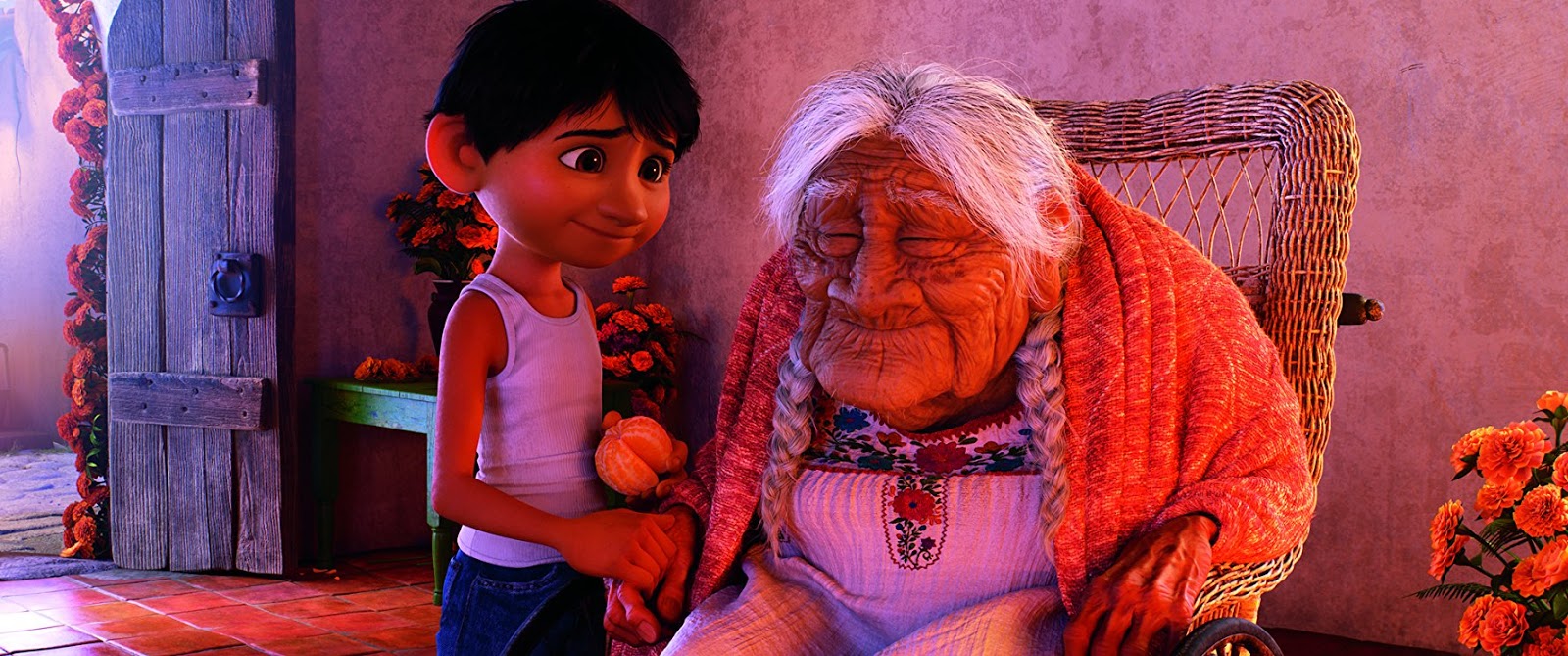
I know, this is over a month late, but Coco honestly couldn't have come out at a worse time for me; it released right around Thor, Justice League, The Disaster Artist, and Star Wars, and since then I've experienced multiple holidays, a bout of wintertime sickness, and a bomb cyclone (whatever that is). With everything I had on my plate, I just couldn't find time to get out and see Pixar's latest film until just this week (in what I'm fairly certain was the absolute last showing in my hometown). On the bright side, I'm overjoyed I got to catch this one before it left theaters (unlike some other animated films); I've been a Pixar fan from the day I was born, and it always feels weird whenever I miss the theatrical run of anything that isn't Cars. However, I'm also left with the bittersweet realization that last week's 2017 Retrospective is already outdated. I wish I had seen Coco when it released back in November, or at least before I started compiling my rankings of everything I watched last year. Had I not put it off for so long, I can guarantee that it would have landed right next to Logan as one of my favorite films of 2017; trust me, it's just that good.

Set in the Mexican town of Santa Cecilia, the story follows a young boy by the name of Miguel Rivera (Anthony Gonzales). An aspiring musician in a family of shoe-makers, Miguel dreams of following in the footsteps of his idol, Ernesto de la Cruz (Benjamin Bratt); unfortunately for him, music has been banned in the Rivera household ever since his great-great-grandfather left his wife and child to pursue a career in the music industry. After a family spat on Dia de Muertos (The Day of the Dead, a Mexican holiday where offerings are made to the spirits of departed family members), Miguel finds himself trapped in the Land of the Dead amongst his ancestors; if he doesn't receive a blessing that allows him to return to the Land of the Living before sunrise, he'll be stuck knee-deep in the dead for all eternity. What follows is a colorful, emotional adventure that explores the messy, complicated relationship between familial responsibility and duty to one's own dreams and passions.


I'll admit, I wasn't exactly excited for Coco in the months leading up to its release. The character design didn't thrill me (particularly the choice to add eyeballs to the skeleton characters) and the plot seemed extraordinarily basic for something from Pixar. In hindsight, I wasn't being entirely fair to Coco; it works much better from a visual standpoint now that I've actually seen it in practice (to the point that it might just be the most visually-impressive Pixar film to date) and the story (as I should have expected) had much more to it than your standard "child gets lost in fantastical place, has to race against the clock and learn a lesson" plot. 

It feels like so many movies of 2017 (even ones I've enjoyed) run into the same problem of either falling into a painful slump during the second act or outright losing all steam by the time the climax rolls around; Coco, it seems, has the opposite problem. This is a film that takes quite a bit to properly get going; until Miguel enters the Land of the Dead, I was honestly getting a bit worried. The film opens with an upbeat first-person narration that doesn't return at any other point in the story, so it ends up feeling like it's specifically addressing the kids in the audience who don't know anything about Mexico. It comes off as so cheery and overly-earnest that it comes dangerously close to crossing the line into "anyone over the age of 12 is going to feel embarrassed to be watching this" territory, but that luckily all changes once Miguel is flung into the afterlife. From that point on, the film only gets stronger as it goes, culminating in one of the most emotionally-resonant third acts I've seen all year. Again, I'm referring to the same year that gave us Logan, so keep that in mind.


Despite its almost overly-kid-friendly opening, the atomosphere of the movie matures alongside its protagonist. Miguel starts off as a rambunctious, impudent kid; at 12 years old, he's right on the verge of casting off childish flights of fancy in favor of more adult responsibilities, hardly a smooth transition for most young people. The idea that, sometimes, you can't be whatever you want to be is a bitter pill to swallow, especially when it feels as though your own family is standing in the way. The conflict between Miguel wanting to become a musician and his elders wanting him to take up the family trade isn't exactly the most original, but it's how it's handled here that makes it stand out. Unlike The Last Jedi, this is a movie where characters actually sit down and talk with one another; both sides make valid and flawed arguments, and sometimes they don't reach a consensus that makes everyone happy. It's not an ideal situation, but the emotions at play make it a relatable one; whether or not we agree with these characters' stances, we can 100% understand and sympathize with how they came to these conclusions, and that attention to detail makes all the difference in the world.

As the plot continues and the tone grows more somber, we see the shift in Miguel's priorities (as well as those of his ancestors, who want nothing more than for him to give up his dream of being a musician and return safely to the Land of the Living). Every character has a lesson to learn, so the message of the story never feels one-sided. We don't get a moral that reads like a lecture ("Always listen to your elders, they know what's best for you"), but we also don't get a moral that feels like a cynical appeal to a sense of prepubescent rebellion ("Up yours, old man! What the world really needs is to learn how to dance!"). Instead, we get something more in the middle; you should always be willing to do anything for your family, but your family should never be willing to let you give up on your dreams. Instead of feeling wishy-washy, it strikes just the right chord, presenting two flawed-yet-understandable arguments and reconciling them in classic Pixar fashion.


I suppose I should talk about what inspired me to give Coco a watch after over a month of procrastination. While I was off seeing Justice League like a sucker, my compatriots at The Long Run Podcast went to see Coco (side note, fellas, what gives? Y'all had a month-long head-start on me and I put out my Coco Review first? Get it together). Their reactions floored me; here I was, looking at a movie I expected to measure up alongside Pixar's more lukewarm entries like Brave and The Good Dinosaur, only to be told that this was the most emotionally-impactful Pixar film since Toy Story 3. That this movie contains scenes as tear-jerking and sob-inducing as the first 5 minutes of Up. That, not only was this one of the best films Pixar has ever put out, but that it was one of the best films of the year. So yeah, high praise.

I entered the theater, expecting some of those good ol' Pixar feels. I left not-quite two hours later, whistling mariachi music and trying to hide how hopelessly bleary my eyes has become. I need to reiterate, this is not your stock plot about an average kid who no one understands. This is a tale about life, death, family, tradition, and legacy. It's a story about how what we amount to, at the end, is the memories we leave behind with those we've loved in life. Coco pulls no punches and goes right for the jugular; when you're sitting there during the third act, quietly weeping into your popcorn, you can rest easy knowing that Lee Unkrich and company have earned every single teardrop.


I won't mince words; Coco is my second-favorite film to come out in 2017 and I hate that I procrastinated so long in seeing it. It's a true masterpiece, one of Pixar's best (which, despite a few less-than-stellar entries, still remains high praise for any animated feature). The music is incredibly well-crafted, even by Disney standards (and then there's Remember Me, which is so thematically brilliant it's on a whole other level). And that's to say nothing of the art direction and animation, which is just spellbinding to look at, bursting with vibrant colors and liveliness. I'm not sure if this is standard for all screenings, but there was a lovely little bumper before the film began in which several of the filmmakers showcased how much work it took to animate certain shots and sequences, before thanking all of us for coming out to see Coco in an actual movie theater. It really offered some insight into the process of modern animation and helped remind me that, even though Disney is a company with essentially bottomless resources, movies like Coco are still the cumulative result of mountains of individual care, effort, and imagination. 

If you haven't seen it by this point, I'm afraid you might be out of luck for a theatrical screening (like I said, I just happened to luck out and catch the final show in my neck of the woods), but in hindsight, I'd say that Coco is worth the effort. If you can find a theater that's still showing it, take the journey and settle in for a lovely time. I came away from it feeling like I did after seeing Inside Out; in that it gave me a good cry that I didn't know I needed to have until I'd had it, and I feel like that's the true magic of Pixar movies. To clarify, this isn't a good movie because it made me cry; the same result can be achieved with a swift kick to the groin or a hefty ball of wasabi. No, Coco is a good movie because it earns its emotional response without feeling cheap. You can get cheap tears as easily as you can get cheap laughs; it's sad when an animal dies in the same way it's funny when Melissa McCarthy falls down some stairs. But when we have a genuine, emotional reaction to the experiences of the characters on screen; when we form a connection to what we're seeing and these fake, imaginary people cease to be cartoon characters and become real, that is when you can rest assured that true artistry is taking place.

December 8, 2017

REVIEW: Hey Arnold! The Jungle Movie


It feels as though nostalgia is becoming more profitable now than it's ever been before. Sure, there was the boom of 50's throwbacks during the 80's, but it's nothing compared to the sheer amount of merchandise and soft-reboots we're seeing today. Social media is beginning to hold tremendous influence over the decisions of big-name companies, particularly in the realm of television. Over the past decade, we've seen revivals of everything from Toonami to Full House to Mystery Science Theater 3000. Hell, social media is objectively the reason why Deadpool even got made in the first place. The power of nostalgia and social media are not tools that studios should wield lightly, however; as we've seen, nostalgia-baiting only works when your heart is truly in it. When it's clear a revival was pushed through production simply in the name of making a quick buck, the results can be totally catastrophic, irreparably damaging a brand that is already, for all intents and purposes, dead. Which brings us to Nickelodeon's recent made-for-TV special, Hey Arnold! The Jungle Movie, a conclusion to the classic series that, much like its titular protagonist, shows the true power of effort, teamwork, and optimism in the face of less-than-stellar odds.

The movie picks up after the events of The Journal, a television special that aired back in 2002, acting as the finale of the series (despite ending on a cliffhanger). Series creator, Craig Bartlett, had always intended to release a follow-up film entitled Hey Arnold! The Jungle Movie; however, after the poor reception of Hey Arnold! The Movie and a series of complicated contract disputes at Nickelodeon, plans for the film were cancelled. In the years that followed, Bartlett would share a number of plot points and rough animation tests with fans, giving some idea of what The Jungle Movie could have been. Still, he never showed his full hand, citing his belief that, maybe someday, The Jungle Movie would see the light of day. Fifteen years later, Bartlett's optimism has finally paid off, and Hey Arnold! at long last receives the final send-off it deserved all along.


After entering a documentary contest, Arnold (Mason Vale Cotton) and his friends at P.S. 118 win a class trip to the South American country of San Lorenzo. Seeing as how this is the place where his long-lost parents disappeared to years ago, Arnold sees this as a golden opportunity to gain closure (and possibly even find them, assuming they're still alive). Once the class arrives in the jungle, however, it's clear that things aren't quite what they seem. What follows is a charming (if a bit predictable) adventure, packed to the brim with swashbuckling hijinks and a heartfelt amount of love and reverence for a Nicktoons classic.

As one might expect of a film that's been in the works for nearly two decades, there's a fair amount of hype Craig Bartlett and company had to live up to. However, living up to the hype isn't exactly the film's biggest obstacle, so much as it is living up to its full potential. I've heard from people in the animation industry that this was something of a rush-job; that Nickelodeon demanded a quick turnaround on a relatively light budget. If that's indeed true, then the effort on display is certainly admirable (the film looks exactly how Hey Arnold! should), but it's still very noticeable that a lot ended up on the cutting room floor. The end result is just under 90 minutes long, and while what's here is most definitely fun, I couldn't shake the feeling that this is something everyone involved would have much rather seen done as a full-length theatrical release.


That said, The Jungle Movie displays an adept understanding of that which eludes so many would-be revivals and remakes; it doesn't just look like Hey Arnold!, it feels like Hey Arnold!. Mainly because it is Hey Arnold!. The crew behind this includes people who worked on the original series back in the 90's, as well as newcomers who grew up with the original show as a staple of their childhood viewing. Factor in the frankly absurd amount of original voice actors who've returned (20 cast members reprising roles from over a decade ago, alongside 11 newcomers they've brought on-board) and it's plain to see that Hey Arnold! The Jungle Movie is very much a labor of love. This is something that the show's creator has been trying to make happen for nearly 20 years, and thanks to fan support, he's finally been able to do it. I wouldn't say the end result is perfect, but it's certainly the kind of thing I hope Craig Bartlett and company can be proud of. Sure, there are a few plot points that felt relatively toothless and silly, but that's the jaded, broken twenty-something in me talking. I can say with the utmost faith that, if this came out alongside The Journal back in 2002, I would have lost my mind. I would have recorded this on a blank VHS and watched it until I had the commercials memorized. I probably would have gotten together with some friends and had a viewing party, featuring pizza, 007 Nightfire, and a 2-liter of Pepsi Blue. This is how well The Jungle Movie recaptures the spirit of the original show (and indeed, that whole era of Nicktoons programming).


If there's one thing I hate whenever a television property is translated into a feature-film, it's the corners that are cut in order to appeal to a wider audience. Characters are simplified, references are dumbed down, and it feels like the filmmakers almost intentionally misrepresent the kind of minor details that are sure to raise the dander of longtime fans (I still wince whenever I watch The Simpsons Movie and see Moe's rebranded as "Moe's Bar", so as to spoonfeed context to casual moviegoers). The Jungle Movie has none of this. If I wasn't clear before, I'll reiterate; this may as well have come out in 2002. There's a few new voices, yes, and the animation is clearly made with modern technology, but this is, in every sense of the word, a new episode of Hey Arnold! that just happens to be 81 minutes long. There's numerous references to iconic episodes from the show (mainly in the first half, which, while fun, dragged a bit for my taste), but none of the callbacks feel cheap or self-fellating. When Curly (Nicolas Cantu) releases a caged panther with a cry of "FREE THE ANIMALS AT THE ZOO!", it doesn't feel like a condescending wink to the audience ("remember THIS episode where he said the thing?"); mainly because these characters are so in tune with the way we left them all those years ago, despite a few new additions to the voice cast. A revival is no good if you don't still have what made the original work; so many reboots fail to recognize this and assume they can bank on nothing but brand recognition alone. The result is often cheap, lazy, and soulless. Hey Arnold! The Jungle Movie is none of these, and all prospective reboot-ers should take note; this is how it's done.


In the end, was The Jungle Movie everything I wanted it to be? No, not quite. It feels a little rushed (despite sitting in development hell for a decade and a half), some plot elements are a little too simplistic and convenient for my taste, and it feels as though the made-for-TV budget really held this back from being all that it could be (at least considering what was originally planned). But then if it was up to me, this would be a two hour long theatrical release; that's just not how the business works, unfortunately. For what it is, Hey Arnold! The Jungle Movie is an admirable, genuine, satisfying conclusion to one of my favorite childhood television shows. It's nothing groundbreaking, but it feels good to have closure on this series after so long, especially when it's presented in such fine form. I've heard rumblings about The Jungle Movie serving as a jumping-off point for a complete revival of the series; I say, if Craig Bartlett and company are willing to give a new Arnold series the same level of care, attention, passion, and authenticity that they gave to this, then bring it on. 

Hey Arnold! stands out as one of the few cartoons of my childhood (alongside Spongebob) that wasn't preoccupied with being edgy or cynical (not that there's necessarily anything wrong with that, but I digress). Ol' Football Head is a pure, optimistic force for decency and human kindness; a kid who devoted his time every episode to solving problems, sometimes for his close friends, other times for people he just happened to meet on the street. Aside from being a funny, inventive, entertaining cartoon, it's a positive thing for kids to be exposed to, and it absolutely revels in that atmosphere that comes with early childhood, when life was all about treehouses and bicycles and ice cream trucks. If you grew up with Hey Arnold! like I did (or heck, maybe you've got kids of your own who watch it in syndication on TeenNick), I simply can't not recommend you check this out. It's a fun, enjoyable trip to what was, for many of us, a simpler time. And I think that's something special.

November 17, 2017

REVIEW: The Last Unicorn


I've always found it interesting how the benefit of hindsight can add or subtract to a film. Some movies have a habit of taking root in our minds, where subtext reveals itself to the viewer and creative decisions become that much clearer to understand; we're able to step back and see the full picture, sometimes as early as when the credits begin to roll. Oftentimes this kind of post-viewing rumination can lead to that magnificent kind of eureka moment, where the pure artistry at work is pulled into the limelight and given a time to shine. Other times, as the afterglow fades, plot holes begin to make themselves known and the film begins to disintegrate before our very eyes. The Last Unicorn, a 1982 cult classic from the iconic Rankin/Bass Productions, falls moreso alongside the former rather than the latter; while I found my viewing experience to be very hit or miss, it was after the credits had stopped rolling, when I had a chance to really consider the plot from a subtextual standpoint, that the film's true value made itself known to me.

Adapted from Peter S. Beagle's novel of the same name, the story follows the titular unicorn (Mia Farrow) as she attempts to cope with the revelation that she is, indeed, the last of her kind (hence the title; already the film begins to reveal itself to us). After hearing tell of a mysterious Red Bull that supposedly chased all of her unicorn brethren to the ends of the earth, the unicorn sets out on a grand adventure to find and return all the world's unicorns. Along the way, she meets an insecure magician by the name of Schmendrick (Alan Arkin) and a beleaguered maid named Molly Grue (Tammy Grimes), who accompany her on her journey. After a harrowing run-in with the Red Bull, Schmendrick uses his magic to turn the unicorn into a mortal woman (since the bull only pursues unicorns). As the unicorn (now under the assumed human name of Amalthea) adjusts with her new body and place in the world, the group arrive at the seaside castle of King Haggard (Christopher Lee), in hopes of solving the mystery of where the unicorns disappeared to once and for all.


While the plot is very much your standard fairy tale fare (characters go from point A to B to C, encountering different story beats along the way), it's truly the subtext behind it all that keeps everything moving. I must confess that, upon watching this for the first time, I found myself growing quite bored on more than one occasion. The film carries itself slowly to begin with, lingering on individual scenes and focusing moreso on character interactions and dialog than outright action and adventure, but once our trio reaches King Haggard's castle, things grind to a complete stop until the climax. This isn't helped by our protagonists; the only one with any kind of drive or grit is Molly, and she isn't given nearly as much attention as Schmendrick and the unicorn (who are completely passive by comparison). Yes, everyone has an arc and yes, everyone contributes something by the time the story is ended, but there's still not really anyone for the audience to latch onto until Molly is introduced. Schmendrick is endearing thanks to Alan Arkin's humble performance, but that doesn't change the fact that he barely does anything aside from feel sorry for himself for the majority of the film. Meanwhile the titular unicorn comes off as detached and mopey until she's turned human, at which point she basically goes catatonic from having to deal with her newfound mortality. Despite all my griping, I actually really like the kind of offbeat, melancholy tone this gives the entire film; I just wish there was a protagonist I could forge a greater connection with.


With a classically simplistic plot and characters to match, the film is 100% carried by its subtext. Despite essentially being a film targeted towards children, the story is heavy with themes of life, death, and notions of mortality and immortality. One of my favorite scenes involves the unicorn immediately after she is turned human; terrified of her newfound mortality, she describes how she can feel her new body slowly dying around her. It's surprisingly hefty stuff for an animated children's film about a pretty unicorn who turns into a pretty princess. In turning human, the unicorn experiences a sort of loss of innocence, transforming from a pure and immortal creature of the woods to yet another doomed-to-die dime-a-dozen person. However, there's a clear look at the give and take associated with mortality and immortality; the unicorn is shaken by her sudden transition, yet, in the end, values her experiences. Though she'll forever be different from the other unicorns (tainted, in a way), she is the only of her kind to have possessed the proper perspective that allows her to feel emotions such as love and regret. 

By the same token, we have characters like Mommy Fortuna (a witch who runs a traveling sideshow, voiced by Angela Lansbury) and The Skull (a talking skeleton, voiced by Rene Auberjonois); both clearly favor immortality and both possess unending life in their own, personal ways. Mommy Fortuna, despite using illusions and trickery to disguise mundane creatures as fantastical beasts, seeks to establish her own dominance over the legendary animals she imprisons. She covets the immortal life that the unicorn (as well as the harpy she imprisons) both possess, and thus seeks to make her mark as best as she can. Despite meeting her end at the hands of said harpy as her captives escape, she still achieves her own kind of immortality; as she explains, the harpy will spend the rest of its unending life knowing that Mommy Fortuna was the one who held it in captivity. She achieves immortality within the memories of the beast she captured, but at the cost of her own life. Meanwhile, the Skull has been around for an unquestionably long time, laying about in the depths of King Haggard's castle. Despite his eternal life, he still longs for something as simple as the taste of wine. They even establish that, as a skeleton, he's unable to even taste wine, let alone drink it; he explains that it's the feeling, the memory of the wine, that truly matters. Both have achieved eternal life, yet at a cost so terrible, it may as well make the entire point moot. Immortality is life without end, but life without end is no life at all.


Aside from that, the art design is quite gorgeous, even if the animation is nothing to write home about. There's several songs performed by America (the band behind A Horse With No Name) and all of these are quite good; it's when anyone else tries singing that things get really embarrassing really quickly (Jeff Bridge's forelorn love ballad and Mia Farrow's infamous "NOW THAT I'M A WOMUUUUUN" songs are the unintentionally hilarious highlights). All in all, while I've certainly seen better, I can at least understand why The Last Unicorn  is considered a cult classic by so many. I found myself slipping into boredom and frustration here and there while watching it, but in hindsight, I can really appreciate it from an artistic and subtextual standpoint. It's not necessarily for everyone; I found myself in a similar position when watching Wizards, where the film really only revealed itself to me after I was done watching it. Looking back, however, at least Wizards had me thoroughly engaged throughout. There are definitely good things here, but I don't know if I'd call it essential viewing, at least more than once. That said, I'm fairly confident that it would improve upon future viewings. Either way, it's certainly a film I plan on showing my children down the line, so take that as you will.

October 20, 2017

REVIEW: Over the Garden Wall


Where to even begin with this one? It's so hard to write about things we love unequivocally; there's so much here I want to talk about and praise that I can't pin down just one aspect to even get started with. I suppose I should explain what Over the Garden Wall even is, exactly. Back in 2013, a writer/storyboard artist named Patrick McHale created a short film that was meant to serve as the pilot to an animated series known as Tome of the Unknown. McHale, an alumni from The Marvelous Misadventures of Flapjack, had hoped to get the show picked up as a three-season series. Cartoon Network instead wanted a full-length animated movie. Eventually, the two met in the middle and Over the Garden Wall became the network's first ever miniseries when it premiered in November of 2014. I remember tuning in every night that week to catch each new chapter as it premiered; by the time it was over, I had made up my mind. Over the Garden Wall is not only one of my absolute favorite Cartoon Network productions, but one of my all-time favorite animated anythings ever.

The plot (which unfolds over 10 twelve-minute chapters) follows two brothers by the names of Wirt (Elijah Wood) and Greg (Collin Dean). We find them lost in a mysterious forest known as The Unknown, trying to make their way home; along the way, they encounter a number of colorful and absurd characters including a mysterious Woodsman (Christopher Lloyd) and a curmudgeonly bluebird named Beatrice (Melanie Lynskey). Each chapter tells a different short story that ties into their greater overall journey, taking them to strange and unique places within The Unknown. One chapter sees them stumbling upon a bizarre harvest festival, while another covers their journey on a riverboat operated by dapper frogs. Each episode is unique in terms of both content and visuals, yet none of it ever feels like filler; it all blends together to help create this imaginative, surreal, comforting-yet-slightly-spooky world of The Unknown.


A lot of people like to say that Hayao Miyazaki's Spirited Away is like a Japanese Alice in Wonderland. If that's the case, then Over the Garden Wall is like an American Spirited Away; not just in the sense that it's a tale about children lost in a bizarre fantasy land, but in terms of its quaint, inviting (yet at the same time, macabre and foreboding) atmosphere. It really is quintessential autumn-time viewing. The art direction was inspired primarily by illustrations from the late 1800's; the backgrounds have a distinctly painterly look, and warm fall colors are everywhere. Add in a smooth, jazzy folk soundtrack care of The Blasting Company, and you've got a winner on your hands. It really feels as though the creators boiled down autumn to its bare essence (feelings of growth and renewal, the interplay between quiet comfort and the creeping dread of the upcoming winter, a childlike sense of whimsy and nostalgia) and built the series' atmosphere, tone, and themes directly around these elements.

For something which premiered on contemporary Cartoon Network (where the most prevasive show by far is the hyper-spastic Teen Titans Go), Over the Garden Wall shows remarkable restraint and maturity in terms of not only its comedic sensibilities, but its themes and tone as well. If everything else on Cartoon Network is meant to be watched while vigorously downing bowl after bowl of sugary cereal, Over the Garden Wall is meant to be watched while quietly sipping a cup of tea, perhaps while bundled up underneath a nice, warm blanket. It's a very mellow, offbeat kind of show that doesn't go out of its way to make things "wacky" for the kids. It takes its time and focuses on building up the world, story, and characters moreso than establishing epic running gags to sell on Hot Topic merchandise. There's absurdity here, to be sure, but it all feels consistent and necessary, which is a huge reason why it works so well for all ages. Kids won't be bored and adults won't be irritated; this is, in every sense, something everyone can enjoy.


Despite its accessible nature, the series still deals in such themes as loss, maturity, lack of confidence, responsibility, and what it takes to develop a sense of self during our formative years. Wirt is an awkward, insecure, yet self-absorbed poet and hopeless romantic. He's caught right in that in-between, too old to properly connect with his kid brother, but too young to see his own immaturity. He, like so many teenagers, is hopelessly concerned with himself, wallowing in self-pity and adolescent wishy-washiness, and it's through his journey into The Unknown that truly helps him define the kind of person he wants to be. Greg is, comparatively, bursting with youthful optimism and whimsy, yet never once feels like an annoying baby brother to us. We understand Wirt's frustration, but we can also clearly understand all that Greg has to teach his older sibling about enjoying life and reconnecting with that upbeat spark of childhood sensibility that lies within us all. Speaking as a big brother myself, Wirt and Greg's relationship hit me right where I live in ways I never could have predicted. I'm not sure if this will resonate as much with everyone as it did with me, but I've yet to get through this series entirely dry-eyed.


Of course, a big deciding factor in the quality of a character is the quality of the performance, and boy does this series boast some serious talent. Elijah Wood is as great as one might expect, imbuing Wirt with just the right balance of self-righteous bravado and insecure wimpiness. We also have Collin Dean giving an incredibly genuine performance as Greg, truly capturing that sense of childlike obliviousness that makes the world look so incredible and inviting at a young age. There's a reason Greg is voiced by an actual child actor, rather than an older woman with a high-pitched voice. Meanwhile, Melanie Lynskey rounds out our main trio as Beatrice, bringing a strong "beleaguered older sister" type personality to the table, perfectly complimenting Greg and Wirt's individual brands of immaturity. 

Christopher Lloyd also appears as the Woodsman, rasping out a surprising amount of emotion for how little we see of him. I almost feel like this was my favorite character out of the entire thing, purely because we know so little about him; his story feels like an underlying thread that permeates the entire journey, just offstage. The rest of the supporting cast includes such personalities as John Cleese, Tim Curry, and more opera singers and jazz musicians than one would ever expect. It's a truly unique ensemble that just fits perfectly. Everything here just fits perfectly; there's no one who sounds too distracting, there's never a song that feels out-of-place, the characters and plot elements, for as absurd as they are, all feel homogeneous and at-home within the world of The Unknown. Over the Garden Wall knows exactly what it wants to do, and it does it with heart, enthusiasm, and style.


If it wasn't clear already, Over the Garden Wall is a modern-day masterpiece. It's a timeless coming-of-age fairy tale that is sure to remain a cult classic for years and years to come (even though it rightfully deserves so much more acclaim than that). The bizarre characters and surreal situations may prove a bit too eccentric for those who prefer their entertainment more conventional and easy-to-digest, but underneath all of the peculiar set dressing lies a story with a purely human soul. It's a true work of art and you would be remiss to not give it a watch, especially now, as the leaves change colors and a slight chill runs through the air. When feelings of childlike nostalgia and spiritual renewal wash over us all, and nature seems to call out, telling us to put on a jacket and come see what wonders and horrors await in the great, wide world.