Showing posts with label Superman. Show all posts

December 2, 2017

REVIEW: Justice League


It's taken me quite some time to form an opinion on Justice League. A week has gone by since I first saw it in theaters and, to be perfectly honest, I'm still not 100% sure what to make of it. I feel like my confusion mainly has to do with my attempts to look at Justice League as a film; therein lies the problem. You see, Justice League isn't a film, so much as it is a product. It's been focus-tested, sanitized, and mechanically shaped into something that's designed to right the wrongs of the DCEU; given my stance on Batman V Superman, you'd think this would be exactly what I wanted. And while it's true that Justice League didn't fill me with as much befuddled rage as Dawn of Justice did, that doesn't mean that Justice League isn't a big fat mess all on its own.

The plot feels like something that's all but completely ignored the last two decades of growth we've seen in the superhero genre. Thousands of years ago, Earth was threatened by a big bad guy named Steppenwolf (a gormless CGI miniboss played by Ciarán Hinds). Against the combined might of mankind, Amazons, Atlanteans, the Olympian Gods, and some cameos meant to generate hype for 2020's Green Lantern Corps (judging how Justice League is doing at the box office, I wouldn't hold my breath; but I digress), Steppenwolf's army is repelled back to Apokolips and his three maguffin boxes are hidden away on Earth. After the death of Superman (Henry Cavill), fear is more rampant on Earth than ever before (yes, Superman dying is implicitly defined by the movie as quantifiably worse than 9/11, the Cold War, and the Holocaust). Thanks to all of the bad vibes generated by the passing of an emotionless alien who levels cities, the Mother Boxes activate and call Steppenwolf back to Earth (since a demoralized populace makes the conquering that much easier). With the man of steel stuck six feet under, it's up to Batman (Ben Affleck) and Wonder Woman (Gal Gadot) to round up the likes of Aquaman (Jason Momoa), The Flash (Ezra Miller), and Cyborg (Ray Fisher) in order to mount a super-powered counter-offensive; for if they fail, Steppenwolf will use the awesome might of the Mother Boxes to... do... something. They're never 100% clear on what the Mother Boxes actually do, and I honestly think his evil plan is just ends up being a rehash of General Zod's from Man of Steel.


Despite a runtime of just barely two hours, there's a lot in this movie; normally this would make things feel overstuffed, but somehow Justice League manages to spread itself thin. It's like emptying an entire bottle of mustard onto a single hotdog and still being able to taste the meat, it just doesn't make any sense. With everything there is to unpack, I'm going to start by talking about everything this movie got wrong. Well, not everything (unless either of us has the time to dissect the finer points of executive meddling and committee planning in the film industry), but the major things, at the very least. First and foremost, let's address the elephant in the room. After the tragic loss of his daughter earlier this year, Zack Snyder stepped down from directing Justice League, at which point Joss Whedon took the helm, finishing up production and directing any and all necessary reshoots. If you can name a more stylistically different pair of filmmakers working on the same project, I'd certainly like to hear it; Whedon and Snyder's styles are night and day (in some cases literally) and the end result is just as much of a patchwork mess as you'd expect. One moment we have Synder's dreary symbolism and melodrama, the next we have a series of Whedon's eye-rolling quips. I don't plan on ever watching Dawn of Justice or Suicide Squad again (unless it's bad movie night), but I'll at least be able to revisit Justice League with a fun drinking game in mind; take a sip every time there's a noticable shift in direction. If I end up dying of alcohol poisoning shortly after Justice League is released on The Pirate Bay home video, you'll know what happened.

Aside from an inconsistent identity, the film also suffers from an extraordinarily bland plot and villain. I've seen (and made) complaints that Marvel's stories are getting a little stale (often involving some generic antagonist firing a big blue beam into the sky), but even the worst of the MCU has nothing on Justice League. Steppenwolf is a cardboard bad guy; he monologues about fear and power and conquest, only to be defeated without issue, leaving no impression whatsoever. I hate to make the inevitable comparison to Marvel Studios, but I think it's necessary in this case, in order to outline exactly how Warner Bros screwed up on this one. When Marvel put out the first Guardians of the Galaxy, Ronan the Accuser served as a stepping stone to Thanos. He was a bland villain who was only really interesting whenever he was sharing the screen with the bigger, badder bad guy that everyone really wanted to see. I get the sense that WB attempted something similar here with Steppenwolf (since he answers to DC's seminal Kirby-created big bad, Darkseid). 

However, when Marvel did it, you got a sense that they at least knew where they were going with it all. Even though Ronan was a bland, one-dimensional villain, he served his purpose in the grander sense of the MCU, establishing Thanos as more than just a post-credits teaser. Comparatively, Darkseid doesn't even appear in Justice League, not even in a quick cameo; to those unfamiliar with the comics, Steppenwolf is just some guy from space who wants to do something vaguely evil with some magic cubes. A throwaway villain isn't ideal, but they can still serve a greater purpose when a series is attempting a multi-film narrative as the MCU (or DCEU) is. With Justice League, it just comes off like blind emulation; like a child who tries to mimick his older siblings by leaping off the high-dive (despite not knowing how to swim). And when he hits the water, it flops just as hard and sinks just as quickly as you'd expect.


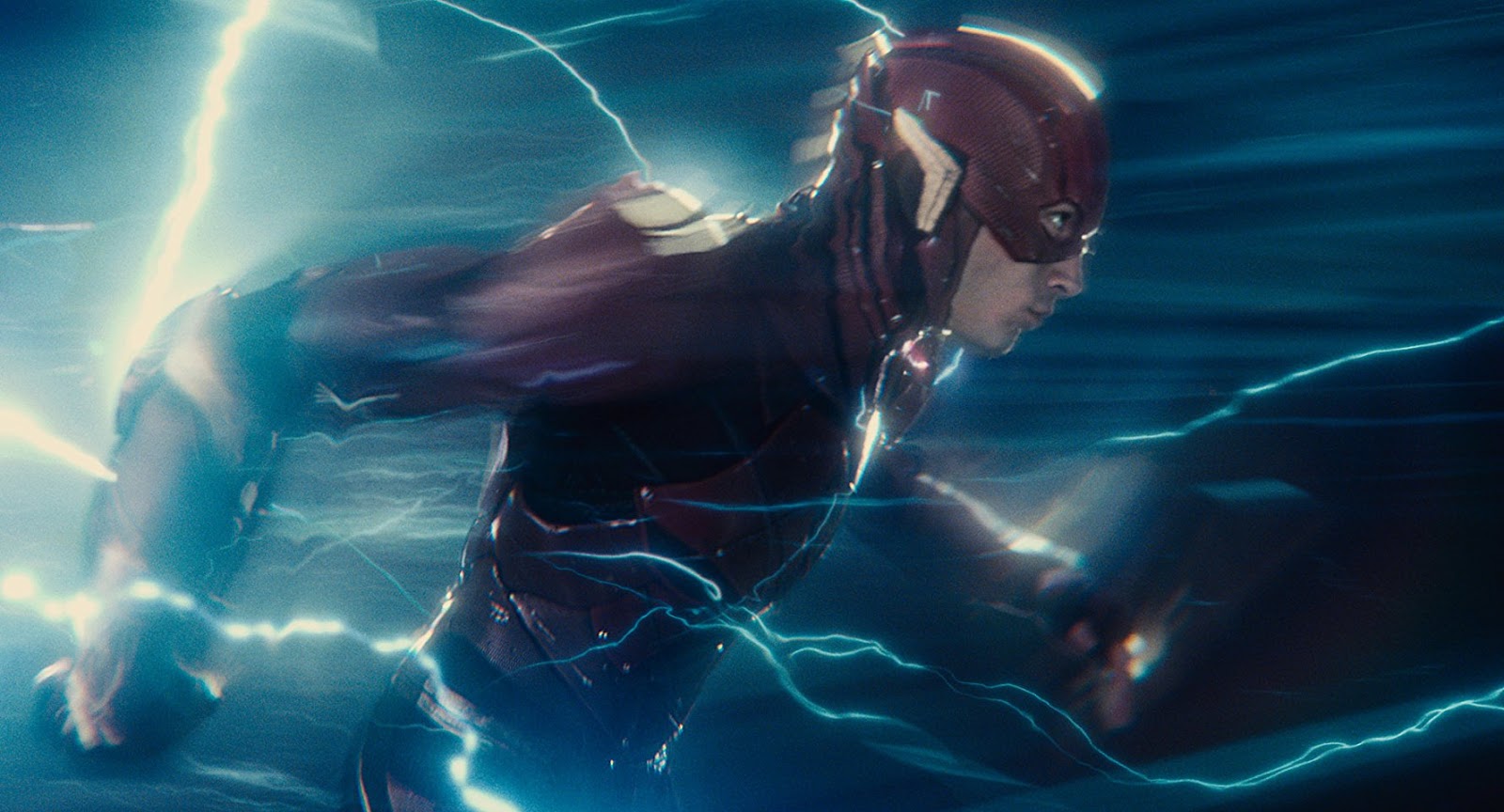
Despite Justice League tying with Pirates of the Caribbean: At World's End as the second most expensive film ever made, there's still an unshakable aura of cheapness to the whole thing. The plot is a generic "we need to stop the doomsday plot and also learn to work together" mishmash of clichés, the CGI is merely passable at best (outright embarrassing at worst), and several of the performances leave a lot to be desired. Gal Gadot continues to carry the entire franchise as Wonder Woman (she's not quite as strong here as she was in her solo film, but she's still good enough) and I was quite surprised at how much I enjoyed Ray Fisher in the role of Cyborg. On the other hand, however, Ezra Miller's Flash served no purpose other than to be a quip machine; while he had a few fun moments, it just felt like there could have (and should have) been more depth to this character than what we've got here. You also have Ben Affleck as Batman, looking like he'd rather be literally anywhere else. I honestly find myself feeling tremendously sorry for Affleck; he once took the role of Daredevil because he assumed it was the closest he would ever get to playing Batman on the big screen. Over a decade later and he's landed his dream role, only to have completely soured on the idea after a single film. That said, Affleck's shotgun wedding of a performance doesn't even hold a candle to the clear weakest links of this cast; those being Jason Momoa and Amber Heard as Arthur Curry and Mera.

As a fan of both Aquaman and Jason Momoa, it pains me to say this, but he's absolutely terrible here. Every line he has is delivered in exactly the same gruff, generic dudebro cadence. The blame doesn't rest entirely on Momoa, as he's given next to nothing to work with (he doesn't even summon any sharks, the lowest of the low-hanging-fruit when it comes to neat Aquaman gimmicks), but it still doesn't change the fact that his character feels like a cheap imitation of Chris Hemsworth's Thor. I don't want my argument to boil down to "not muh Aquaman", but as a fan of the comics, this take on Arthur Curry is nothing like what I had hoped to see. Meanwhile, Amber Heard appears for only one scene, yet leaves enough of a stunningly bad impression that I find myself questioning how excited I even am for James Wan's upcoming Aquaman standalone movie. Just like Wonder Woman before it, the film entirely hinges on whether or not the director can conjure a worthwhile performance out of his lead actors; if their performances in Aquaman are anything like their performances here, then I think it's safe to say that that film is as good as sunk (I'm so sorry). That said, amidst all these middling performances, we still have my favorite part of the entire movie (and, arguably, the entire DCEU). It's a bird, it's a plane, it's...


Spoiler Alert, Superman comes back to life. And his portrayal this time around makes Justice League feel like a two-hour long apology for every sin Zack Snyder previously committed against his character. This is a Superman who is bright, cheerful, and takes visible joy in saving civilians and doling out justice. Sure, it feels completely unearned that he's suddenly treated with such reverence after his last two appearances, but I honestly don't care at this point. Superman is portrayed as he should be (to the point that Batfleck takes a good five minutes to explain to all the fanboys in the audience why Superman is a more human, relatable character than Batman is) and I'm just happy that Henry Cavill is finally being allowed to do the character justice. It's clear (when one looks behind the scenes) that Cavill holds a great deal of regard for the character and history of Superman, yet he was constantly held back by poor writing and direction. Finally, he's free to fight for truth, justice, and the American way and it's honestly the only thing in this entire film that feels 100% right. His resurrection represents the only interesting facet in a supremely bland plot and he ends up being both the most useful and most likeable member of the League (despite, unfortunately, getting the least amount of screentime). 

Alongside Superman's portrayal this time around, I greatly enjoyed the tone and atmosphere Justice League had to offer at times. It often felt inconsistent, true, but there were moments when it felt like exactly the sort of feeling the DCEU should be shooting for; not so self-important and dreary that it becomes a parody of itself, but not an outright comedy like so many recent Marvel films. I also quite enjoyed the score, care of the legendary Danny Elfman. When I had first heard that Elfman planned to sample his 1989 Batman score (and the classic John Williams Superman theme) in his compositions for this film, my eyes practically rolled clean out of my skull. It felt like the most transparent marketing move yet; remember this music from the good DC movies? Doesn't that make you want to like this movie more? That said, having actually heard the score, I must admit, it does it's job well. In hindsight, I would have been perfectly happy had Spider-Man: Homecoming's score been nothing but a gorgeous orchestral remix of the 60's cartoon theme. At the end of the day, those tracks are the iconic themes of Superman and Batman; it's a cheap exploitation of nostalgia, yes, but the end result is still pretty damn good. Really, that explains so many of the parts of this film that I enjoyed. If only WB could figure out a way to just make these films work on their own merit, perhaps they could provide even adequate competition for the MCU (which, at the time of writing, has another 20 films in the planning stages, to be released in the coming years).


What else can I say about Justice League? If Warner Bros' goal was to keep the life support for the DCEU plugged in for but one more year, then I suppose it did its job. Like I said, this film is a complete mess, but it doesn't make me angry the way Batman V Superman or Suicide Squad did. It's harmless, like a rabid dog that's been lobotomized; it's not aggressively stupid anymore, but it's by no means good. It's been just over seven days since I've seen Justice League and it already feels like something I watched ages ago. Honestly, I doubt I'll even remember most of it in a month or two. That said, while it's still on my mind, I think it's worth pointing out exactly what WB needs to do to make this franchise a hit, not just with consumers, but with critics as well. 

All it needs is a little fresh perspective; the Marvel films aren't consistent mega-hits because of their scale or quips or Joss Whedon (hell, certainly not because of Joss Whedon). For the DCEU to succeed, Warner Bros needs to try emulating Marvel's business strategies rather than the content of their films; bring on filmmakers who have proven they know what they're doing (James Gunn, Taika Waititi, Shane Black, etc.) and let them do their thing. Don't try and bend the product to the will of focus testers and studio execs. Treat these films like films. Marvel Studios is a monolithic conveyor belt of content that turns comic book iconography into millions upon millions of dollars thrice annually on a yearly basis. Make no mistake, it's very much a business, and films in the MCU still need to tick a requisite number of shared-universe boxes before they can get the all clear; but at the end of the day, Kevin Feige and company understand which parts of that business should be left in the hands of creative people who understand how to make endearing and entertaining films. Full disclosure, I'm enjoying DC's comic book offerings leagues more than what Marvel's putting out nowadays (no pun intended). It pains me to see the DCEU fail to represent these iconic characters and storylines time and time again with flop after flop, especially since there's so many good elements hidden within this mire of mediocrity (such as Patty Jenkins' Wonder Woman film). But until Warner Bros learns to stop worrying about every other film studio and focus on themselves, I see no reason to expect the DCEU to get any better anytime soon.

June 6, 2017

REVIEW: Wonder Woman


I think it's safe to say that the DCEU wasn't shaping up as well as anyone had hoped (least of all the executives at Warner Bros). While Marvel is pumping out three blockbusters a year (the majority of which range from excellent at best to forgettable at worst), DC's competing cinematic superhero franchise has been puttering by on a wing and a prayer ever since Green Lantern failed to get things going back in 2011. With the exception of The LEGO Batman Movie, each new film starring the iconic characters of Detective Comics has not only fallen short of expectations at the box office, but with critics as well (I even went so far as to name Batman V Superman: Dawn of Justice one of the worst films of last year in my 2016 Retrospective). Even if these movies are critical disasters that fall short of projected earnings, however, they still manage to make just barely enough to keep projects like the standalone Black Adam movie alive and in the pipeline. Which brings us to this year's first release from the DCEU, Wonder Woman. I'm going to be perfectly honest; after so many disappointing entries in this series, I wasn't even entirely sure I would bother spending money to see this one, even after the improbably positive initial reception it got on Rotten Tomatoes. Keep in mind, this was a project that had been in development since the mid-90's. Even in its current state, the original director left over creative differences, the script was re-written several times, and the original cut was reported to have featured some severely lackluster editing decisions. And that's to say nothing of the exhausting, contrived, heavily-politicised squabbling that surrounded this film close to release (because God forbid we have a modern film that happens to feature a female protagonist without people trying to force it to fit their socio-political narrative). With all of this acting against it, it's nothing short of a miracle that Wonder Woman has turned out to be, without question, the best film in the DCEU so far. I understand that the bar wasn't set especially high to begin with, but trust me, this movie is a solid good time.

Told through flashback after the events of Dawn of Justice, Wonder Woman focuses on the origins of Princess Diana (Gal Gadot), heir to the throne of the Amazonian island of Themyscira. A race of proud, all-female warriors, the Amazons live a life of quiet seclusion, magically concealed from the outside world. This changes, however, after Captain Steve Trevor (an American spy played by Chris Pine) crash lands on Paradise Island while fleeing from German forces. Trevor informs the Amazons that the world is engaged in the war to end all wars (better known these days as World War I); as far as Diana is concerned, a conflict of this scale is clearly the work of Ares, the Greek god of war. Convinced that it is her duty to seek out and destroy Ares, Diana leaves her home on Themyscira to accompany Trevor to man's world, becoming the champion of peace, justice, and love known as Wonder Woman.


Part of what helps elevate this film above its peers is the unabashedly sincere tone it puts forward. Previous DCEU films have almost felt embarrassed by their source material; clearly, Superman is too stupid an idea for anyone to take seriously (despite over 75 years as a worldwide icon), so any film focused on him should become a dour slog full of ham-fisted religious allegory, lest audiences realize they're watching a movie about a spangly man who leaps tall buildings in a single bound. Even Marvel is guilty of this, to some extent; while entries like Guardians of the Galaxy manage to balance out comedy with genuine heart, too much levity can make a movie impossible to take seriously as a result (such is the case with Age of Ultron). It belays insecurity, on the filmmaker's part, in the property that is being adapted. It implies that the filmmaker isn't talented enough to maintain the tone of the source material with a straight face, making things more silly or dour in an attempt to distract from the fact that they're making movies about people who dress up as bats and talk to ants.

Wonder Woman's Patty Jenkins, as it were, has no compunctions about being sincere. While the tone ranges from serious to lighthearted, it is all played 100% straight; Wonder Woman isn't made the butt of any jokes for being a corny 70-year-old comic book hero who wears a magic tiara. At the same time, she isn't turned into a tortured soul who enjoys angstily pouting and waxing philosophic in the rain. Jenkins understands why the character has endured for so long and what makes her such an endearing, inspiring protagonist. This is Wonder Woman, champion of peace, hope, and love, teaming up with the Allied powers to put and end to the destructive conflict of World War I. It's been some time since I've seen a comic book movie that so strongly commits to that old-school superhero spirit, and boy have I missed it.


As I mentioned before, I was admittedly a little dubious of this film walking in, partially because the part of Wonder Woman would be played by Gal Gadot. Her appearance in Dawn of Justice left me thoroughly unimpressed and I was certain that, if there was indeed a low point of this movie, it would be Wonder Woman herself. As it turns out, I'm glad to report that those fears were entirely unfounded. Patty Jenkins displays an aptitude for conjuring excellent performances out of her actors, and Gadot's turn as the titular Amazon Princess here is no exception. While she doesn't necessarily give the best performance in the movie (which is forgivable, considering the supporting cast boasts talent such as Connie Nielsen, David Thewlis, and Robin Wright), Gal Gadot definitely does a respectable job of capturing the spirit of the character, showing marked improvement from when she last appeared in the DCEU. I've no doubt that, over time, she'll continue to grow and improve as she's been doing, making the role her own and becoming a modern icon in her own right.

Personally, the highlight of the film for me was Chris Pine's portrayal of Captain Trevor. He and Gadot share a superb chemistry (despite all the groan-inducing sexual innuendos), even though he tends to outshine her from time to time. Theirs is a surprisingly balanced relationship; they both learn from one another and help out in their own, unique ways. There are no damsels or flat love interests here, everyone pulls their own weight; no where is this more evident than in the spectacular No Man's Land sequence, which was by far the highlight of the entire film (at least in terms of action). I also really quite enjoyed Steve Trevor's gang of mercenary pals (Saïd Taghmaoui, Ewen Bremner, and Eugene Brave Rock); each one of them gets their own set of personality quirks, as well as a little moment of focus for characterization and growth. These are the kind of supporting protagonists who could have easily just amounted to nothing more than set dressing (such as the Howling Commandos in Captain America: The First Avenger), yet the movie cares enough to flesh them out for the sake of a more well-rounded ensemble. I've never seen any of these actors in anything before, but would love to see them in more.


That said, for as much as I enjoyed this movie, it isn't without its flaws. Early reports had mentioned how Wonder Woman struggled both in terms of pacing and editing. While much of this has been masked in post-production, it's still easy to see the proverbial scars these problems left on the film. There are times where things can feel a little uneven and disjointed; the first act feels very rushed at times (condensing multiple flashbacks, time-skips, and exposition dumps into the first ten minutes) and there are moments where it almost feels like some parts of the story are misplaced (for example, it's never made explicitly clear whether or not Diana is especially strong for an Amazon, or if her sisters are all capable of lifting a tank above their heads as well). These are minor nitpicks, but I still found them to be a bit distracting when they came up. It's a fairly good superhero origin story, but it is still a superhero origin story.

I also enjoyed the antagonists for the most part, but they too are not free from their share of problems and setbacks. Danny Huston's General Ludendorff feels like a character directly out of a classic Indiana Jones film and fits the tone quite well, even if he's not given anything particularly interesting to do. There's also Elena Anaya as Doctor Poison, a mad scientist who concocts deadly chemical weapons for the Germans. She was actually one of my favorite aspects of the entire film, as she's given a surprising amount of characterization and vulnerability that one wouldn't immediately expect from a secondary villain. Unfortunately, our final antagonist, Ares, is responsible for the absolute weakest part of the entire movie.


I'm not going to delve into spoilers here, but Ares is by far the worst aspect of an otherwise mostly solid film. Despite all the fun action sequences and genuinely compelling character growth we've seen thus far, it all comes down to a generic, poorly-telegraphed Red Herring twist and a final fight that devolves into two CGI ragdolls smacking into each other while surrounded by fire and rubble. Out of everything this movie gives us, this is the only part of it that feels totally generic. Despite a strong buildup and some legitimate emotional beats surrounding it, the final clash between Diana and Ares ends up feeling so routine that it almost becomes boring. Don't get me wrong, the pros most definitely still outweigh the cons overall, but that doesn't change the fact that Wonder Woman's climax represents exactly what the DCEU should be desperately trying to move away from; loud, stupid action with zero emotional weight or consequence. We end up caring far more about how Steve Trevor ends up saving the day than about Diana fulfilling her destiny, and that's truly the movie's greatest sin (even if it still manages to pull out of this supremely schlocky nosedive to deliver an appropriately bittersweet payoff). 


While it's not exactly perfect, Wonder Woman is still a thoroughly enjoyable comic book film; a shining example of what DC should strive for in future installations. Sure, movies like Supergirl, Punisher: War Zone, and Tank Girl have since stolen any "first female anything"-type accolades, but Wonder Woman holds the distinction of being the first theatrically-released, female-led, female-directed superhero film that is actually any good. Despite all of the nonsensical political turmoil that was whipped up before the film's release, the movie focuses on being a quality film first and foremost. It's a story that champions ideals such as hope, love, peace, and equality; while some painfully stupid individuals are sure to take issue with this, it doesn't change the fact that Wonder Woman is a movie that sets out to elevate itself above the petty squabbling of the internet. Wonder Woman hears you crying about clean-shaven armpits and women-only screenings and it doesn't care. There's a world that needs saving.

July 21, 2016

REVIEW: The Iron Giant


Brad Bird's The Iron Giant is a perfect example of the importance of proper advertising. Here we have a near-perfect film which ended up definitively dead on arrival at the box office, barely making half of its budget back. Thanks to the poor planning of the Warner Bros marketing department, the film was left with little to no media tie-ins; one would expect an animated film about a boy and his giant robot to spawn a myriad of toys and books and fast food collectibles, but no such sponsorship was to be found. Because of the lack of promotion, the film failed (despite receiving universal critical acclaim and enjoying cult status to this day), thus furthering the unfortunate notion that intelligent, traditionally-animated children's films simply don't sell.

The story is a love-letter to 50's B-Movie sci-fi, taking place in smalltown America in the wake of Sputnik and the heat of the Cold War. A massive robot (Vin Diesel) careens down from the stars, landing in the idyllic suburb of Rockwell, Maine. After the amnesiac giant is discovered by a kid named Hogarth Hughes (Eli Marienthal), the two form a bond that some terrible hacks might describe as "stronger than steel". Naturally, the presence of a gigantic, mechanical colossus attracts the attention of the United States government, dispatching agent Kent Mansley (Christopher McDonald) to get to the bottom of the odd rumors and unexplained phenomena that have sprung up in the Giant's wake. The tone of the movie is as comfortable and consistent as they come; there are times when you almost forget you're watching an animated film. The Giant is by far the most fantastical thing here; everyone else acts and thinks just like real human beings. This is a movie that could very easily have been made in live-action (for an exponentially larger amount of money, of course), but the fact that it's animated allows for many subtle aesthetic touches that just help to cement the feel of the movie. The autumn leaves are just a bit more vibrant than in real life, the stars a bit brighter and more plentiful; the town of Rockwell is, funnily enough, positively Rockwellian in its cozy depiction of classic Americana.


The animation here is stunning, seamlessly blending CGI and traditional methods to create something truly timeless. This is one of those movies where the visuals age like fine wine; The Iron Giant will always look spectacular, simply because of the amount of care and ingenuity on display. The animators behind the titular giant (a character done entirely using computer animation) even factored in human errors concerning details such as line weight when animating the character, helping him blend in seamlessly with his 2-D costars. It's that kind of meticulous attention to detail that makes Brad Bird one of the finest animation directors in the industry; he knows how to manages his staff properly and inspire his team to produce the best end result imaginable.

Aside from the beautiful visuals, this is also one of the smartest "children's films" I've ever seen, to the point that I hesitate to refer to it as a children's film. It's really more of an animated movie that happens to be appropriate for all ages. The sleepy little town of Rockwell is a perfect metaphor for the time period in which the film takes place; while we may look back at the 50's with quaint nostalgia for all the diners and Radio Flyers and everything else that came with this "simpler time", underneath the surface lay a bubbling crock-pot of fear and paranoia. The Red Scare was in full swing at this point, and those fears are perfectly embodied by Kent Mansley, the film's antagonist. He's a clean-cut fast-talker who justifies his fear and hatred of the unknown as doing what's necessary for Uncle Sam. No one is certain of where the Giant came from, which means that there's a good chance it's a Russian superweapon sent to destroy truth, justice, and the American way. While the Giant DOES pose certain risks and dangers, the movie makes a strong point that, when faced with something new and different, unchecked aggression is usually a poor choice of immediate response.


Really, it's a film about outsiders. The Giant is packing some serious heat, and a deleted scene implies that he is one of many, all made for the purpose of conquest. Despite all this, thanks to a case of crash-sustained robo-amnesia, he finds himself in a very strange place with little purpose. It's a similar situation with Hogarth, living with his widowed mother (Jennifer Aniston) at home and studying a grade-level up in school (leading him to be ostracized and bullied by his peers). He's a boy who doesn't inspire much out of anyone but those close to him, a party that is essentially entirely comprised of his mother and Dean McCoppin (Harry Connick Jr), a scrapyard foreman and aspiring artist. His beatnik ways clash with the simplistic ideals of American suburbia in the 1950's; it's no wonder why he, Hogarth, and the Giant all come together as a team over the course of the film. In the end, it's the would-be weirdos, crazies, and monsters who save the day.


The movie also touches on themes of predetermined roles within society. If the movie has a takeaway line, it is likely "we are who we choose to be". The Giant has the potential, as do we all, to dismantle and destroy. Whether it be in small, subtle ways (such as fear-mongering and bigotry) or in larger, more on-the-nose ways (like taking an innocent life or ordering a nuclear strike on a small suburban town on impulse), there are times when it can be very easy to be a monster. There are some, like Mansley, who fall directly into this philosophical trap. Blocked in by the barriers we ourselves have established, we may do the wrong thing because "we have no choice". Even during the action-packed climax, the military themselves eventually stand down when they realize they aren't pursuing the correct course of action. The Giant, the military, Mansley; we all do things we may regret out of fear, but it is when we let that fear control us and taint us that we go too far. Though we may fall by the wayside and feel confined to the roles that seem almost predetermined for us, there is always a time to change. We are who we choose to be; anyone can be a monster, anyone can be a gun, but anyone can also be Superman.


The Iron Giant is close to being a perfect movie. Everything about it is gorgeous and heartfelt and just masterfully crafted. The only gripe I have with the entire film is the ending, which was clearly added in via studio mandate. If the movie was thirty seconds to a minute shorter, the film would be truly flawless, but there does exist this one irritating nitpick of mine that keeps it from "official" perfection. That said, "unofficial" perfection will simply have to do. Brad Bird is an amazing director and this movie is one of his absolute best. If you haven't seen it, do so immediately; this is required viewing for anyone who considers themselves an animation buff, cinephile, or connoisseur of cult classics in any regard.

March 29, 2016

REVIEW: Batman V Superman- Dawn of Justice


2016 is looking to be the year of the superhero squabble; on the Marvel front, we've got Daredevil fighting The Punisher and Captain America fighting Iron Man. Of course, we also have DC's Caped Crusader facing off against the Man of Steel in Zack Snyder's Batman V Superman: Dawn of Justice. 2013's Man of Steel was a flawed film; heavy on style and destruction, yet lacking that feel-good, inspiring kind of substance that makes Superman into the iconic character known throughout the world as a symbol of truth, justice, and the American way. For all its problems, it was not an irredeemable film by any means. We all knew it was to serve as a launching point for DC's own Cinematic Universe as they desperately tried to play catch-up with Marvel; with some luck, Man of Steel would be remembered as the black sheep of the franchise. An off-color, rocky start for an on-screen universe that would bring the iconic heroes of Detective Comics to the big screen in ways we've never seen before. Unfortunately, having seen Batman V Superman, I find myself having the same "better luck next time" kind of reaction I did when I finished watching Man of Steel three years ago.

The opening sequence is arguably the strongest part of the entire movie. In a few mere minutes, it manages to introduce us to the character of Bruce Wayne (Ben Affleck) and completely establish his origins and motivations. It knows we've seen Batman's origin a million times before and wastes no time getting it out of the way before diving right in to the overindulgent climax from Man of Steel, this time shown from Bruce Wayne's perspective. Blaming Superman (Henry Cavill) for the casualties and destruction he witnessed firsthand, Bruce Wayne steadily becomes more and more obsessed with finding a way to counter the potentially destructive force that Metropolis' Man of Tomorrow represents. Meanwhile, Clark Kent hopes to use the power of the press to shed some light on the Batman of Gotham, who has become increasingly brutal on criminals in recent years. Greasing the wheels of the conflict is billionaire CEO and mad scientist, Lex Luthor (Jesse Eisenberg), hoping to pit the two caped heroes against one another to further his own vaguely-defined goals.


One of my biggest problems with Man of Steel was that it seemed to miss the point of Superman. Sure, Jor-El's speeches were inspiring and the "first flight" sequence was the highlight of the film, but overall it was a much more dour take on the character than was necessary. Superman is meant to represent all that is good in the human spirit; a humble-yet-confident everyman who uses his immense power to do the right thing simply because it's the right thing to do. The problem with Zack Snyder's take on the character is that he's less of a protagonist and more of a plot device; less of a relatable Kansas farmboy and more of a beleaguered alien messiah. One of my hopes for Batman V Superman was for the movie to give me a reason to feel good about Superman again. Something that makes my spirit swell the way the classic John Williams score or an excerpt from All-Star Superman might. There's a scene very early on in the film in which Lois Lane (Amy Adams) is captured by a terrorist cell in the middle east. When things start to go south, a militant cocks his gun and aims it at the head of Lois' traveling companion; as a Superman fan, I began grinning, since surely I knew what was about to happen. The music would swell and Superman would swoop out of the sky, rescuing this man from certain doom. Imagine my surprise when the trigger was pulled and this character (whom the director later confirmed to be Superman's pal, Jimmy Olsen) takes a bullet point-blank to the face, dying instantly.


It's fine to have a darker, more serious take on a comic book figure; I'm honestly glad that DC is exploring a tone different from that of Marvel's lighthearted blockbusters. However, Superman is a property that should most definitely never be described as "bleak", "joyless", or "heavy-handed". The character is meant to be a beacon of hope, so as to contrast with the dour, pessimistic Batman. The film portrays Superman's do-gooding almost as a burden, something he feels obligated to do for all of us puny humans so that we'll continue to tolerate his presence on our world. When he rescues a small girl from a fire or saves a space capsule from an explosion on the launch pad, there's no joy or warmth to be found in his good work. Unless he's saving his mother or Lois Lane, Henry Cavill looks like he'd honestly rather be doing anything else with his time, and that is an objectively wrong way to portray Superman. It's a cold, artificial performance totally unbecoming of the character. This movie commits the mortal sin of portraying Superman in a way that focuses almost entirely on the fact that his biology is alien, rather than how his heart is wholly human. The fact that I actually thought "oh boy, he's gonna do a Superman thing" when he saved someone who wasn't Lois Lane during the climax should tell you all you need to know about this interpretation.

Thankfully, the overly dreary tone here works to the full advantage of Batman, who honestly feels like the real main character of the film. While it's not without its flaws, I feel safe in saying that this is the best live-action interpretation of Batman and Alfred (Jeremy Irons) I've ever seen. There's appropriate amounts of detective work, brooding, banter, and acrobatic fisticuffs that are a legitimate joy to watch in action. As excellent as I found Affleck's portrayal to be, however, this does break one of the golden rules when it comes to Batman; he does kill people. That's not to say that Batman has never dabbled in a bit of murder from time to time; from his first appearance over 75 years ago, to the 1989 Tim Burton adaptation, to the classic The Dark Knight Returns (a graphic novel that clearly and directly inspired large parts of this film), the Dark Knight has taken his fair share of lives. However, going by the most widely-accepted version of the character, the Batman does not go out of his way to kill anyone. There are a few deaths in this film that are indirect and therefore excusable (for example, a henchman who falls victim to his own hand grenade), but the sheer amount of wanton carnage in the over-the-top (and altogether pointless) Batmobile sequence crosses the line for me. There's a number of ways that Batman can incapacitate his foes without resorting to flat-out murdering them with machine guns and missiles. Usually when Batman kills someone, it's treated with a certain degree of gravity; aside from one specific (and legitimately strong) moment, the film never lingers on how many people Batman directly murders in cold blood. However, writing that into this movie would probably require some degree of clever thought, a department in which the film is somewhat lacking.


Filling the role of our main antagonist, we have Alexander "Lex" Luthor Jr, played curiously enough by Jesse Eisenberg. A surprising casting decision that is sure to be divisive amongst moviegoers and fans. I personally found myself torn; I quite enjoyed this interpretation of Lex Luthor as something of an eccentric trust fund baby in the beginning. Whenever he was on screen, Eisenberg seemed to radiate the feeling that he felt he was smarter than everyone else in the room, a trait that is 100% Lex Luthor. However, it's important for a villain such as this to be able to back that claim up with actual intelligence and trickery, and this is where the character falls flat. This is a Lex Luthor with little motivation and absolutely no end-game for his fiendish plan. When one thinks of Lex Luthor, the greatest criminal mind of our time, one thinks of Machiavellian schemes that end with Superman being completely unable to take any meaningful action. Even if the day is saved, Lex still wins. Here, Lex's plan involves manipulating Superman and Batman into fighting one another. We can understand that he'd be fine with seeing Superman either proven to be an imperfect menace or dying at the hands of the Bat, but his plan raises a great many other questions about his motivations. Why exactly does he hate Superman? Is it mere jealousy, or something more? What is his beef with Batman in the first place? How'd he manage to deduce both Clark Kent and Bruce Wayne's secret identities, and why doesn't he use this information in any long-lasting, meaningful way? Why did he bother creating Doomsday at all? His motivation is more akin to that of the Joker or Riddler than Lex Luthor; all he does is cause chaos in an attempt to prove his mental superiority. Out of the three-way conflict of Superman, Luthor, and Batman, only the latter is given an appropriate amount of development and motivation; this might not have been a problem, had more of the two and a half hour runtime been spent developing our primary characters rather than advertising future Justice League movies.


It's no secret by now that there are a number of cameos, all from future Justice Leaguers; the Flash (Ezra Miller), Aquaman (Jason Momoa), and Cyborg (Ray Fisher) all make brief appearances to remind audiences that they exist and the DC Cinematic Universe is definitely something just as big and successful as what Marvel is doing. While the cameos were largely inoffensive (though I do think the camera lingered on Momoa for far too long, and this is coming from someone who's looking forward to James Wan's Aquaman moreso than everything else DC has in the pipeline), their place in the plot sticks out like a sore thumb. It's a scene that would have worked much better as a brief post-credits teaser than an intrusive coming attraction in the middle of the climax.

There's also the matter of Bruce Wayne's frequent dream sequences. While the majority of them act to the film's advantage, offering a bit of that visual flair that Snyder has such a knack for while also delving a bit into the mind of the Bat, one in particular is nothing more than a clear and obvious teaser for the coming Justice League film. Normally I wouldn't care too much, as it was a fairly exciting and well-shot sequence. However, the implications it raises are just too baffling to ignore (fair warning, I am going to get into mild spoiler territory for this paragraph alone). The dream ends with a warning from what appears to be a time-traveling Flash, telling Bruce Wayne that, in order to prevent the horrible future he's witnessed, he needs to track down all the members of the Justice League and assemble them before it's too late. However, this warning comes inside of the dream, before Bruce wakes up. I know that the Speed Force is essentially magic and thus does whatever the hell the writer needs it to do, but is the implication here that the Flash traveled into Bruce Wayne's dream (before Bruce Wayne ever met Barry Allen) in order to show him a vision of the future? Why not have the Flash appear out of the time stream in real life, considering time travel is one of his powers? Why not have Wonder Woman (Gal Gadot), a character based around myth and magic, be the one to receive prophecies of doom and set out to unite the Justice League? I'm nitpicking here, sure, but this just seemed like the most roundabout and confusing attempt at foreshadowing I think I've ever seen.


By and large, the cast does a fair job. For as alien as Henry Cavill's performance is, the fact that he actually does feel like Superman the few times he does appropriately Supermanny things makes me think that the issues brought up by his performance are due more to poor direction and a weak script rather than flat-out bad acting. Ben Affleck and Jeremy Irons are by far the highlights here; their scenes flow wonderfully thanks to their mutual passion and natural chemistry. This is the Alfred and Master Wayne we all know and love, done just right. Gal Gadot is serviceable as Princess Diana of Themyscira, though she hardly has enough screentime for me to truly pass judgement (I suppose that will have to wait until next year's Wonder Woman movie). Unfortunately, Amy Adams, while a truly enjoyable actress elsewhere, is just a terrible Lois Lane and arguably the worst thing about this. Her character serves to do absolutely nothing than play Anne Darrow to Superman's King Kong, being in the right place at the right time to help further the plot. She sucks up far too much screentime with a dull-as-dishwater subplot involving someone selling munitions to terrorists (I'll give you exactly one guess as to who it is) and gets across exactly none of the charisma or spunk that the character is known for.


With everything I've had to say about this film, the cruelest irony is that I didn't even hate it. It's the most solid five out of ten I think I've ever seen. The action is sparse and overindulgent, yet it's still cool to see Batman, Wonder Woman, and Superman teaming up to fight evil on the big screen. There's a lot of decent moments, but the pace is a disjointed hatchet job that flows like poorly-mixed concrete. The music (care of Hans Zimmer and Junkie XL) is really quite excellent, but we don't end up really caring about any of the characters that these pulse-pounding themes are meant to represent.

Honestly, I feel as though all of this film's problems can be attributed directly to Zack Snyder and executive meddling. The studio is all too eager to catch up with Marvel, even if that means bogging their product down with enough cameos and teasers to sate an entire phase of Marvel films. Meanwhile, Snyder clearly doesn't know or care enough about the source material to deliver a satisfying adaptation. While it's not fair to judge a film strictly on the grounds of being different from its source material, any adaptation does hold a certain degree of responsibility to accurately represent that which it is adapted from; it's fine to divert from the origins of a property (Christopher Nolan proved with his Dark Knight trilogy that such an approach can work out okay), but Batman V Superman: Dawn of Justice just feels sloppy. It's time for Warner Brothers to ditch Snyder and bring in an actual auteur; a Guillermo Del Toro or a George Miller. Someone who can do these iconic characters justice while still delivering a well-made and satisfying film underneath it all. 

As it stands, DC's had strike one with Man of Steel and now a foul tip with Batman V Superman; they've made contact with the ball this time, but they still haven't made it to any bases. They need to hit a home run real soon, or they're out. There's elements of this series so far that are promising; elements which give me hope for projects like Ben Affleck's standalone Batman movie and James Wan's Aquaman. Hopefully, this franchise will find its way into the proper creative hands soon, so the potential that remains doesn't go to waste.