Showing posts with label Batman. Show all posts

May 26, 2018

REVIEW: Batman Ninja


Outside of the realm of comic books and video games, it's fair to say that DC is in big trouble. With their awkward attempt at a shared universe film franchise knocking on death's door and their home-video animated releases hosting one of the worst things I've ever seen, it's safe to say that the executives at Warner Bros simply don't know what to do with the timeless heroes and villains of Detective Comics. We live in an age where the best Batman movie of the past half-decade stars a bunch of animated LEGO toys; they couldn't even get The Killing Joke right, weighing down the whole experience with uncomfortable romantic subplots, camp gay stereotypes, and embarrassingly sloppy animation. When it comes to DC properties, if it's not a comic book or video game, I've got little reason to be excited for it. But then, out of nowhere, we get a new direct-to-video release. A co-production between WB and a handful of notable writers, animators, and producers from Japan's anime industry. This is Batman Ninja, and it's goddamn crazy.


The film opens at Arkham Asylum, where we see the Bat-Family trying to put a stop to Gorilla Grodd's (Fred Tatasciore) latest scheme. It seems that the super-intelligent ape has built a time machine, which he promptly uses to fling the Dark Knight (Roger Craig Smith) back in time to Feudal Japan. It's here that Batman learns that he wasn't the only one sent back to the past; a number of his greatest enemies took the trip as well, and have since established themselves as daimyōs, each controlling a different section of the island. Most notable is the Joker (Tony Hale), who keeps Grodd's time machine locked away in his towering castle; if the Clown Prince of Crime is able to defeat the other daimyōs and unify Japan under his rule, the entire course of history will be changed. It's up to Batman, Catwoman (Grey Griffin), and the rest of the Bat-Clan to stop the villains, saving Japan (and their future) in the process.

Comparing Batman Ninja to other recent efforts from Warner Bros Home Entertainment (such as Batman & Harley Quinn and The Killing Joke), the difference is night and day (and not just because of the obvious cultural shift). While those efforts both featured the talent of industry veteran Bruce Timm (who, along with Paul Dini, spearheaded the DC Animated Universe of the late 90's/early 2000's), his talent felt very much squandered. Compare that to Batman Ninja, which comes to us from Takashi Okazaki (the creator of/character designer for Afro Samurai), Junpei Misuzuki (a producer on Jojo's Bizarre Adventure), and Kazuki Nakashima (a writer for Kill La Kill, Kamen Rider, and my personal holy grail of anime, Gurren Lagann). If none of those names or titles sound familiar to you, then you may want to reconsider giving Batman Ninja a watch. Simply put, if you haven't seen at least one of those series I just mentioned, you're not the target audience for this film.


I am a huge fan of how crazy things can get when it comes to anime; my favorite anime of all time, Gurren Lagann, is about robots that are powered by machismo who throw galaxies at each other. I want my anime to get crazy from time to time. That said, there are some moments in Batman Ninja (specifically during the final 30 minutes) that are even a bit too ridiculous for my tastes. The premise itself is an insane idea, the kind of thing I'd have come up with when I was seven, hopped up on Fun Dip and Tang, bashing my Batman and Power Rangers toys against each other on my bedroom floor. I absolutely hate to use the old "just turn your brain off" excuse for anything, but when it comes to Batman Ninja... well, what did you expect? Were you looking for high art? For something as politically-charged as The Dark Knight Returns, or as engrossing as Whatever Happened to the Caped Crusader? This is a movie where Nightwing (Adam Croasdell) looks like a cross between Vegeta and Sasuke and the Joker pilots a moving castle with a pair of robotic arms. It's absolutely nothing more than an excuse to see Batman and his assorted cast of characters duking it out in a Feudal Japanese setting, and it's awesome.

Right off the bat, the most striking thing about this film is its art direction and animation. Okazaki's interpretations of these classic DC heroes and villains feel both familiar and wholly original, lending themselves wonderfully to the style of animation on display. It may take a moment or two to get used to everything looking like the opening to the first part of Jojo's Bizarre Adventure, but once you adjust, you can fully start to appreciate just how gorgeous this movie really is. It's a far-cry from the stilted, lifeless, and often off-model animation seen in the more recent DC home-video releases; everything here is colorful, expressive, and just bursting with detail without appearing at all overwhelming or busy. It's a distinctly home-grown Japanese spin on a Western property that feels right at home against the Feudal backdrop in which our story takes place. And that's not even mentioning the action. Oh ho ho, the action.


It's not at all an exaggeration to say that Batman Ninja has some of the most exciting, engaging, and just flat-out badass action I've seen from any DC movie, let alone their efforts from the past decade or so. The use of CGI allows for animators to operate with a greater deal of versatility than they would be able to with more traditional techniques, and that's something that Batman Ninja takes full advantage of. It's so refreshing to see a Joker who can actually go toe-to-toe with the Dark Knight (rather than just an edgy mastermind who is soundly beaten down without incident), and their numerous clashes ended up being some of the highlights of the entire film for me. The climactic duel between the two (featured in most of the trailers) is everything I wanted this film to be since I'd heard of its existence. 

I also adored the characterization of Harley Quinn (Tara Strong) this time around, feeling much more in-line with the mischievous hench-wench of the old 90's animated series than she has as of late. Her confrontations with Catwoman were equally as thrilling; if I have one action-related complaint, is that there wasn't enough of it. Yes, what this movie puts forth as "plot" is basically just an excuse to move things from fight scene to fight scene, but so many of them involve some combination of Batman, Catwoman, the Joker, and Harley Quinn. The other iconic members of Batman's rogues gallery hardly get the amount of screen time we'd hope for (considering how great their designs are), and when it comes time for each to throw down with a member of the Bat-Family, the vast majority of the non-Bat/Cat-related action is handled off-screen.


Now it's important to note that, at the time of writing, I have only seen the English dub; as I would later find out, it turns out that the English and Japanese versions of Batman Ninja are radically different in terms of plot and dialog. Apparently, the Japanese team went about animating the film before any of the dialog was written or recorded (not an uncommon practice in the anime industry). This is, however, the exact opposite of how things are done stateside, leaving the English localization team with nothing to work with besides a series of rough storyboards and a translated script that totaled a whopping six pages long. This forced writers Leo Chu and Eric Garcia to more or less wing it, and while the end result isn't exactly pure poetry, it wasn't quite enough to distract me from all of the jaw-dropping art design and pulse-pounding action. If anything, I'm excited to have an excuse to revisit it in Japanese (besides, of course, hearing "Joker" pronounced as "JEEYOOOOOKAAAAAAH" over and over again).


Is Batman Ninja a good movie? Therein lies the question; it's not especially thought-provoking, or even all that coherent. If I'm being honest, I checked out of the plot well before things got truly convoluted, but then we're not exactly here for the plot, are we? We're here to see Batman have a samurai fight with the Joker in ancient Japan, and that's exactly what we get. This is not an intelligent or clever movie by any stretch of the imagination. It is, however, immensely entertaining. Batman Ninja is like Gurren Lagann meets Naruto meets Zoids meets Power Rangers meets Jiro Kuwata's Bat-Manga; it's an exercise in light-hearted nonsense, and the result is the kind of fun experience that Justice League only wishes it could provide. If you like anime and want to see what would happen if a really kickass piece of fanart came to life for 85 minutes, I can't recommend this enough. Grab some friends and a case of your favorite Japanese beer, check your mind at the door, and enjoy the ride.

January 20, 2018

REVIEW: Batman (1989)


It's pretty insane when you think about just how long the superhero genre has been around. Movies like those in the MCU and DCEU feel like a relatively recent trend, but the groundwork for what we've come to know as the modern superhero genre was laid decades ago with films such as today's subject, Tim Burton's 1989 Batman film. It's important to understand just how revolutionary this adaptation of DC's dark knight was at the time. Aside from comic readers, most associated Batman with the 60's Adam West show, despite how comics like The Killing Joke and The Dark Knight Returns had long since moved past the camp of the Silver Age. There was strong demand from the fanbase for a darker, more modern take on the character; hot off the success of Beetlejuice, Tim Burton was brought on to direct, and the rest is cinematic history.

Despite being one of the founding fathers of the modern superhero genre, the plot here is hardly the stock origin story most would expect. Really, we get more focus on the origin of the Joker (played famously by Jack Nicholson) than we do Batman (Michael Keaton). After a mob enforcer by the name of Jack Napier falls into a vat of toxic chemicals, he resurfaces under the ghoulish guise of the Joker. Feeling jilted by the amount of press given to the mysterious Batman, Joker sets out on a spree of terror, poisoning the populace of Gotham City. It's up to the caped crusader (with a little help from Vicki Vale, played by Kim Basinger, and his loyal butler, Alfred, played by Michael Gough) to foil the Joker's sinister schemes once and for all. Simplistic enough conceptually, but the real meat of this film lies in the way that this story is executed.


As I mentioned, such a dark, stylistic approach to a superhero property was all but unheard of at the time of the film's release. Compared to Richard Donner's squeaky-clean Superman (which came out a decade earlier), Batman represents a bold new shift in the boundaries of the genre. Looking behind the scenes, it's clear that some people (particularly hairdresser-turned-producer, John Peters) attempted to go a bit too far with this mindset; the Batsuit was originally meant to include footwear sponsored by Nike, and Keaton's iconic "I'm Batman" line originally contained a few more expletives than the finished product we see today. It's for reasons like these that it's important for studios to bring visionary creators on board, in order to even out the money-men. Enter Tim Burton; to this day, I'm still hard-pressed to name a director better-suited for this particular job. Despite this being a massive blockbuster that endured years of rewrites and executive meddling, Burton's distinct style still shines through, and that is what I feel makes Batman such a memorable entry into the annals of film history. Just about anyone can make a film about a superhero who dresses like a bat and fights crime, but only Tim Burton could have made this film the way that it turned out (much like how Bill Finger is responsible for making the original Batman into something more than another disposable pulp vigilante).

Gotham City (care of production designer Anton Furst) positively reeks of Burton's trademark flair. We're treated to clashing architectural styles, gothic vistas, and more gargoyles and statues than any planning committee would know what to do with. Perhaps this is just a side-effect of nostalgia (since this and the 90's Animated Series were my official introduction to the character of Batman), but whenever I think of Gotham City, this is the Gotham I envision. A bleak, grey, foggy hellscape, perpetually stuck in a sort of anachronistic limbo between the roaring 20's and the 1980's. Aside from the Prince music, there's absolutely nothing here to date this film; as is expected of early Burton, he creates a fantasy dreamscape and invites the audience to lose themselves in his world. While some may say that The Dark Knight is far more in-tune with the spirit of the source material from a character standpoint (and I'd be inclined to agree), I think it's safe to say that this film is far more fascinating stylistically. The Dark Knight will forever take place in 2008 Chigago, while the events of Batman unfold in a Gotham City ripped straight from the Bronze Age of DC comics.


That's not to say that this is a perfect interpretation by any means; there are a number of changes from the source material that are sure to make comic readers' heads spin (the most egregious of which is Batman's willingness to flat-out murder any criminals he comes across), but I feel as though these are minor details that don't really detract from what is otherwise a very well-made film. The atmosphere here is tight enough that no amount of adaptational inconsistency can really totally shatter it. It's of course helped along by what might just be Danny Elfman's finest work as a composer. The score here is just magnificent, and is the song that comes to mind whenever I think of Batman (even moreso than the Adam West theme). Of course, all the atmosphere in the world isn't worth much if the cast is lackluster; fortunately, that's not the case in the slightest.

Michael Keaton's casting as Bruce Wayne was the subject of widespread controversy back in the day; after a series of primarily comedic roles in films such as Mr. Mom, fans assumed Keaton would be a poor choice for the dark knight. The reaction was so vitriolic that petitions were actually formed to have the role recast (keep in mind, this was well before the heyday of the internet). Fortunately for all involved, Keaton gives what may be the strongest performance in the entire film. As Bruce Wayne, he is quiet and reserved. He keeps all of his emotions bottled up inside and comes off as a man who appears totally unassuming, despite his lavish background. Under the cowl, Keaton's Batman is cool and collected, always in control of the situation. Compared to other live-action Batmen (namely Bale and Affleck), Keaton feels by far the most natural. He doesn't need to growl or scream to instill fear in the hearts of criminals (who are, after all, a superstitious and cowardly lot), and this innate sense of confidence helps elevate the character to the status of superhero (despite not being able to turn his neck around). This is a character who feels much more comfortable underneath his cape and body armor than he does in a tuxedo, and Keaton's performance conveys that dual identity to a T.


On the other hand, we have Jack Nicholson as the Joker. This is the true star of the movie; his origin gets the most attention from the plot, he steals every scene he's in, and he even gets top billing over the lead actor. A common criticism of Nicholson's performance is that he doesn't seem to act like the Joker, so much as he just acts like himself in clown makeup. While I can definitely see this (for as enthusiastic as he gets, he never really disappears into the role the way Keaton does), it doesn't change the fact that he gives a dynamite performance as one of the most iconic villains of all time. Burton really hones in on the narcissistic side of the Joker's personality; everything he does is motivated by ego. He is a villain who, in every sense, wouldn't exist without Batman. At the same time, it was a young Jack Napier (rather than the seminal Joe Chill of the comics) who killed Bruce Wayne's parents, creating a sort of hero/villain Ouroboros. While it's not a 100% accurate portrayal, I'd say that it's arguably the perfect performance for this interpretation of the character. He's got a great look, a great laugh, and contrasts brilliantly as a foil for our titular hero. This is a film full of strong performances and likeable characters, but it's obvious that Batman and the Joker are far and above the main event here.


I hadn't watched this movie in years and, upon revisiting it, I'm glad to say that it holds up. There are a few nitpicky issues I had concerning elements like the sound mixing, some of the editing, and of course the inconsistencies with the source material, but I feel as though I can safely say that this is an iconic classic that holds up, even without the help of nostalgia-goggles. When this film came out, it was revolutionary for its dark tone and clearly-defined stylistic choices. Nowadays, in a world of committee-planning and cinematic universes, it's refreshing for those same reasons. As much as I love the MCU, every film is basically a comedy at this point and the Guardians of the Galaxy films are the only ones with any real amount of dynamic color or directorial flair. The DCEU positively reeks of Zack Snyder's distinctive influence, but in a way that hampers any character who doesn't mesh well with washed-out colors and pseudo-intellectual platitudes. Batman is the perfect blend between blockbuster comic book adventure and a director's singular vision. It's a product born of all the right kinds of compromises, and I feel like many modern studio executives could (and should) look back to it for inspiration. If you somehow haven't seen this film by now, right your wrongs as soon as possible. Just make sure you stop after Batman Returns unless you've got something potent in your cup.

If you liked this, be sure to check out The Jurassic Mark Podcast!

December 2, 2017

REVIEW: Justice League


It's taken me quite some time to form an opinion on Justice League. A week has gone by since I first saw it in theaters and, to be perfectly honest, I'm still not 100% sure what to make of it. I feel like my confusion mainly has to do with my attempts to look at Justice League as a film; therein lies the problem. You see, Justice League isn't a film, so much as it is a product. It's been focus-tested, sanitized, and mechanically shaped into something that's designed to right the wrongs of the DCEU; given my stance on Batman V Superman, you'd think this would be exactly what I wanted. And while it's true that Justice League didn't fill me with as much befuddled rage as Dawn of Justice did, that doesn't mean that Justice League isn't a big fat mess all on its own.

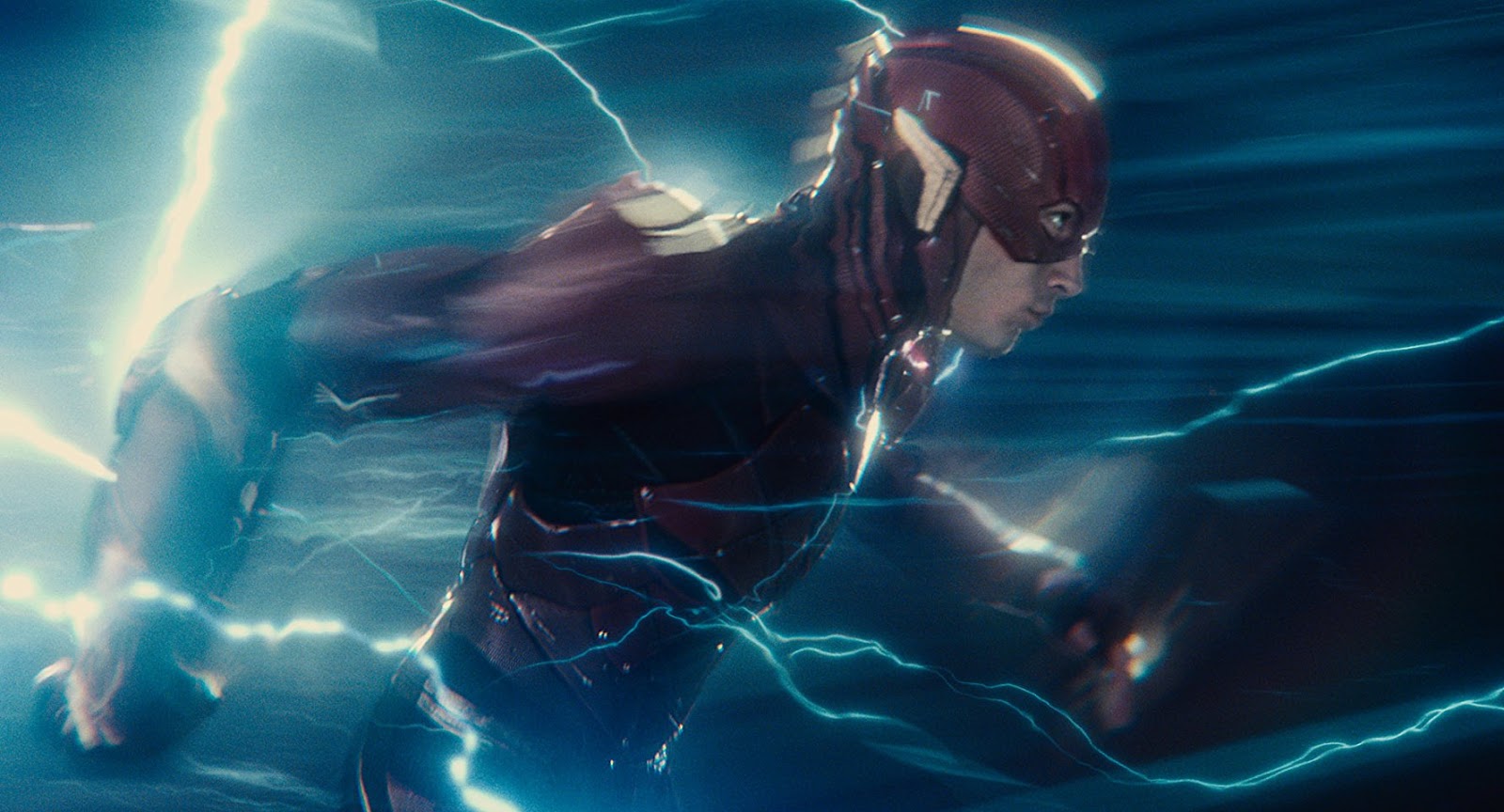
The plot feels like something that's all but completely ignored the last two decades of growth we've seen in the superhero genre. Thousands of years ago, Earth was threatened by a big bad guy named Steppenwolf (a gormless CGI miniboss played by Ciarán Hinds). Against the combined might of mankind, Amazons, Atlanteans, the Olympian Gods, and some cameos meant to generate hype for 2020's Green Lantern Corps (judging how Justice League is doing at the box office, I wouldn't hold my breath; but I digress), Steppenwolf's army is repelled back to Apokolips and his three maguffin boxes are hidden away on Earth. After the death of Superman (Henry Cavill), fear is more rampant on Earth than ever before (yes, Superman dying is implicitly defined by the movie as quantifiably worse than 9/11, the Cold War, and the Holocaust). Thanks to all of the bad vibes generated by the passing of an emotionless alien who levels cities, the Mother Boxes activate and call Steppenwolf back to Earth (since a demoralized populace makes the conquering that much easier). With the man of steel stuck six feet under, it's up to Batman (Ben Affleck) and Wonder Woman (Gal Gadot) to round up the likes of Aquaman (Jason Momoa), The Flash (Ezra Miller), and Cyborg (Ray Fisher) in order to mount a super-powered counter-offensive; for if they fail, Steppenwolf will use the awesome might of the Mother Boxes to... do... something. They're never 100% clear on what the Mother Boxes actually do, and I honestly think his evil plan is just ends up being a rehash of General Zod's from Man of Steel.


Despite a runtime of just barely two hours, there's a lot in this movie; normally this would make things feel overstuffed, but somehow Justice League manages to spread itself thin. It's like emptying an entire bottle of mustard onto a single hotdog and still being able to taste the meat, it just doesn't make any sense. With everything there is to unpack, I'm going to start by talking about everything this movie got wrong. Well, not everything (unless either of us has the time to dissect the finer points of executive meddling and committee planning in the film industry), but the major things, at the very least. First and foremost, let's address the elephant in the room. After the tragic loss of his daughter earlier this year, Zack Snyder stepped down from directing Justice League, at which point Joss Whedon took the helm, finishing up production and directing any and all necessary reshoots. If you can name a more stylistically different pair of filmmakers working on the same project, I'd certainly like to hear it; Whedon and Snyder's styles are night and day (in some cases literally) and the end result is just as much of a patchwork mess as you'd expect. One moment we have Synder's dreary symbolism and melodrama, the next we have a series of Whedon's eye-rolling quips. I don't plan on ever watching Dawn of Justice or Suicide Squad again (unless it's bad movie night), but I'll at least be able to revisit Justice League with a fun drinking game in mind; take a sip every time there's a noticable shift in direction. If I end up dying of alcohol poisoning shortly after Justice League is released on The Pirate Bay home video, you'll know what happened.


Aside from an inconsistent identity, the film also suffers from an extraordinarily bland plot and villain. I've seen (and made) complaints that Marvel's stories are getting a little stale (often involving some generic antagonist firing a big blue beam into the sky), but even the worst of the MCU has nothing on Justice League. Steppenwolf is a cardboard bad guy; he monologues about fear and power and conquest, only to be defeated without issue, leaving no impression whatsoever. I hate to make the inevitable comparison to Marvel Studios, but I think it's necessary in this case, in order to outline exactly how Warner Bros screwed up on this one. When Marvel put out the first Guardians of the Galaxy, Ronan the Accuser served as a stepping stone to Thanos. He was a bland villain who was only really interesting whenever he was sharing the screen with the bigger, badder bad guy that everyone really wanted to see. I get the sense that WB attempted something similar here with Steppenwolf (since he answers to DC's seminal Kirby-created big bad, Darkseid). 

However, when Marvel did it, you got a sense that they at least knew where they were going with it all. Even though Ronan was a bland, one-dimensional villain, he served his purpose in the grander sense of the MCU, establishing Thanos as more than just a post-credits teaser. Comparatively, Darkseid doesn't even appear in Justice League, not even in a quick cameo; to those unfamiliar with the comics, Steppenwolf is just some guy from space who wants to do something vaguely evil with some magic cubes. A throwaway villain isn't ideal, but they can still serve a greater purpose when a series is attempting a multi-film narrative as the MCU (or DCEU) is. With Justice League, it just comes off like blind emulation; like a child who tries to mimick his older siblings by leaping off the high-dive (despite not knowing how to swim). And when he hits the water, it flops just as hard and sinks just as quickly as you'd expect.


Despite Justice League tying with Pirates of the Caribbean: At World's End as the second most expensive film ever made, there's still an unshakable aura of cheapness to the whole thing. The plot is a generic "we need to stop the doomsday plot and also learn to work together" mishmash of clichés, the CGI is merely passable at best (outright embarrassing at worst), and several of the performances leave a lot to be desired. Gal Gadot continues to carry the entire franchise as Wonder Woman (she's not quite as strong here as she was in her solo film, but she's still good enough) and I was quite surprised at how much I enjoyed Ray Fisher in the role of Cyborg. On the other hand, however, Ezra Miller's Flash served no purpose other than to be a quip machine; while he had a few fun moments, it just felt like there could have (and should have) been more depth to this character than what we've got here. You also have Ben Affleck as Batman, looking like he'd rather be literally anywhere else. I honestly find myself feeling tremendously sorry for Affleck; he once took the role of Daredevil because he assumed it was the closest he would ever get to playing Batman on the big screen. Over a decade later and he's landed his dream role, only to have completely soured on the idea after a single film. That said, Affleck's shotgun wedding of a performance doesn't even hold a candle to the clear weakest links of this cast; those being Jason Momoa and Amber Heard as Arthur Curry and Mera.

As a fan of both Aquaman and Jason Momoa, it pains me to say this, but he's absolutely terrible here. Every line he has is delivered in exactly the same gruff, generic dudebro cadence. The blame doesn't rest entirely on Momoa, as he's given next to nothing to work with (he doesn't even summon any sharks, the lowest of the low-hanging-fruit when it comes to neat Aquaman gimmicks), but it still doesn't change the fact that his character feels like a cheap imitation of Chris Hemsworth's Thor. I don't want my argument to boil down to "not muh Aquaman", but as a fan of the comics, this take on Arthur Curry is nothing like what I had hoped to see. Meanwhile, Amber Heard appears for only one scene, yet leaves enough of a stunningly bad impression that I find myself questioning how excited I even am for James Wan's upcoming Aquaman standalone movie. Just like Wonder Woman before it, the film entirely hinges on whether or not the director can conjure a worthwhile performance out of his lead actors; if their performances in Aquaman are anything like their performances here, then I think it's safe to say that that film is as good as sunk (I'm so sorry). That said, amidst all these middling performances, we still have my favorite part of the entire movie (and, arguably, the entire DCEU). It's a bird, it's a plane, it's...


Spoiler Alert, Superman comes back to life. And his portrayal this time around makes Justice League feel like a two-hour long apology for every sin Zack Snyder previously committed against his character. This is a Superman who is bright, cheerful, and takes visible joy in saving civilians and doling out justice. Sure, it feels completely unearned that he's suddenly treated with such reverence after his last two appearances, but I honestly don't care at this point. Superman is portrayed as he should be (to the point that Batfleck takes a good five minutes to explain to all the fanboys in the audience why Superman is a more human, relatable character than Batman is) and I'm just happy that Henry Cavill is finally being allowed to do the character justice. It's clear (when one looks behind the scenes) that Cavill holds a great deal of regard for the character and history of Superman, yet he was constantly held back by poor writing and direction. Finally, he's free to fight for truth, justice, and the American way and it's honestly the only thing in this entire film that feels 100% right. His resurrection represents the only interesting facet in a supremely bland plot and he ends up being both the most useful and most likeable member of the League (despite, unfortunately, getting the least amount of screentime). 

Alongside Superman's portrayal this time around, I greatly enjoyed the tone and atmosphere Justice League had to offer at times. It often felt inconsistent, true, but there were moments when it felt like exactly the sort of feeling the DCEU should be shooting for; not so self-important and dreary that it becomes a parody of itself, but not an outright comedy like so many recent Marvel films. I also quite enjoyed the score, care of the legendary Danny Elfman. When I had first heard that Elfman planned to sample his 1989 Batman score (and the classic John Williams Superman theme) in his compositions for this film, my eyes practically rolled clean out of my skull. It felt like the most transparent marketing move yet; remember this music from the good DC movies? Doesn't that make you want to like this movie more? That said, having actually heard the score, I must admit, it does it's job well. In hindsight, I would have been perfectly happy had Spider-Man: Homecoming's score been nothing but a gorgeous orchestral remix of the 60's cartoon theme. At the end of the day, those tracks are the iconic themes of Superman and Batman; it's a cheap exploitation of nostalgia, yes, but the end result is still pretty damn good. Really, that explains so many of the parts of this film that I enjoyed. If only WB could figure out a way to just make these films work on their own merit, perhaps they could provide even adequate competition for the MCU (which, at the time of writing, has another 20 films in the planning stages, to be released in the coming years).


What else can I say about Justice League? If Warner Bros' goal was to keep the life support for the DCEU plugged in for but one more year, then I suppose it did its job. Like I said, this film is a complete mess, but it doesn't make me angry the way Batman V Superman or Suicide Squad did. It's harmless, like a rabid dog that's been lobotomized; it's not aggressively stupid anymore, but it's by no means good. It's been just over seven days since I've seen Justice League and it already feels like something I watched ages ago. Honestly, I doubt I'll even remember most of it in a month or two. That said, while it's still on my mind, I think it's worth pointing out exactly what WB needs to do to make this franchise a hit, not just with consumers, but with critics as well. 

All it needs is a little fresh perspective; the Marvel films aren't consistent mega-hits because of their scale or quips or Joss Whedon (hell, certainly not because of Joss Whedon). For the DCEU to succeed, Warner Bros needs to try emulating Marvel's business strategies rather than the content of their films; bring on filmmakers who have proven they know what they're doing (James Gunn, Taika Waititi, Shane Black, etc.) and let them do their thing. Don't try and bend the product to the will of focus testers and studio execs. Treat these films like films. Marvel Studios is a monolithic conveyor belt of content that turns comic book iconography into millions upon millions of dollars thrice annually on a yearly basis. Make no mistake, it's very much a business, and films in the MCU still need to tick a requisite number of shared-universe boxes before they can get the all clear; but at the end of the day, Kevin Feige and company understand which parts of that business should be left in the hands of creative people who understand how to make endearing and entertaining films. Full disclosure, I'm enjoying DC's comic book offerings leagues more than what Marvel's putting out nowadays (no pun intended). It pains me to see the DCEU fail to represent these iconic characters and storylines time and time again with flop after flop, especially since there's so many good elements hidden within this mire of mediocrity (such as Patty Jenkins' Wonder Woman film). But until Warner Bros learns to stop worrying about every other film studio and focus on themselves, I see no reason to expect the DCEU to get any better anytime soon.

September 7, 2017

REVIEW: Batman & Harley Quinn


I honestly didn't think things could get much worse than The Killing Joke. Sure, that was a tone-deaf (if admittedly well-acted) cash-in on an iconic Batman story, but it had to have been a fluke, right? There are plenty of decent DC animated features out there; some of them (Justice League: The New Frontier, Mask of the Phantasm, Under the Red Hood) are even pretty phenomenal. However, having taken in the latest Warner Animated movie starring the caped crusader, I'm forced to simply come to terms with the fact that, much like Warner Bros' live-action division, they simply have no idea what they're doing when it comes to the beloved and time-honored characters of Detective Comics. It's not often that a movie is so bad it makes me angry. More often than not, I can see the fun in a good, bad movie (like last week's trainwreck, Death Note). But believe me when I say that Batman and Harley Quinn is one of the most insufferable, insulting things I've had to sit through in a good long while.

The story takes place in the continuity of Batman The Animated Series, the classic show that introduced us to the once-novel but now woefully over-played character of Harley Quinn (incidentally, BTAS just turned 25 years old, and lord knows it deserves a better birthday tribute than this tripe). The plot follows Batman (Kevin Conroy, of course) and Nightwing (Loren Lester) as they attempt to put a stop to the sinister plans of Poison Ivy (Paget Brewster) and Jason Woodrue, the Floronic Man (Kevin Michael Richardson). As one might expect from a duo of hippy-dippy plant-based supervillains, their scheme involves mixing up some manner of super-chemical that will transform all animal life into sentient plants, thus returning the Earth to the rightful hands of Mother Nature and yadda yadda yadda. In order to track down the green meanies, the dynamic duo enlist the help of Ivy's longtime gal-pal and associate, the recently-reformed Harley Quinn (The Big Bang Theory's Melissa Rauch). If this sounds like a rehash of the classic BTAS episode, Harliquinade (in which Batman and Robin enlist Harley's help in tracking down the Joker after he acquires a nuclear bomb), that's simply because that's exactly what it is, just minus any inkling of pathos or emotion and with at least 100% more prolonged fart jokes.


The most jarring issue with this film is that it has no idea what it wants to be, tonally-speaking. The original Batman animated series on which this film is based was notable for its dark tone and noir aesthetics. It had its lighter moments, sure, but the main reason it's so fondly remembered is because of how effectively it reinvented the character of Batman for a new generation, casting the classic superhero in a brooding, mature, dynamic light, reminiscent of the Tim Burton films released around the same time. And the character of Harley Quinn, bubbly and comedic as she was, was still very much a product of this sense of tone. Just under the surface was a tragic figure, able to illicit sympathy just as easily as she could illicit laughter. She wasn't, for lack of a better term, a meme character, meant to spout catchphrases ready-made to be printed on a line of t-shirts at your local Hot Topic. She had some actual degree of emotional depth to her character beyond "wacky random clown girl", yet these days it seems like that's all DC is content in giving us. She's got all the "lol so random" appeal of Marvel's Deadpool, but with that oh-so-important addition of easily-marketable sex appeal. What else is there? She moves buttloads of merchandise with little to no creative effort on DC's part, may as well stay the course until this proverbial cow is milked dry.

This movie's take on Harley is just insufferable in every way. Melissa Rauch is a refreshing change, I guess (I've come to terms with the fact that Tara Strong is probably the best replacement for Arleen Sorkin we're gonna get, but I'd be lying if I said it wasn't getting a bit grating hearing the same exact voice every time the character shows up these days), but she still does a sub-par job overall. While I can admit that any substitute voice would sound wrong coming out of the BTAS Harley, Rauch's pseudo-Yiddish accent just sounds painfully forced. It's obvious WB had her on the payroll for The Big Bang Theory and was just looking for some cheap and easy brand synergy. It also hardly helps that Harley is written here like an author-insert in a gaudy fanfic. She's essentially the best, coolest person in the world; she solves all the problems and has all the epic zingers and even has a totally necessary musical number at one point (again, this movie is definitely not a lazy rehash of that one episode of Batman The Animated Series). Meanwhile, Batman doesn't do much of anything and Nightwing serves as nothing more than a pseudo-love interest/rape victim.


Yes, it seems that once again, Dick Grayson, Bruce Wayne's old chum and faithful ward, ends up getting raped for "comedic" effect. You see, it's perfectly fine that Nightwing gets drugged and tied to a bed in an abandoned tenement, only to have a crazed ex-supervillain jump his batarang. It doesn't matter that Harley is a self-described sociopath; she's hot and that's all that matters, am I right fellas? (Insert whooping and fist-pumping here). No but really, all sarcasm aside, this entire sequence is utterly disgusting. Let's not pretend that heads wouldn't roll if the genders were reversed and a vulnerable superheroine was the one knocked out and sexually assaulted by a reformed mental patient (and before you go throwing The Killing Joke at me, at least that didn't try to hand-wave it away by implying Barbara Gordon actually enjoyed it). It's really the most patronizing and insulting message to men who enjoy comics; the idea that the target audience for this is so desperate, that they'd accept, or even embrace, getting drugged and raped by a murderous psychopath (so long as she's a total dime, of course). Over the remainder of its runtime, the film sees fit to make Nightwing the butt of a number of jokes, implying that he's not only responsible for what happened, but that he deserves to be mocked for letting Harley slide down his bat-pole, as if he was a horny schoolboy who got caught with his hand in the cookie jar. I guess it makes sense, all things considered; I mean, just look at what he's wearing! A fit, handsome young man in a form-fitting outfit like that, why he was practically asking for it!


Aside from turning one of the title characters into a full-fledged rapist, the film also confirms a theory I've been mulling over for some time now; without the Joker, Harley Quinn just isn't an interesting character. I'm sorry, but it's true. The Joker is an integral part in her internal conflict; he is the entire reason that Harleen Quinzel became Harley Quinn in the first place. Removing his influence on her story has the same effect as if Batman's parents came back to life; that initial struggle, that core dynamic that defines the entire character, is lost. Instead, we're simply left with a catchphrase-spouting Poochie of a character and it becomes abundantly clear that this was simply made to cash in on Harley's ongoing mainstream popularity, as well as Batman The Animated Series' big 25th anniversary. At one point Batman describes her as "the walking definition of 'loose cannon'", which I can only assume is a direct quote from some Warner Bros executive at whatever pitch meeting spawned this cheap, lazy trash. 

Without the Joker keeping her down, Harley loses all sense of sympathy; if she's willing to throw on the tights, a supposed symbol of a horribly traumatic and abusive period in her life, at the drop of a hat, then she just becomes another supervillain with flexible morality. She ceases to be a truly tragic figure and just becomes another wacky comic book character with an unfortunate past. Everyone has a tragic backstory these days. Kite Man has a tragic backstory these days. The thing that set Harley aside from the rest was that it wasn't just her backstory, but her whole life that was tragic. Mr. Freeze was one of the best villains featured on BTAS, but once you cure his wife, he loses all relevance and has no reason to go cavorting about with Batman and Robin anymore. The same applies to Harley; once she's free of the Joker's influence, any attempt to put a mallet back in her hands just comes off as hackneyed and regressive from a characterization standpoint. Then again, it's fairly obvious that nuanced characterization wasn't exactly at the top of the agenda when putting this together.


If it wasn't clear already, I absolutely positively loathed this movie. I say this as a tremendous fan of not only Batman the Animated Series, but of all the cartoons and comics that Bruce Timm and Paul Dini created together; this movie is pure trash of the highest caliber. The tone comes off like a Hot Topic interpretation of the 60's Adam West show, conveyed through the aesthetic of The Animated Series, only the people behind it managed to capture exactly none of the nuance or charm of either of those shows (which is especially confusing, considering Bruce Timm is one of the two writers responsible for this mess). This movie is so bad it made me wish that DC had retired the character of Harley Quinn alongside Arleen Sorkin. The characters are paper-thin and bafflingly characterized, the animation is sub-standard, everyone appears off-model more often than not, and the frame-rate sinks like a stone any time there's any action onscreen. There's tons of padding for time and the end result ranks alongside BTAS episodes like I've Got Batman in My Basement; it stretches itself so thin to try and justify a full-price home release, yet by the time Floronic Man made Poison Ivy eat a psychedelic yam he plucked off of Swamp Thing's corpse I just didn't care anymore. 

The only bit worth salvaging is the post-credits scene, in which Harley finds herself hosting a television show that's one part Doctor Phil, one part Takeshi's Castle. It's actually legitimately funny and is the only part of this entire ordeal that feels even remotely in-tune with the tone of the series it's banking off of. Unless you feel like wasting an hour of your life you'll never be able to get back, I recommend sparing yourself the headache and giving this mess a miss.

June 6, 2017

REVIEW: Wonder Woman


I think it's safe to say that the DCEU wasn't shaping up as well as anyone had hoped (least of all the executives at Warner Bros). While Marvel is pumping out three blockbusters a year (the majority of which range from excellent at best to forgettable at worst), DC's competing cinematic superhero franchise has been puttering by on a wing and a prayer ever since Green Lantern failed to get things going back in 2011. With the exception of The LEGO Batman Movie, each new film starring the iconic characters of Detective Comics has not only fallen short of expectations at the box office, but with critics as well (I even went so far as to name Batman V Superman: Dawn of Justice one of the worst films of last year in my 2016 Retrospective). Even if these movies are critical disasters that fall short of projected earnings, however, they still manage to make just barely enough to keep projects like the standalone Black Adam movie alive and in the pipeline. Which brings us to this year's first release from the DCEU, Wonder Woman. I'm going to be perfectly honest; after so many disappointing entries in this series, I wasn't even entirely sure I would bother spending money to see this one, even after the improbably positive initial reception it got on Rotten Tomatoes. Keep in mind, this was a project that had been in development since the mid-90's. Even in its current state, the original director left over creative differences, the script was re-written several times, and the original cut was reported to have featured some severely lackluster editing decisions. And that's to say nothing of the exhausting, contrived, heavily-politicised squabbling that surrounded this film close to release (because God forbid we have a modern film that happens to feature a female protagonist without people trying to force it to fit their socio-political narrative). With all of this acting against it, it's nothing short of a miracle that Wonder Woman has turned out to be, without question, the best film in the DCEU so far. I understand that the bar wasn't set especially high to begin with, but trust me, this movie is a solid good time.

Told through flashback after the events of Dawn of Justice, Wonder Woman focuses on the origins of Princess Diana (Gal Gadot), heir to the throne of the Amazonian island of Themyscira. A race of proud, all-female warriors, the Amazons live a life of quiet seclusion, magically concealed from the outside world. This changes, however, after Captain Steve Trevor (an American spy played by Chris Pine) crash lands on Paradise Island while fleeing from German forces. Trevor informs the Amazons that the world is engaged in the war to end all wars (better known these days as World War I); as far as Diana is concerned, a conflict of this scale is clearly the work of Ares, the Greek god of war. Convinced that it is her duty to seek out and destroy Ares, Diana leaves her home on Themyscira to accompany Trevor to man's world, becoming the champion of peace, justice, and love known as Wonder Woman.


Part of what helps elevate this film above its peers is the unabashedly sincere tone it puts forward. Previous DCEU films have almost felt embarrassed by their source material; clearly, Superman is too stupid an idea for anyone to take seriously (despite over 75 years as a worldwide icon), so any film focused on him should become a dour slog full of ham-fisted religious allegory, lest audiences realize they're watching a movie about a spangly man who leaps tall buildings in a single bound. Even Marvel is guilty of this, to some extent; while entries like Guardians of the Galaxy manage to balance out comedy with genuine heart, too much levity can make a movie impossible to take seriously as a result (such is the case with Age of Ultron). It belays insecurity, on the filmmaker's part, in the property that is being adapted. It implies that the filmmaker isn't talented enough to maintain the tone of the source material with a straight face, making things more silly or dour in an attempt to distract from the fact that they're making movies about people who dress up as bats and talk to ants.

Wonder Woman's Patty Jenkins, as it were, has no compunctions about being sincere. While the tone ranges from serious to lighthearted, it is all played 100% straight; Wonder Woman isn't made the butt of any jokes for being a corny 70-year-old comic book hero who wears a magic tiara. At the same time, she isn't turned into a tortured soul who enjoys angstily pouting and waxing philosophic in the rain. Jenkins understands why the character has endured for so long and what makes her such an endearing, inspiring protagonist. This is Wonder Woman, champion of peace, hope, and love, teaming up with the Allied powers to put and end to the destructive conflict of World War I. It's been some time since I've seen a comic book movie that so strongly commits to that old-school superhero spirit, and boy have I missed it.


As I mentioned before, I was admittedly a little dubious of this film walking in, partially because the part of Wonder Woman would be played by Gal Gadot. Her appearance in Dawn of Justice left me thoroughly unimpressed and I was certain that, if there was indeed a low point of this movie, it would be Wonder Woman herself. As it turns out, I'm glad to report that those fears were entirely unfounded. Patty Jenkins displays an aptitude for conjuring excellent performances out of her actors, and Gadot's turn as the titular Amazon Princess here is no exception. While she doesn't necessarily give the best performance in the movie (which is forgivable, considering the supporting cast boasts talent such as Connie Nielsen, David Thewlis, and Robin Wright), Gal Gadot definitely does a respectable job of capturing the spirit of the character, showing marked improvement from when she last appeared in the DCEU. I've no doubt that, over time, she'll continue to grow and improve as she's been doing, making the role her own and becoming a modern icon in her own right.

Personally, the highlight of the film for me was Chris Pine's portrayal of Captain Trevor. He and Gadot share a superb chemistry (despite all the groan-inducing sexual innuendos), even though he tends to outshine her from time to time. Theirs is a surprisingly balanced relationship; they both learn from one another and help out in their own, unique ways. There are no damsels or flat love interests here, everyone pulls their own weight; no where is this more evident than in the spectacular No Man's Land sequence, which was by far the highlight of the entire film (at least in terms of action). I also really quite enjoyed Steve Trevor's gang of mercenary pals (Saïd Taghmaoui, Ewen Bremner, and Eugene Brave Rock); each one of them gets their own set of personality quirks, as well as a little moment of focus for characterization and growth. These are the kind of supporting protagonists who could have easily just amounted to nothing more than set dressing (such as the Howling Commandos in Captain America: The First Avenger), yet the movie cares enough to flesh them out for the sake of a more well-rounded ensemble. I've never seen any of these actors in anything before, but would love to see them in more.


That said, for as much as I enjoyed this movie, it isn't without its flaws. Early reports had mentioned how Wonder Woman struggled both in terms of pacing and editing. While much of this has been masked in post-production, it's still easy to see the proverbial scars these problems left on the film. There are times where things can feel a little uneven and disjointed; the first act feels very rushed at times (condensing multiple flashbacks, time-skips, and exposition dumps into the first ten minutes) and there are moments where it almost feels like some parts of the story are misplaced (for example, it's never made explicitly clear whether or not Diana is especially strong for an Amazon, or if her sisters are all capable of lifting a tank above their heads as well). These are minor nitpicks, but I still found them to be a bit distracting when they came up. It's a fairly good superhero origin story, but it is still a superhero origin story.

I also enjoyed the antagonists for the most part, but they too are not free from their share of problems and setbacks. Danny Huston's General Ludendorff feels like a character directly out of a classic Indiana Jones film and fits the tone quite well, even if he's not given anything particularly interesting to do. There's also Elena Anaya as Doctor Poison, a mad scientist who concocts deadly chemical weapons for the Germans. She was actually one of my favorite aspects of the entire film, as she's given a surprising amount of characterization and vulnerability that one wouldn't immediately expect from a secondary villain. Unfortunately, our final antagonist, Ares, is responsible for the absolute weakest part of the entire movie.


I'm not going to delve into spoilers here, but Ares is by far the worst aspect of an otherwise mostly solid film. Despite all the fun action sequences and genuinely compelling character growth we've seen thus far, it all comes down to a generic, poorly-telegraphed Red Herring twist and a final fight that devolves into two CGI ragdolls smacking into each other while surrounded by fire and rubble. Out of everything this movie gives us, this is the only part of it that feels totally generic. Despite a strong buildup and some legitimate emotional beats surrounding it, the final clash between Diana and Ares ends up feeling so routine that it almost becomes boring. Don't get me wrong, the pros most definitely still outweigh the cons overall, but that doesn't change the fact that Wonder Woman's climax represents exactly what the DCEU should be desperately trying to move away from; loud, stupid action with zero emotional weight or consequence. We end up caring far more about how Steve Trevor ends up saving the day than about Diana fulfilling her destiny, and that's truly the movie's greatest sin (even if it still manages to pull out of this supremely schlocky nosedive to deliver an appropriately bittersweet payoff). 


While it's not exactly perfect, Wonder Woman is still a thoroughly enjoyable comic book film; a shining example of what DC should strive for in future installations. Sure, movies like Supergirl, Punisher: War Zone, and Tank Girl have since stolen any "first female anything"-type accolades, but Wonder Woman holds the distinction of being the first theatrically-released, female-led, female-directed superhero film that is actually any good. Despite all of the nonsensical political turmoil that was whipped up before the film's release, the movie focuses on being a quality film first and foremost. It's a story that champions ideals such as hope, love, peace, and equality; while some painfully stupid individuals are sure to take issue with this, it doesn't change the fact that Wonder Woman is a movie that sets out to elevate itself above the petty squabbling of the internet. Wonder Woman hears you crying about clean-shaven armpits and women-only screenings and it doesn't care. There's a world that needs saving.

February 13, 2017

REVIEW: The LEGO Batman Movie


After seeing The LEGO Movie roughly four times in the theater back in 2014, you could say I was basically on-board for whatever LEGO-related project Warner Animation Group wanted to throw my way. When it was announced that Will Arnett's Batman would be getting his own spin-off film, I was sold immediately. Batman as a character has been around for 78 years; of course there's plenty there to be colorfully and hilariously deconstructed (no pun intended). I expected it to be a fun time with some fantastically imaginative animation, but what I didn't expect was for this to be the best Batman film since The Dark Knight (and if we're talking purely on how well it understands the character, then it's in the running for the best film depiction ever).

Taking place three years after the events of The LEGO Movie, Batman (Will Arnett) is back in Gotham City doing what he does best, fighting crime and foiling evil. After his plan to detonate an overly-complicated bomb under the city goes up in smoke, a jilted Joker (Zach Galifianakis) plots his ultimate revenge in an attempt to prove that he is Batman's greatest nemesis. Meanwhile, new police commissioner Barbara Gordon (Rosario Dawson) attempts to revamp Gotham into a place that no longer needs a Batman, hoping to work side-by-side with the vigilante. This naturally doesn't jive with Batman's usual lone-wolf crime fighting style, nor does the addition of his newly adopted son, Dick Grayson (AKA Robin, voiced by Michael Cera). On top of all of this, Batman is forced to face his greatest fear; being part of a family once again.


Leave it to a movie populated entirely with plastic bricks to offer the most human portrayal of the Dark Knight in years. Despite how over-the-top the humor and heroics are in this film, there's a deceptive amount of heart present underneath it all. As absurd and blatantly comedic as Arnett's take on the character of Batman is, his faults are all very much accurate to the core of the character. He's shown to be a self-absorbed loner, one whose weakness stems from a deep-rooted fear of losing those close to him. What at first glace appears to be nothing more than a 104 minute commercial for LEGO products is really a character study of one of the most iconic superheroes of all time. That may sound a bit overly-serious, given the movie I'm talking about here, but the dramatic elements of this film really do work; this is a film that gets Batman.

As one would expect, this movie is an unapologetic love letter to all things Batman. There's nods to everything from the Tim Burton films, to the Adam West series, to the black and white serials of the 1940's. There's jokes involving everything from shark repellent to bat-nipples. We get special appearances from Batman characters such as King Tut, the Mutant Leader, and Two-Face as portrayed by LEGO Billy Dee Williams. There's plenty of surface-level jokes that anyone can enjoy, but it's clear that this is a film made by and for Batman fans, first and foremost. And that's to say nothing of the copious winks and nods made at the expense of Warner Bros less-stellar live-action efforts ("What am I going to do, get a bunch of criminals to fight criminals? That’s a stupid idea!").


For as much praise as I intend to lavish on this movie (trust me, I'm not finished), it's not without its faults. Maybe it's just the comic geek in me talking, but I found the first half (when the film is far more "Batman" than it is "LEGO") to be by-far superior to the second half. The jokes hit harder and more frequently and the film didn't slow down long enough for me to stop smiling. Once the Joker actually puts his master plan in motion and the third act begins, the pace becomes less manic and the film seems to lose a bit of its own identity. I don't want to give anything away, so I'll say this; what happens is both very fun and very imaginative, but I honestly would have had no problem whatsoever with this film just being a DC affair.


As one would expect, the voice cast here is stellar. Will Arnett's Batman carries the film, coming off as an untouchable badass while also appearing supremely vulnerable. His chemistry with Cera's Robin will be no surprise to anyone familiar with Arrested Development, but it's still worth noting how frequently hilarious/often heartwarming their superhero/sidekick relationship is. Ralph Fiennes lends his voice to Alfred Pennyworth (yet, surprisingly enough, not to ANOTHER character who appears later in the film), imbuing the Wayne family butler with the perfect amount of dry British wit. He, along with Rosario Dawson, act as excellent straight-men foils to the markedly more madcap Batman and Robin; our quartet of heroes is nothing if not well-rounded and balanced. Meanwhile, Zach Galifianakis's Joker is surprisingly compelling; he was honestly the only member of the cast I wasn't sold on from the get-go, so it's good to see that he really pulled it off (far better than Jared Leto did, that's for sure). 

The relationship between Batman and the Joker is one of my favorite aspects of the entire film; not only does it toe the line on being hilariously homoerotic, but it's also dead-on accurate to their dynamic in the source material. The Joker's entire motivation boils down to getting Batman to admit that he's a greater adversary than Bane or Superman; that he's the perfect match for Gotham's caped crusader. Everything he does, every evil scheme, is explicitly for Batman's sake. He's an attention-seeker on a quest for validation from his arch-nemesis, an utterly perfect representation of who the Joker really is. He insists that their adversarial relationship is really something special, but Batman frequently denies him the closure he so desires; it's literally the same dynamic between Christian Bale and Heath Ledger in The Dark Knight, just framed through the lens of a cheesy rom-com. It's such a perfect joke, mainly because it's so painfully, bitingly accurate.


What else can I say? The LEGO Batman Movie is a hilariously written, outrageously acted, gorgeously animated piece of work. It's a rare thing to see satire that so totally understands the thing that it's lampooning as well as this film does. It takes some liberties, sure (Dick Grayson hasn't been nearly this gawky since the days of Burt Ward), but you'd be hard pressed to find an adaptation that understands the spirit of its source material as well as The LEGO Batman Movie. It's a film which runs on hyperbole; everything is exaggerated, but it's also dead-on when you get right down to it. Behind all the flashy colors and beatboxing is a film that is much smarter than it appears to let on. If you're a Batman fan, this is mandatory viewing, one of the best bat-films ever made (and honestly neck-in-neck with Mask of the Phantasm for my personal favorite). Even if you couldn't care less that Batman asks his rogue's gallery if they "wanna get nuts", this is still a load of surprisingly heartwarming fun, not to be missed.